Clear Sky Science · en
Diminishing anti-migrant sentiment in China: migrant inflow, local wealth, and discrimination
Why this story matters
China has seen one of the largest movements of people in human history, as hundreds of millions leave their hometowns for work in booming cities. Many feared this wave of newcomers would spark lasting hostility from long-term city residents. Instead, prejudice against migrants has eased. This article explains why, showing how rising local wealth, fueled in part by migrants themselves, has softened social divides and offers clues for managing migration debates worldwide. 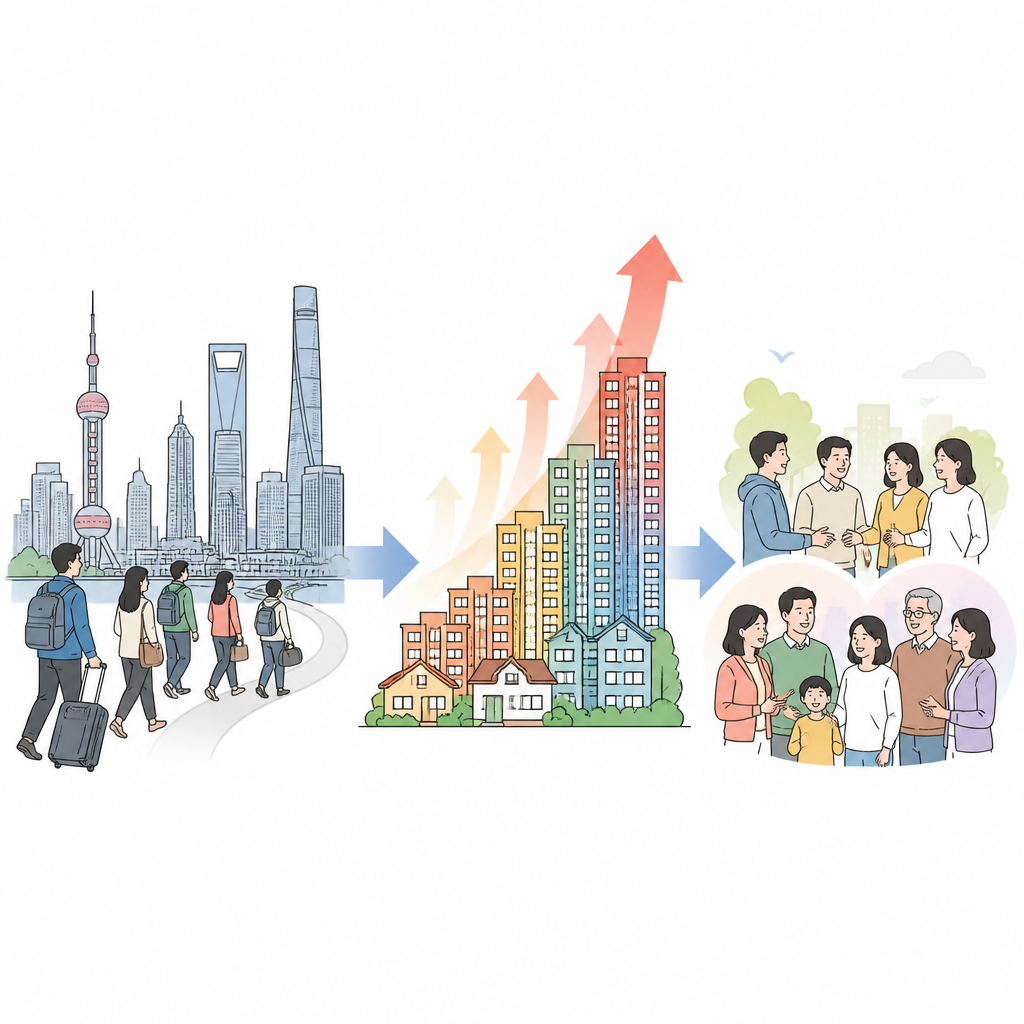
People on the move
In recent decades China’s cities have attracted huge numbers of internal migrants, people who live far from the place where their household registration, or hukou, is recorded. Unlike in the United States or Europe, these migrants are citizens of the same country but lack full access to schools, welfare programs, and public jobs where they live. Earlier surveys and popular culture portrayed strong bias against them. Yet data from 2005 to 2017 show that while prejudice first rose, it later declined, and migrants and locals have become more likely to work together and even marry across hukou lines.
Following the money at home
The researchers suspected that changing economic fortunes might explain this shift in attitudes. Using detailed surveys of tens of thousands of households between 2011 and 2021, they tracked how families’ total wealth changed over time, including real estate, savings, and investments minus debts. During this period China’s migrant population soared from about one sixth to more than one quarter of the country. At the same time, the average city household grew substantially richer, especially in eastern regions and large cities where property is most valuable. The study asked whether the arrival of migrants helped push this wealth boom, and in turn reduced the sense of economic threat that can fuel discrimination.
How newcomers boost local wealth
Statistical models show that cities with larger increases in the share of migrants also saw faster growth in the wealth of long-term residents. Much of this gain came through the housing market. When migrants arrive, they need places to live, which raises demand for apartments and houses. Because housing supply cannot adjust instantly, prices climb. Since Chinese households hold most of their assets in housing, rising property values translate directly into higher net worth for local owners. The effect is strongest for families that already own homes or buy them during the period studied, confirming that property is the key link between migrant inflows and growing local fortunes. 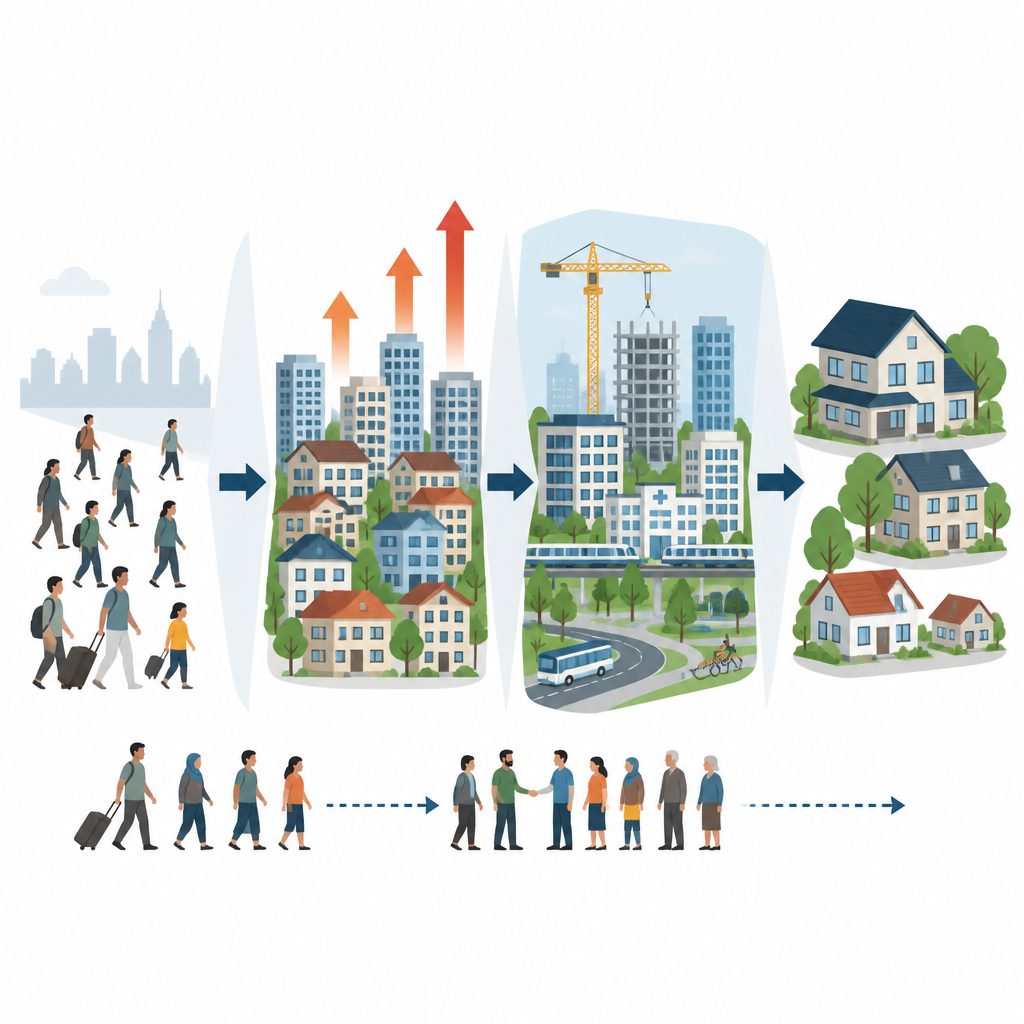
City building and rising prices
The study also uncovers an indirect route from migration to wealth. Migrants expand the labor force, contribute to economic growth, and pay a sizable share of income taxes. This additional revenue allows city governments to spend more on urban construction, such as transport lines and public facilities. These improvements, in turn, make neighborhoods more attractive and push property values even higher. However, soaring housing costs also widen the wealth gap between locals, who tend to own homes, and migrants, who are more often renters. High prices make it harder for migrants to settle permanently, dampening their desire to stay long term even as their presence has enriched local homeowners.
Wealth and warmer attitudes
To connect money and social attitudes, the authors matched city-level wealth data with a large national survey that asked migrants whether they felt that locals looked down on them. In places where local household wealth had grown more rapidly, migrants were less likely to report feeling despised. After accounting for age, income, education, family size, and city traits, the pattern remained: when locals experienced strong gains in wealth, migrants perceived less discrimination. In other words, as homeowners felt more secure and prosperous, they seemed to view migrants less as competitors and more as contributors to shared progress.
What this means for everyday life
The article concludes that migration in China has been not only an engine of economic growth but also a quiet force for social integration. By lifting the wealth of local residents through housing markets and city development, migrant inflows have reduced the sense of threat that often drives hostility. While China’s hukou system and internal migration differ from international migration in Europe or the United States, the basic lesson travels well: when host communities clearly benefit in material ways from newcomers, fears ease and coexistence becomes easier to achieve.
Citation: Wu, D., Cao, Y. & Yi, D. Diminishing anti-migrant sentiment in China: migrant inflow, local wealth, and discrimination. Humanit Soc Sci Commun 13, 645 (2026). https://doi.org/10.1057/s41599-026-07015-3
Keywords: internal migration, housing wealth, social integration, discrimination, China urbanization