Clear Sky Science · en
Unmasking the shadow economy: the role of economic policy uncertainty, clean energy, and clean technology in BRICS nations
Why the hidden economy matters
Across much of the world, a large share of work and trade happens out of sight of tax offices and regulators. This “shadow economy” affects public services, fair competition, and people’s job security. This study looks at why that matters for the fast‑growing BRICS countries—Brazil, Russia, India, China, and South Africa—and how policy stability, clean energy, and cleaner technologies can shrink this hidden side of economic life.
Work in the shadows
The shadow economy includes activities that are legal in themselves but not reported, such as unregistered shops or off‑the‑books wages, as well as outright illegal trade. When this sector is large, governments collect less tax, official statistics become misleading, and social protections reach fewer people. BRICS countries have particularly big hidden sectors, often equal to a fifth or more of their total output, driven by high taxes, complex rules, weak institutions, and limited access to formal jobs and credit.
Uncertain rules, informal choices
A central focus of the study is economic policy uncertainty, which reflects how unclear or changeable government decisions on taxes, spending, and regulation appear to businesses and households. Using data from 2001 to 2022 and advanced statistical models, the authors find that when uncertainty rises, so does the shadow economy. In the long run, a one percent increase in uncertainty is linked to roughly a 0.29 percent expansion of hidden activity. People and firms respond to shifting rules and unpredictable enforcement by stepping away from formal channels to reduce perceived risk and compliance costs.
Clean energy and technology as a path to openness
The research also shows that clean energy and clean technology can push economic activity in the opposite direction, toward greater openness. Investments in renewable power, such as wind and solar, typically require formal contracts, modern infrastructure, and clearer oversight. Likewise, digital tools and other clean technologies improve record‑keeping, make transactions easier to trace, and lower the cost of obeying the rules. In BRICS countries, higher use of clean energy is associated with a smaller shadow economy, with long‑run effects around a 0.31 percent reduction for each one percent rise in clean energy use. Clean technologies show a similar though slightly smaller effect, with a 0.25 percent reduction.
Shocks that are felt unevenly
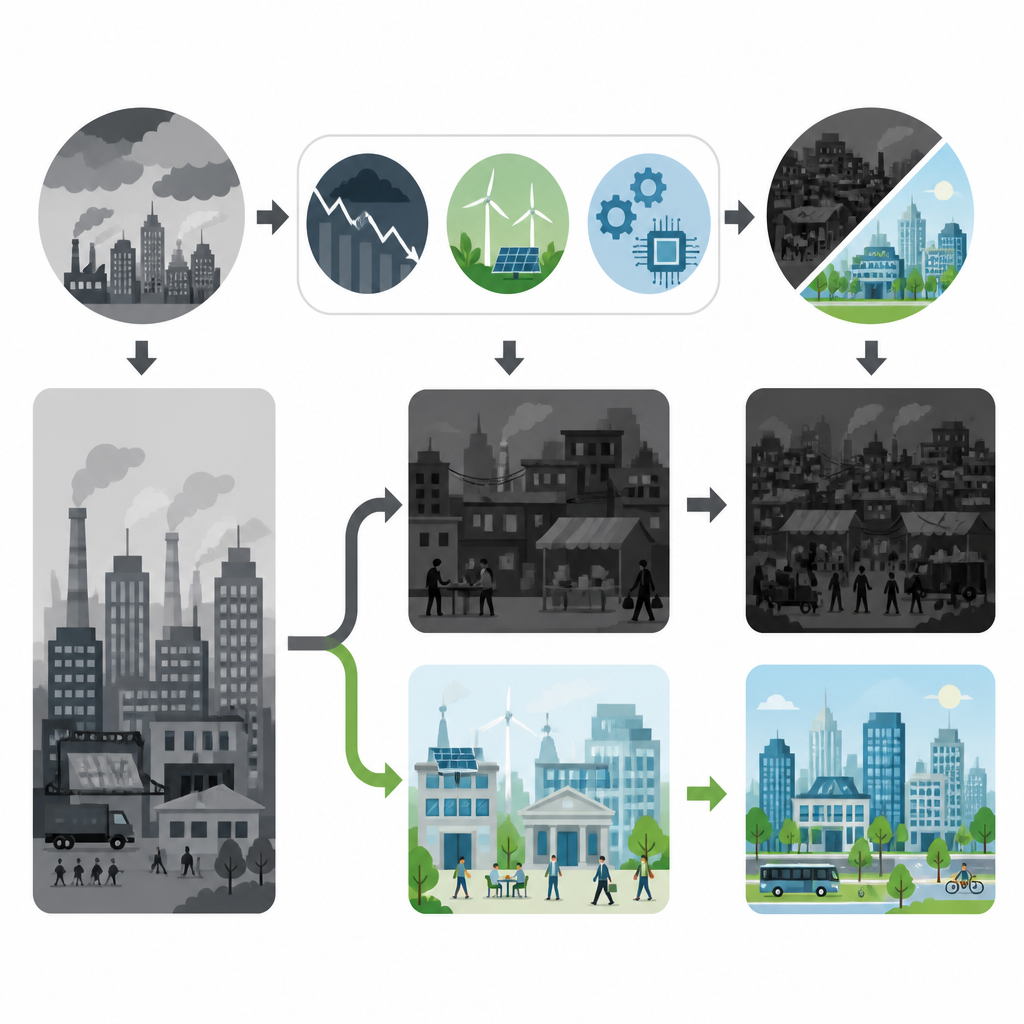
The study goes further by asking whether good and bad shocks are felt in the same way. It finds that increases in policy uncertainty do more damage than decreases can undo. In other words, it is easier for anxiety about rules to swell the hidden sector than for calmer times to pull workers and firms back into the open. A similar pattern appears for clean energy and technology: cuts or slowdowns in these areas spur informality more strongly than expansions reduce it. Short‑term transitions also matter. As economies shift to greener power or new technologies, some workers may briefly lose formal jobs and slip into informal work before new formal opportunities appear.
Building trust and cleaner growth
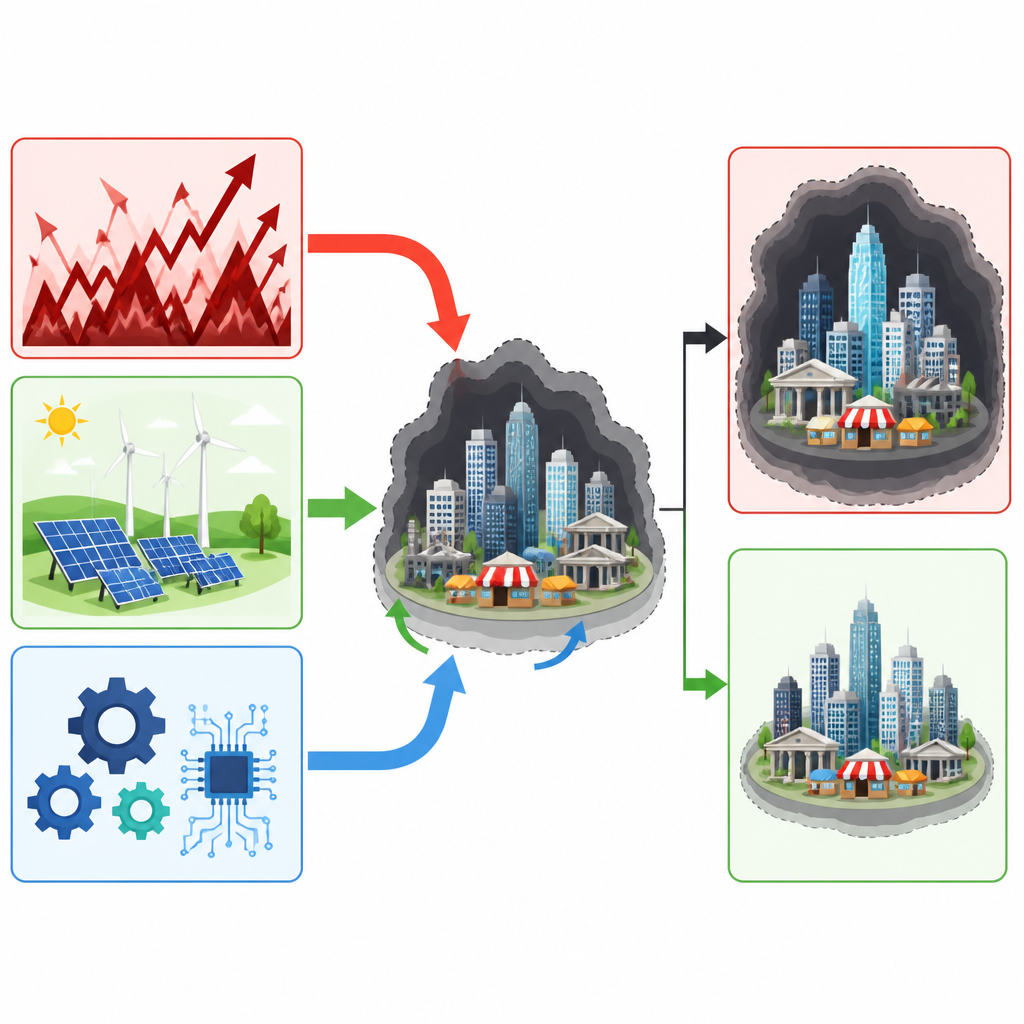
For a lay observer, the main message is simple: when rules are stable and clear, and when countries invest steadily in clean energy and modern technologies, less of the economy has to hide. The authors argue that BRICS governments can shrink their shadow sectors by reducing policy swings, strengthening institutions, simplifying taxes, and making green innovation widely accessible. Over time, this mix of predictability and clean innovation can bring more jobs, businesses, and income into the formal system, supporting fairer growth and better public services while also helping the environment.
Citation: Qamruzzaman, M., Almulhim, A.A. & Aljughaiman, A.A. Unmasking the shadow economy: the role of economic policy uncertainty, clean energy, and clean technology in BRICS nations. Humanit Soc Sci Commun 13, 641 (2026). https://doi.org/10.1057/s41599-026-06951-4
Keywords: shadow economy, economic policy uncertainty, clean energy, clean technology, BRICS