Clear Sky Science · en
The economics of elusive methane diplomacy: forecasting 2030 emissions in China, India, and Russia
Why this matters for everyday life
Methane may be an invisible gas, but it acts like a blowtorch on the planet’s thermostat. This paper asks what will happen to methane pollution by 2030 in China, India, and Russia—three countries that together produce nearly one‑third of global methane emissions yet have stayed out of a major international pledge to cut them. The authors show that, unless policies change quickly, emissions in these countries will keep rising, making it far harder to limit dangerous warming in the coming decades.
The hidden power of a short‑lived gas
Methane is the second most important heat‑trapping gas after carbon dioxide, but over the next 20 years each ton of methane warms the planet more than 80 times as much as a ton of CO₂. That outsized punch means cutting methane is one of the fastest ways to slow near‑term warming. In 2021, more than 160 countries launched the Global Methane Pledge, promising to reduce their methane emissions by 30% by 2030 compared with 2020 levels. Yet China, India, and Russia—the first, third, and fourth largest methane emitters—declined to join, and none has set a clear national target for this gas. If they remain outside the deal, the countries that did sign on will have to cut their emissions by far more than 30% to reach the same global outcome.
How growth, trade, and jobs lock in pollution
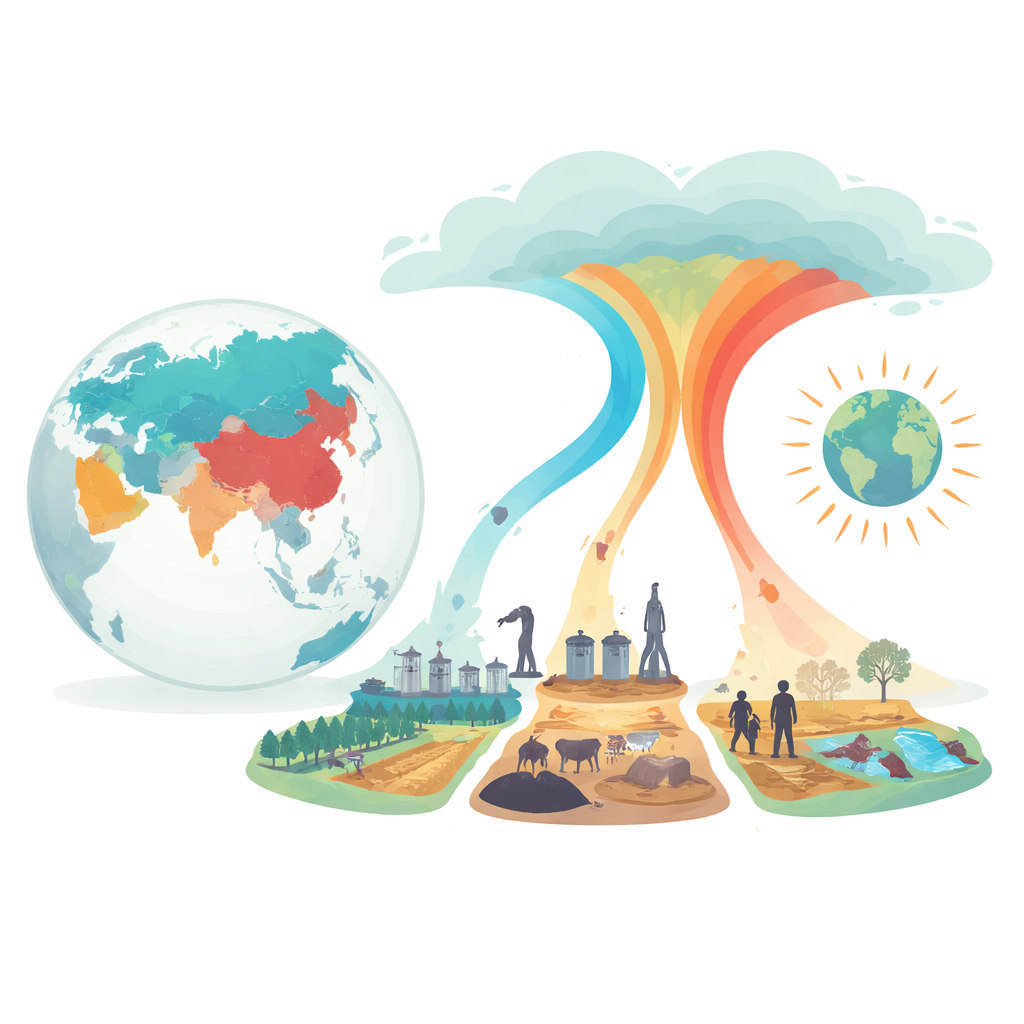
The authors show that methane in these three economies is deeply tied to how they produce energy, food, and jobs. In China and Russia, the energy sector—especially coal mines, oil and gas wells, and pipelines—is the main source of methane. In India, agriculture, particularly livestock and rice cultivation, dominates, with waste sites and coal mining also playing growing roles. Trade links among the three countries reinforce this pattern. Russia sells most of its coal, oil, and gas to China and India, and is likely to lean even more on these markets as Europe tightens climate rules. At the same time, millions of workers in China and India depend on coal, and large rural populations in India rely on livestock and traditional farming. These social and economic realities make abrupt cuts in methane‑heavy activities politically costly.
Forecasting the future of methane
To see where emissions are headed, the researchers used three decades of national methane data and applied two forecasting tools: an econometric method called Autometrics and a machine‑learning technique known as XGBoost. Both methods examine how past emissions trends, including sudden shifts linked to policy or economic shocks, shape likely futures. The authors then averaged the two sets of forecasts and ran thousands of simulations to capture uncertainty, such as gaps in national reporting or future policy changes. This approach does not model every factory, farm, or mine. Instead, it looks at the overall trajectory of emissions in each country and how persistent those patterns are.
What the numbers say about 2030
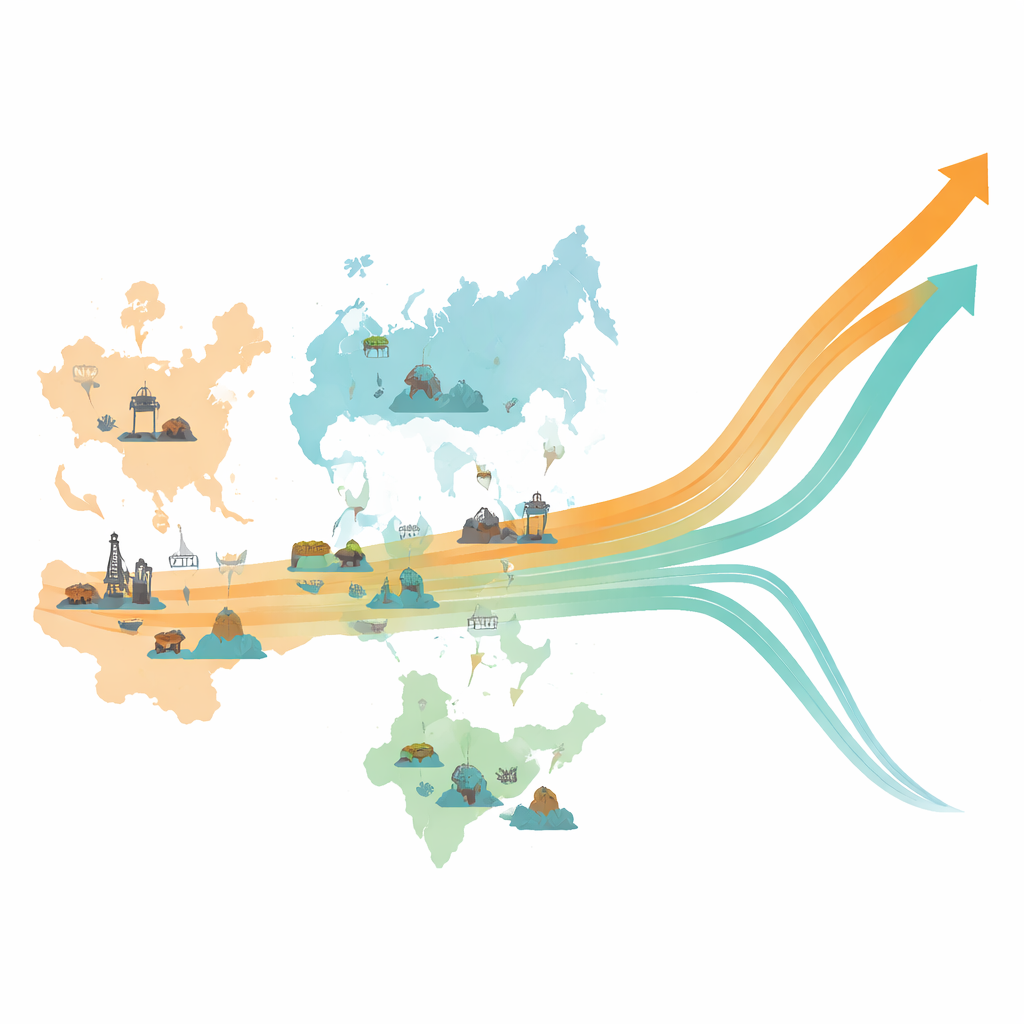
The projections point in a worrying direction. For all three countries, methane emissions are expected to rise rather than fall between now and 2030. Combined emissions from China, India, and Russia are forecast to reach about 2,896 million tons of CO₂‑equivalent in 2030—roughly 7% higher than in 2020. That is the opposite of what climate science says is needed. According to the International Energy Agency, methane from fossil fuel operations alone must drop by about 75% by 2030 if the world is to have a good chance of limiting warming to 1.5 °C. The study’s simulations suggest that, even allowing for data uncertainties, there is only a narrow chance that emissions from these three countries will fall on their own under current policies.
Paths out of the methane trap
Despite the grim forecasts, the paper argues that major progress is both technically and economically within reach. Many leaks from coal, oil, and gas facilities can be plugged with existing equipment at relatively low cost, and captured methane can often be sold as fuel. China’s booming clean‑energy industries, from solar panels to batteries, are already helping to weaken the link between economic growth and carbon dioxide emissions; similar strategies could be applied to methane. India could pair support for rural livelihoods with better waste management and climate‑smart farming to curb emissions without sacrificing development. Russia, heavily dependent on fossil‑fuel exports, would need substantial investment and external pressure—such as border carbon measures—to shift course.
What this means for global climate action
The authors conclude that, on current paths, the world is unlikely to meet its methane goals, and the Global Methane Pledge risks becoming more promise than practice. Because methane’s effects are so strong in the short term, missing the 2030 window could lock in extra warming for decades. The study calls for a new phase of "methane diplomacy" focused on three fronts: targeting the energy sector as the cheapest place to cut emissions, expanding climate finance and technology transfer so that poorer countries can afford these measures, and using trade rules to nudge reluctant major emitters toward action. In plain terms, if the world wants a realistic shot at keeping extreme warming in check, convincing China, India, and Russia to curb methane quickly is not optional—it is essential.
Citation: Gurbanov, S., Mikayilov, J.I. & Talmachou, A. The economics of elusive methane diplomacy: forecasting 2030 emissions in China, India, and Russia. Humanit Soc Sci Commun 13, 543 (2026). https://doi.org/10.1057/s41599-026-06920-x
Keywords: methane emissions, climate diplomacy, China India Russia, energy transition, Global Methane Pledge