Clear Sky Science · en
Barriers to sustained adoption of integrated soil fertility management practices: evidence from smallholder farmers in northern Ghana
Why soil care matters for everyday life
Food on the table starts with healthy soil. In northern Ghana, many small-scale farmers struggle with worn-out fields that produce less and less each year. To fight this decline, experts promote a package of practices known as integrated soil fertility management, which combines better seeds, fertilizers, and cropping methods to restore the ground while boosting harvests. But while many farmers try these techniques once, far fewer stick with them over the long haul. This article digs into why that happens, and what kinds of support help farmers keep using soil-friendly methods year after year.
Farming on tired land
Much of the world’s farmland is losing fertility, and Africa carries a large share of the damage. Northern Ghana is a clear example: soils there are eroding and nutrients are running low, pushing some farmers to move in search of better land. Integrated soil fertility management offers a more hopeful path. It encourages a mix of improved maize seeds, careful use of chemical fertilizer, adding organic materials like manure, and planting maize together with legumes rather than burning crop residues. Studies have shown these combinations can raise maize yields substantially. Yet in practice, many farmers either never adopt the full set of practices or abandon them after a few seasons, leaving the promise of healthier soils only partly fulfilled.
Looking beyond first-time adoption
Most previous research has asked what makes farmers try these practices in the first place. This study instead asks what keeps them going. The authors surveyed 412 randomly selected maize-farming households across 15 communities in northern Ghana in early 2023. They defined “sustained adoption” as using at least one of four key practices—improved seeds, chemical fertilizer, organic fertilizer, or intercropping or relay cropping with legumes—continuously for more than two years. Because the survey was done once rather than tracked over time, farmers were asked to recall which practices they had used in past seasons and whether they had stopped or continued them. The researchers then linked these patterns to different types of constraints, such as access to credit, insurance, information, markets, labor, and secure land.
Everyday hurdles on the farm
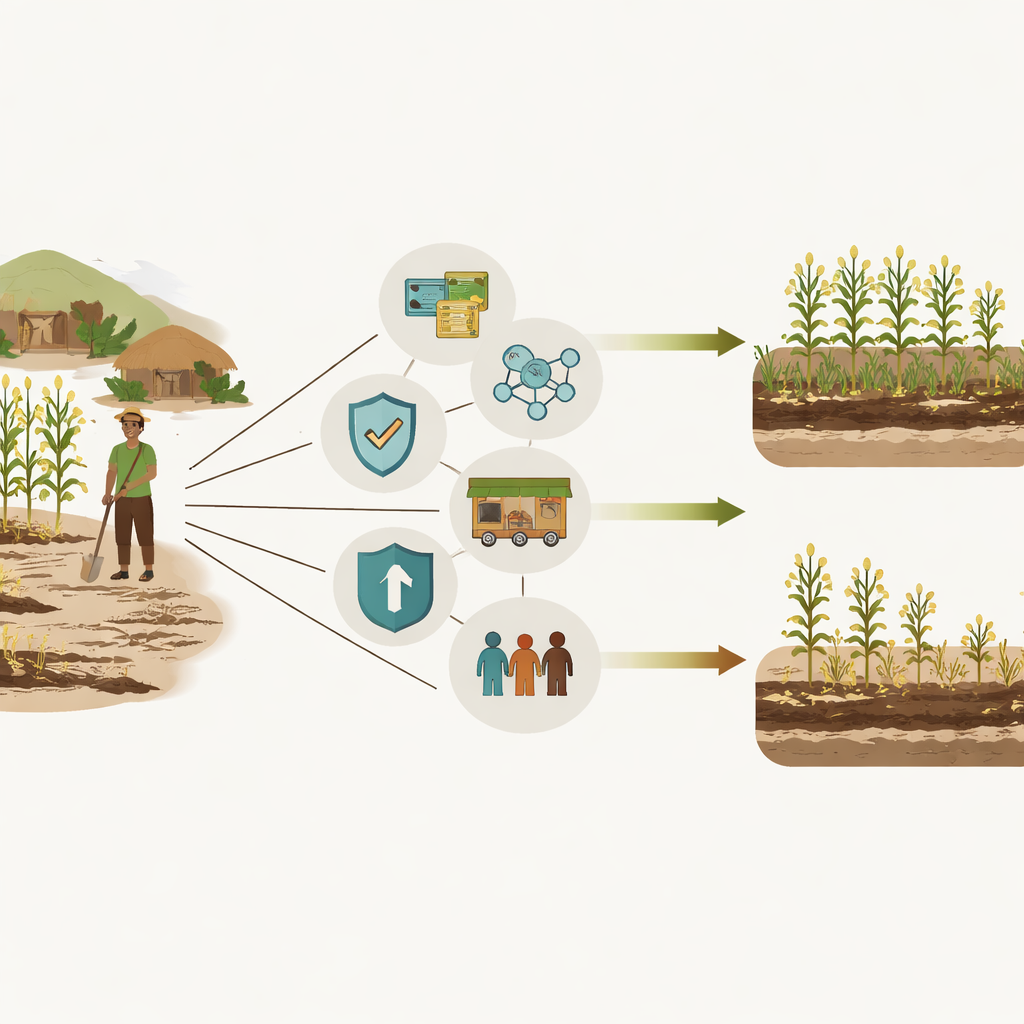
To understand these hurdles, the team translated broad economic ideas into concrete farm-level indicators. Credit and liquidity were captured by whether households had access to a loan of at least 100 Ghanaian cedis and how much they had in savings. Risk management was reflected in whether farmers had even heard of agricultural insurance—a rare occurrence, reported by only about 1% of respondents. Information access was measured by whether farmers received advice from neighbors or from formal extension workers. Market barriers were described by how long it took to reach the nearest input and output markets, while labor and land conditions were captured by the number of working-age household members on the farm and farmers’ expectations of how long they could keep using their land. These variables were then related to both the decision to keep using each practice and the quantities of seed and fertilizer applied.
What farmers keep and what they drop
The results reveal a mixed picture. Chemical fertilizer was the most widely used and most often retained: more than half of households had tried it, and roughly two-thirds of those continued using it for more than two years. Intercropping maize with legumes was also popular to try, but many farmers later dropped it. Organic fertilizer had high dropout rates, especially among male-headed households, suggesting that the labor and effort required to gather and apply organic matter can be hard to sustain. Interestingly, female-headed households, though fewer in number, were more likely than male-headed ones to keep using practices once adopted, particularly improved seeds and intercropping. Across the board, households with more working members and better access to extension advice used higher amounts of improved seeds and chemical fertilizer, highlighting the importance of both labor and know-how for deepening adoption rather than just trying practices once.
Money, insurance, and distance
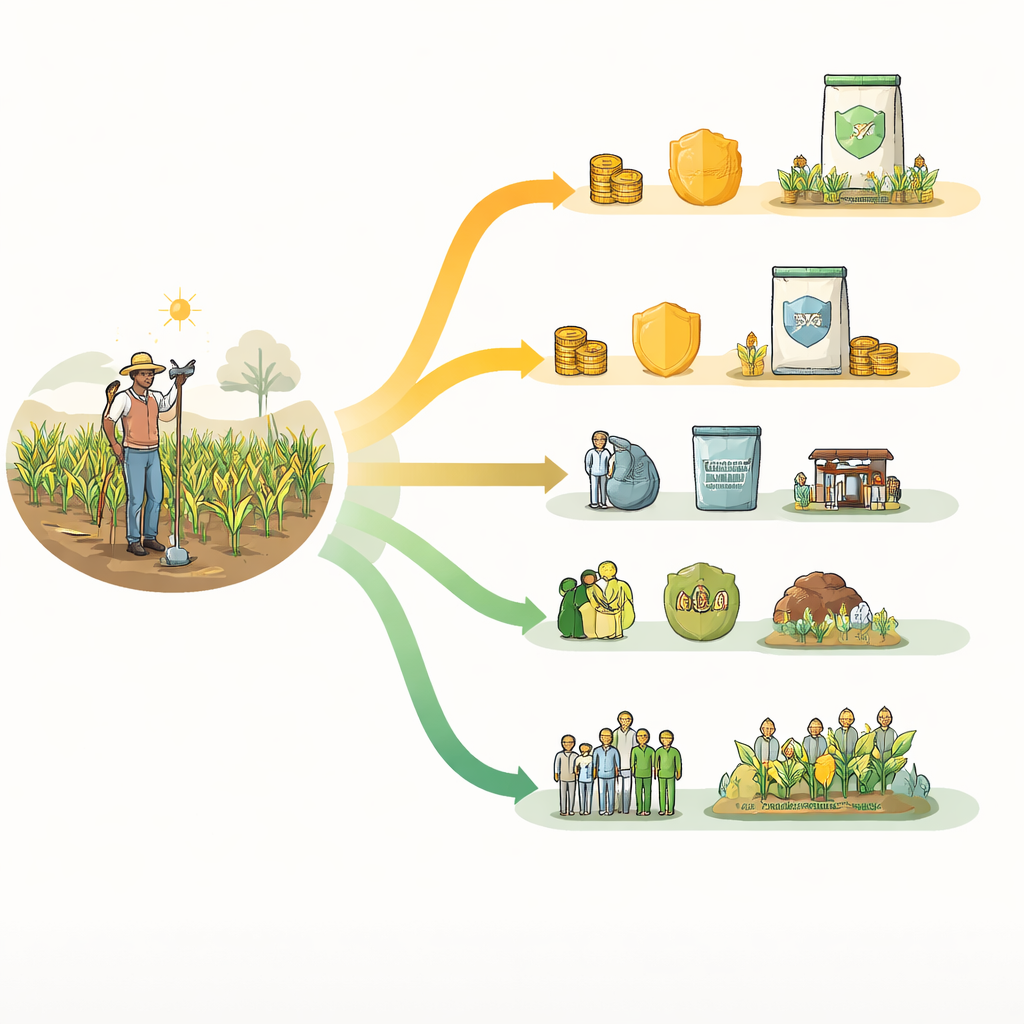
Financial tools and market access showed more complicated effects. Awareness of agricultural insurance was strongly linked to sticking with intercropping or relay cropping, and to adopting a larger number of soil-improving practices overall. At the same time, insurance awareness was associated with lower sustained use of improved seeds and organic fertilizer, hinting that existing insurance products may not match the way farmers use these inputs or the risks they worry about. Access to loans nudged farmers toward continued use of chemical fertilizer, but it was negatively tied to using organic fertilizer, suggesting that easier finance may encourage a shift toward purchased chemical inputs and away from labor-intensive organic ones. Long travel times to input markets clearly discouraged sustained fertilizer use, while distance to output markets and weak land security also held back some practices. These patterns underline how roads, markets, and well-designed insurance and credit can either reinforce or undermine soil-friendly choices.
What this means for food and soil
For a non-specialist, the key message is that improving soil health is not just about telling farmers which practices work in theory. It is about shaping the environment in which they farm. When farmers have reliable information, access to advice, enough household labor, and markets within reach, they are more likely to keep using practices that build soil fertility. Insurance and credit can help, but only if they are designed to support a balanced mix of chemical and organic inputs instead of pushing farmers toward quick fixes. The study argues for integrated policies that combine better infrastructure, tailored insurance products, and financial support that does not sideline organic methods. Such an approach could make it easier for smallholder farmers in northern Ghana—and in similar regions elsewhere—to care for their soils, secure more stable harvests, and withstand a changing climate over the long term.
Citation: Lee, G., Awuni, J., Koide, J. et al. Barriers to sustained adoption of integrated soil fertility management practices: evidence from smallholder farmers in northern Ghana. Humanit Soc Sci Commun 13, 433 (2026). https://doi.org/10.1057/s41599-026-06776-1
Keywords: soil fertility, smallholder farmers, Ghana agriculture, sustainable farming, crop insurance