Clear Sky Science · en
Latent profiles of parents’ family-of-origin invalidation experiences: associations with emotion coping and children’s prosocial behavior
Why Early Family Memories Still Matter
Many parents wonder whether the way they were raised really shapes how their own children turn out. This study follows that question into the heart of family life, showing how parents’ childhood experiences of being listened to—or ignored—are linked to how kindly their preschoolers act toward others. By tracking hundreds of families over time, the researchers reveal quiet but powerful pathways through which old emotional wounds can echo across generations, and how warm, supportive responses to a child’s feelings can interrupt that echo.
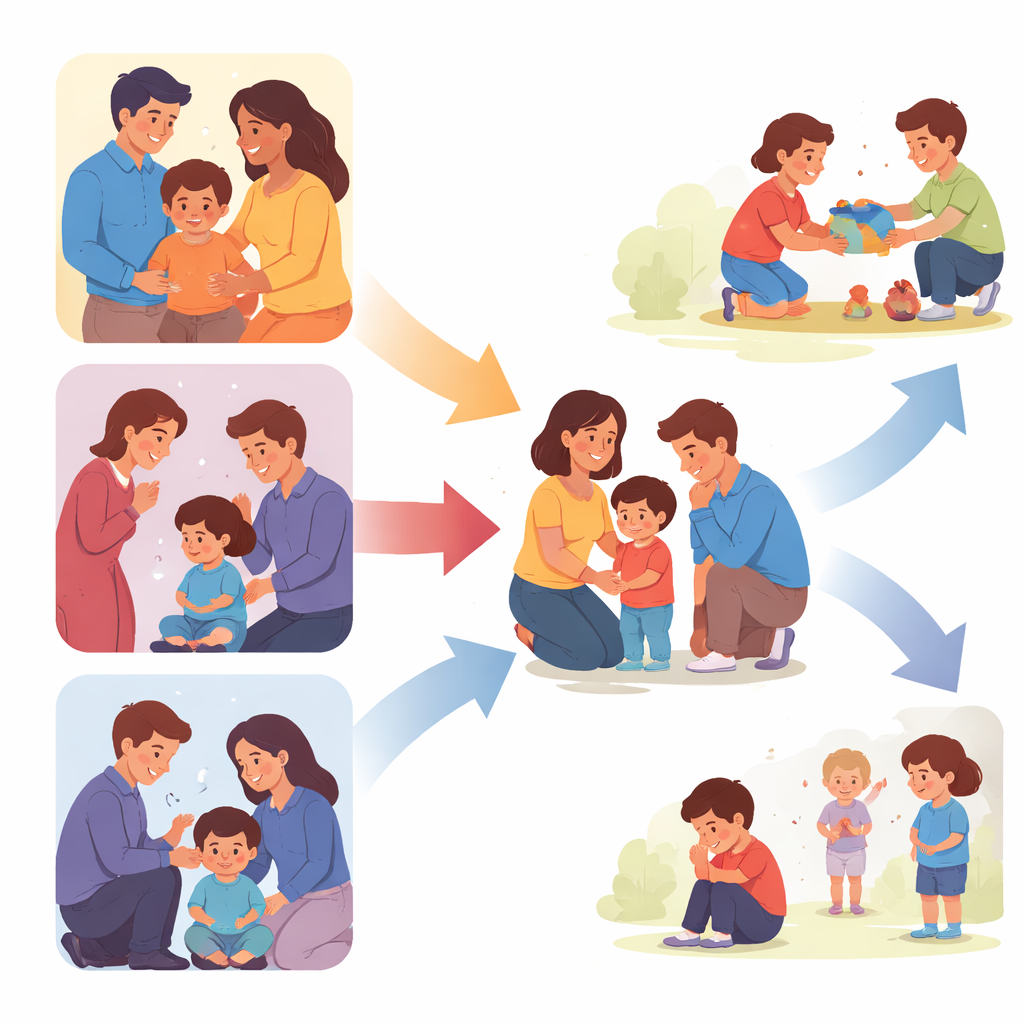
Growing Up Kind: Why Helping and Sharing Count
Prosocial behavior—everyday acts like sharing toys, comforting a friend, or cooperating in a game—is a key building block of children’s social and emotional health. Children who frequently help and cooperate tend to get along better with peers and teachers and are less likely to struggle with aggression, isolation, or sadness later on. Because family life is where children first learn what emotions mean and how to respond to them, this study focused on how parents’ own histories at home might shape their children’s willingness to care for others.
Different Childhoods, Different Kinds of Parents
The researchers surveyed 837 mother–father pairs in Shanghai, China, all raising children between about 2½ and 7 years old. Parents reported on how invalidated they felt in their families growing up—that is, how often their feelings were dismissed, ignored, controlled, or overshadowed by constant criticism and pressure for achievement. Using a statistical technique that clusters people with similar patterns, the team found three main profiles. In the “effective” profile, both parents recalled relatively supportive childhood homes. In the “father-invalidating” profile, fathers remembered invalidating families while mothers reported more positive ones. In the “both-invalidating” profile, both parents grew up in families that frequently dismissed their emotions.
How Parents Handle Big Feelings at Home
Next, the study asked how these background patterns relate to the ways parents respond when their child is upset, scared, or angry. Supportive responses include comforting the child, helping them name and manage feelings, and working together to solve the problem. Non-supportive responses involve punishment, scolding, minimizing the child’s distress, or becoming overwhelmed oneself. Parents who had grown up with high invalidation—especially in the both-invalidating group—tended to report fewer supportive and more non-supportive reactions to their children’s negative emotions. Six months later, mothers rated their children’s prosocial behavior, such as how often they volunteered to help or showed kindness toward others.
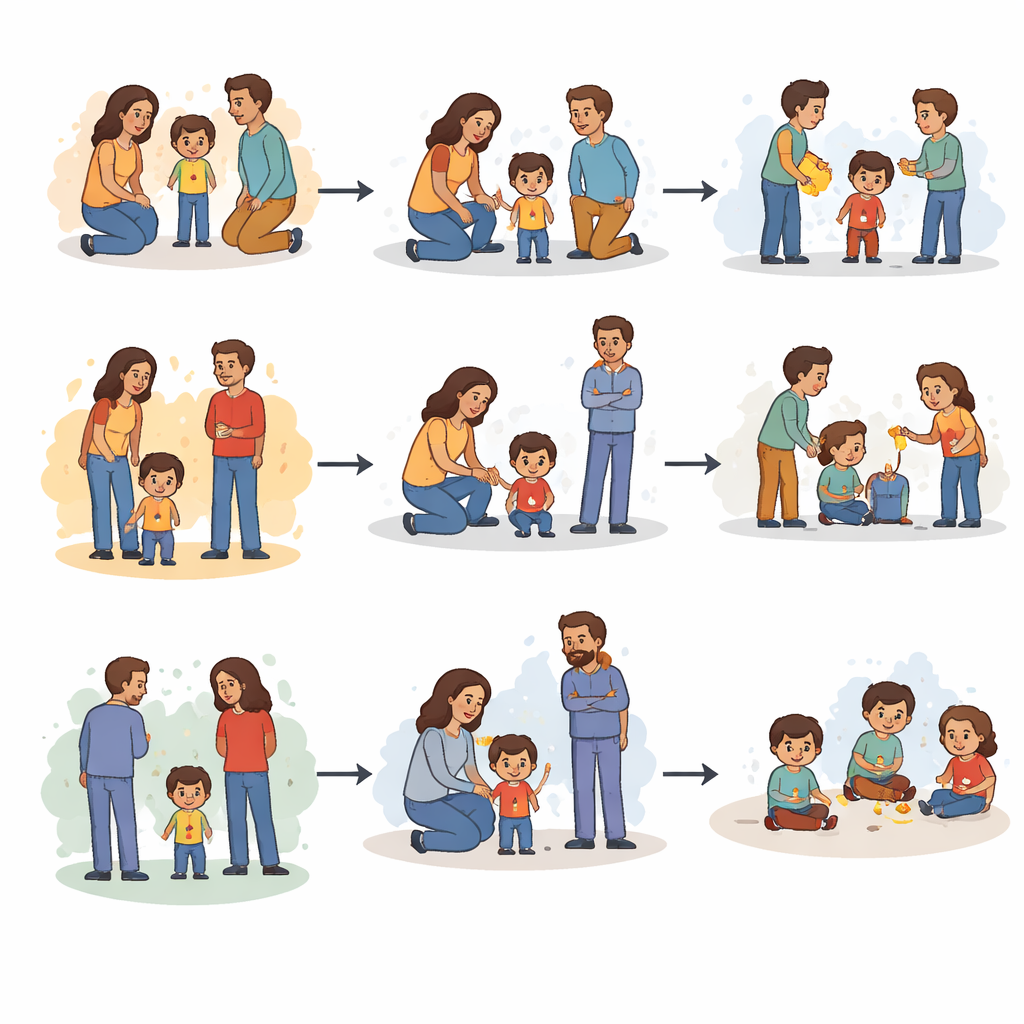
When Old Wounds Meet New Emotions
The results showed that not all difficult childhoods have the same impact on the next generation. When only fathers had invalidating early experiences, children’s kindness levels were not reliably lower than in families where both parents came from supportive homes. Mothers’ responses in these families appeared to play a buffering role: when mothers coped with children’s negative emotions in warm, constructive ways, children still showed healthy prosocial behavior, even if fathers struggled more. In contrast, when both parents had grown up feeling invalidated, their children were less likely to show helpful and generous behavior, particularly when both parents reacted to children’s distress with little support and more dismissal or harshness. Mothers’ non-supportive reactions were especially important in explaining these links.
Breaking the Cycle and Building Kinder Futures
To a lay reader, the takeaway is straightforward but hopeful: how parents were treated as children can influence how they handle their own child’s tears and tantrums, which in turn shapes how kind and caring that child becomes. Yet the study also shows that this is not destiny. Even parents who carry painful memories from their own families can foster prosocial behavior if they learn to respond to their children’s hard feelings with patience, empathy, and practical help. Supporting parents—especially mothers, who often shoulder more day-to-day caregiving—to develop these skills may be a powerful way to nurture the next generation’s capacity for kindness.
Citation: Wang, Y., Fang, H., Pan, B. et al. Latent profiles of parents’ family-of-origin invalidation experiences: associations with emotion coping and children’s prosocial behavior. Humanit Soc Sci Commun 13, 427 (2026). https://doi.org/10.1057/s41599-026-06745-8
Keywords: prosocial behavior, parenting, emotion socialization, adverse childhood experiences, intergenerational transmission