Clear Sky Science · en
Resource grabbing or win-win? Evidence from the South-to-North Water Diversion project
Why Moving Water Across a Country Matters
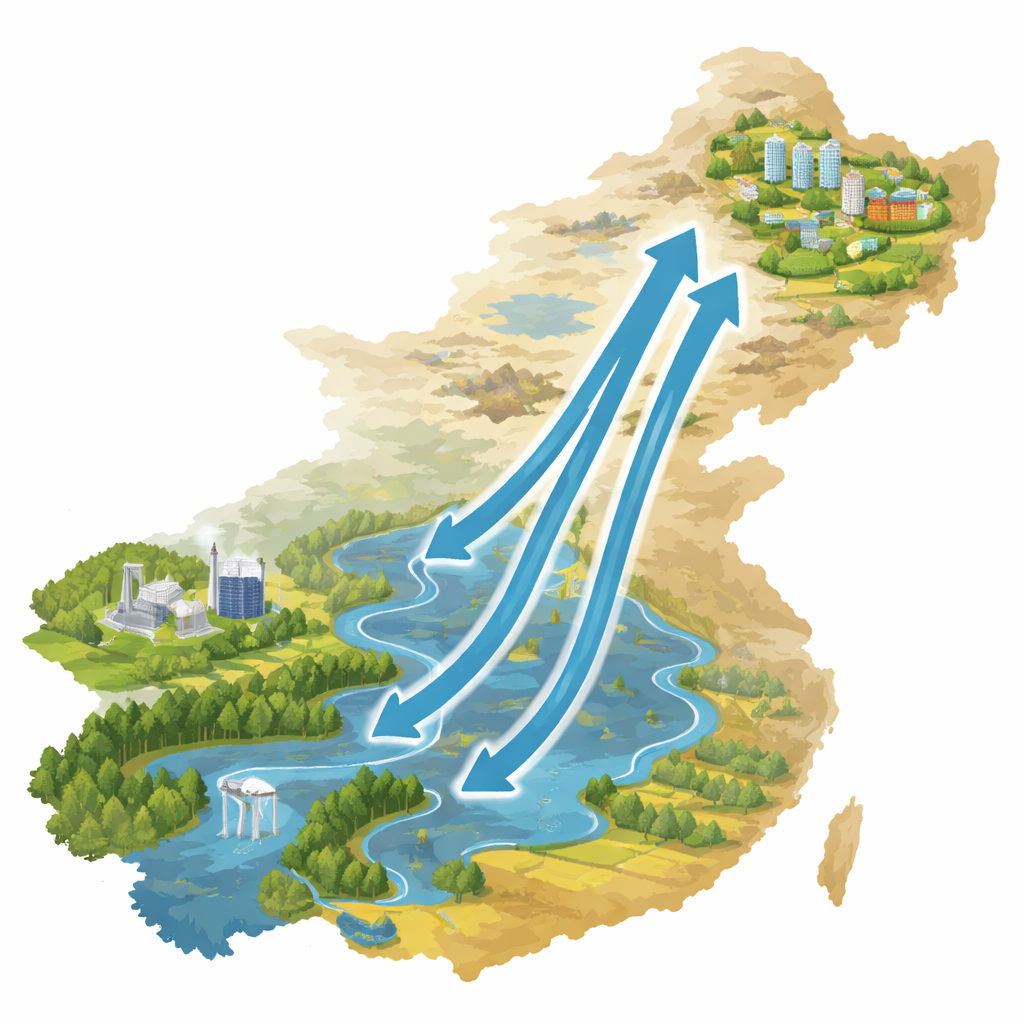
China is home to both water-rich rivers in the south and growing cities and farms in the drier north. To bridge this gap, the country built the South-to-North Water Diversion project, one of the largest water transfer schemes in the world. This study asks a simple but important question: does sending huge amounts of water north simply drain the south, or can it create shared benefits for both regions? By looking at how cities along the project have grown, changed socially, and managed their environment, the authors explore whether this mega-project is a “resource grab” or a true win-win.
A Giant Canal and the Regions It Connects
The project channels water from the Yangtze River basin in southern China to thirsty northern plains and city clusters such as Beijing and Tianjin. It is designed to serve hundreds of millions of people and move tens of billions of cubic meters of water each year through thousands of kilometers of canals. Instead of judging success only by economic output or water savings, the authors use a broader measure called regional coordinated development capacity. This index combines indicators of income, public services, and environmental quality to show how well a city balances growth, social well-being, and ecological health under resource limits.
Checking Who Gains and How
To find the project’s impact, the researchers track 52 cities from 2010 to 2021, including both water-receiving areas in the north and water-source areas in the south. They compare changes in the coordinated development index before and after water starts to flow, and contrast these cities with others not involved in the project. This “natural experiment” approach helps separate the effect of the diversion from general trends in China’s economy. They also test different versions of the index, shift dates, and run placebo experiments with randomly chosen “fake” project cities to make sure the patterns they see are not just statistical noise.
Benefits for Thirsty Northern Cities
For northern cities that receive transferred water, the study finds a clear overall improvement in their ability to grow in a balanced way. The strongest and fastest gains show up in the economic dimension: with more reliable water, farms, factories, and service industries can expand, and new activities such as tourism become viable. The project also supports longer water pipelines and greater supplies for households and public services, easing long-standing shortages. This relief of “water constraints” turns out to be the main pathway through which the project boosts development in receiving regions. Social and environmental improvements are present but slower and less pronounced within the period studied, suggesting that well-being and ecosystems take longer to respond than income and output.
Pressures and Upgrading in the Water-Source Regions
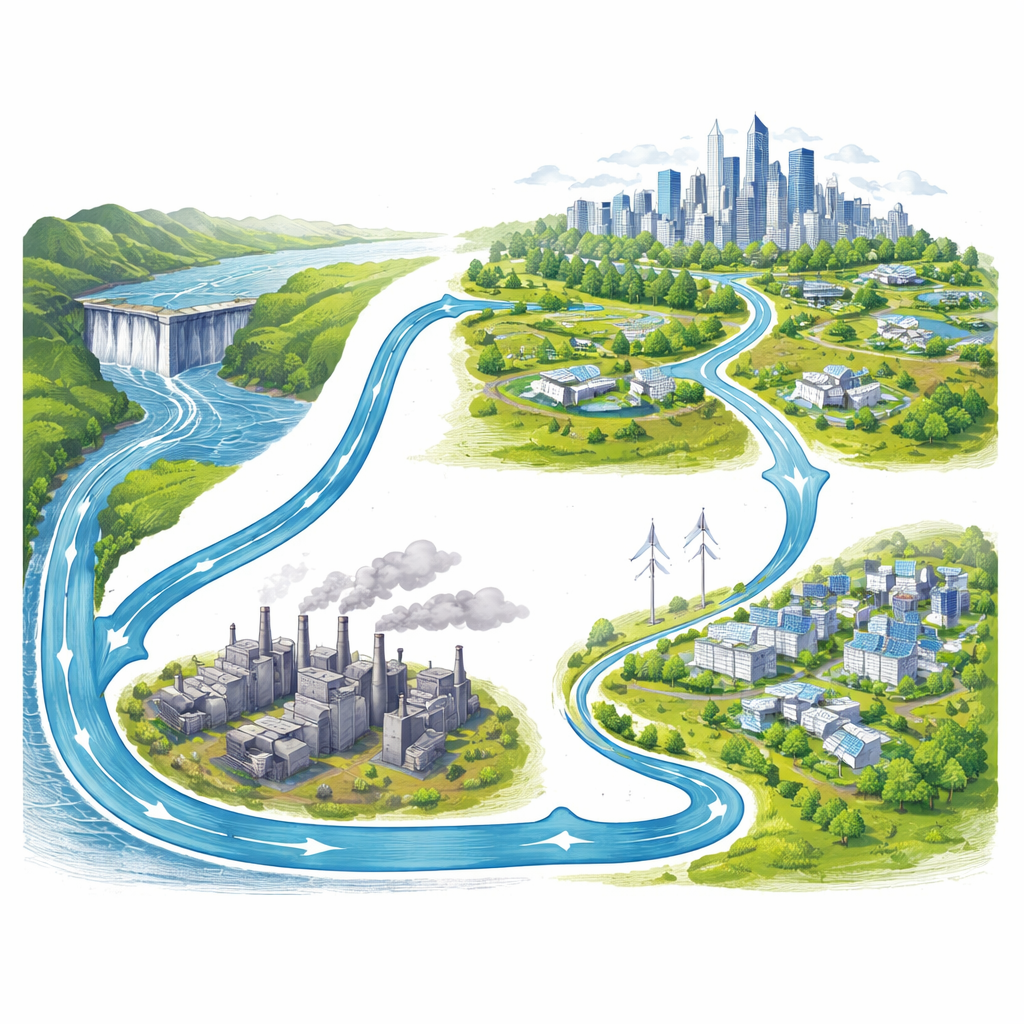
For southern areas that send water north, the picture is more complex. On the one hand, they lose part of their local water and face stricter pollution rules to protect the quality of the transferred supply. These pressures can hurt agriculture, hydropower, and other water-intensive activities, and they bring social costs such as land flooding and resettlement. On the other hand, the same pressures push local governments and firms to shift away from heavy, dirty industries toward cleaner, higher-value sectors. Over time, the study finds that these regions also see an overall rise in coordinated development, driven mainly by an improvement in the quality of their industrial structure rather than by simple growth in any one sector.
What This Means for Big Water Projects
Putting these pieces together, the authors conclude that the South-to-North Water Diversion project has raised the balanced development capacity of both sending and receiving regions, primarily by easing water scarcity in the north and nudging the south toward greener, more efficient industries. It does not appear to be a one-sided extraction of resources, but neither are the benefits automatic or instant. Economic gains show up sooner than social and environmental ones, and the two sides of the project depend on different adjustment paths. For planners in China and elsewhere, the study suggests that large water transfers can support shared progress if they are paired with policies that protect source regions, guide industry upgrading, and turn added water into real gains in public services and environmental quality.
Citation: Li, Y., Wang, Y. & Hou, R. Resource grabbing or win-win? Evidence from the South-to-North Water Diversion project. Humanit Soc Sci Commun 13, 360 (2026). https://doi.org/10.1057/s41599-026-06701-6
Keywords: water diversion, regional development, China, water scarcity, infrastructure policy