Clear Sky Science · en
Global lake anoxia is projected to intensify under climate change
Why fading lake oxygen matters to all of us
Lakes supply drinking water, food, recreation, and wildlife habitat, yet the deep waters that support many of these benefits are quietly losing oxygen. This study explores how climate change may speed up oxygen loss in lakes around the world over the rest of this century, making it harder for fish and other creatures to survive and complicating efforts to keep water clean and safe.
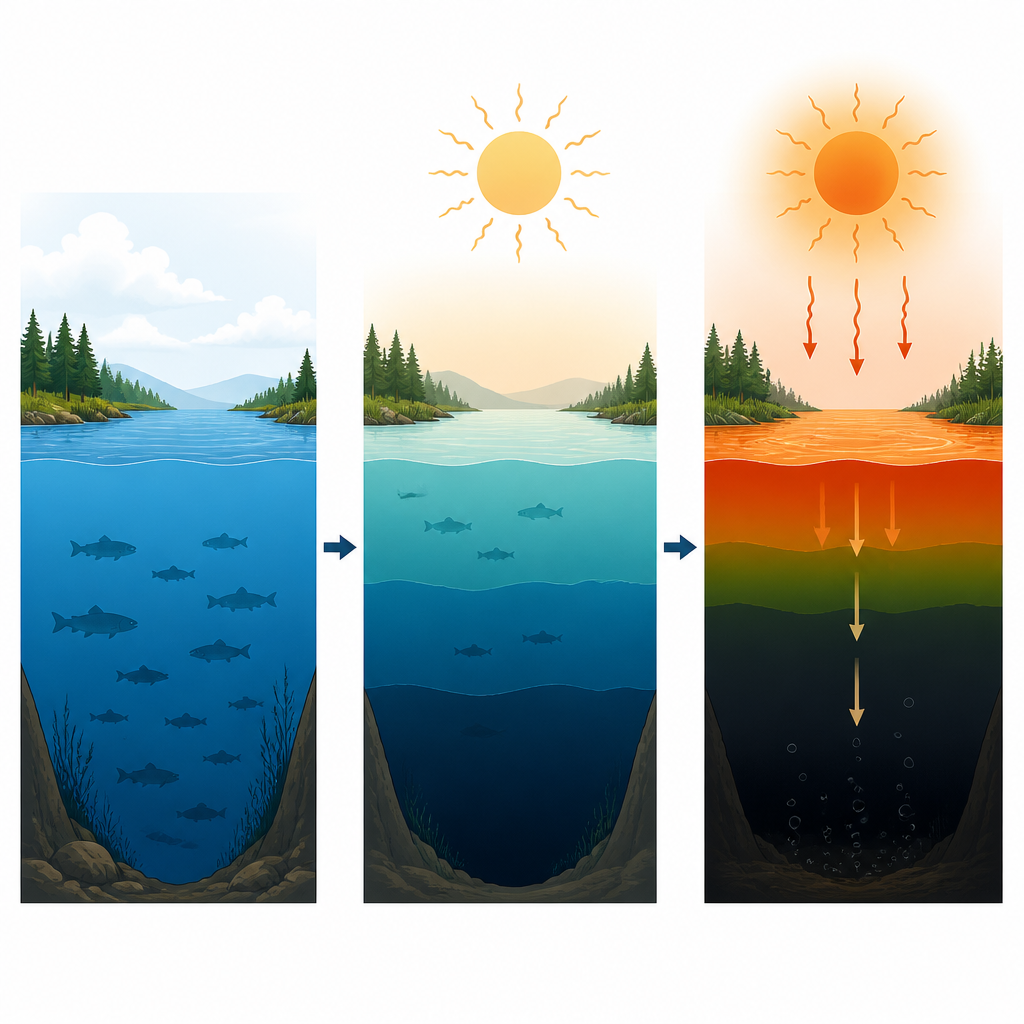
How warmer climates change quiet lake depths
As air temperatures rise, lakes tend to form stronger and longer lasting layers, with warm water on top and cooler water below. Once these layers set in for the summer, the deep water is cut off from direct contact with the air. At the same time, plants and algae in the sunlit surface grow more vigorously in warmer conditions, and when they die and sink, bacteria break them down using up oxygen in the dark depths. Because warmer water holds less dissolved oxygen to begin with, climate warming both lowers the starting oxygen level and lengthens the time over which it is consumed.
A global look at 73 very different lakes
The authors combined three detailed lake models with future climate projections from five global climate models to study 73 lakes scattered across the planet. These lakes range from shallow, nutrient rich waters to deep, clear mountain lakes in climates from the tropics to the poles. For each lake, the team simulated how water temperature and seasonal layering would change from 2015 to 2099 under several greenhouse gas pathways, from a low warming future to an extreme high warming case. They then used a simple oxygen depletion model, tuned with real world measurements, to estimate how fast deep water oxygen would be used up and how long it would take to reach dangerously low or zero oxygen levels.
More frequent and longer deep water dead zones
Across nearly all lakes and scenarios, deep waters warmed, initial oxygen levels declined, and the period of summer layering grew longer. Under the high warming pathway, deep water temperatures rose fastest in nutrient rich lakes, and the rate at which oxygen was consumed increased most sharply in those systems. The time between the start of layering and the onset of zero oxygen conditions shrank by about a month in the worst case, while the share of the summer spent without oxygen climbed, especially in productive lakes. By the end of the century, most nutrient rich lakes were projected to spend the majority of their stratified season without oxygen in their depths, and many clearer lakes once thought to be resilient also drifted toward harmful low oxygen conditions.
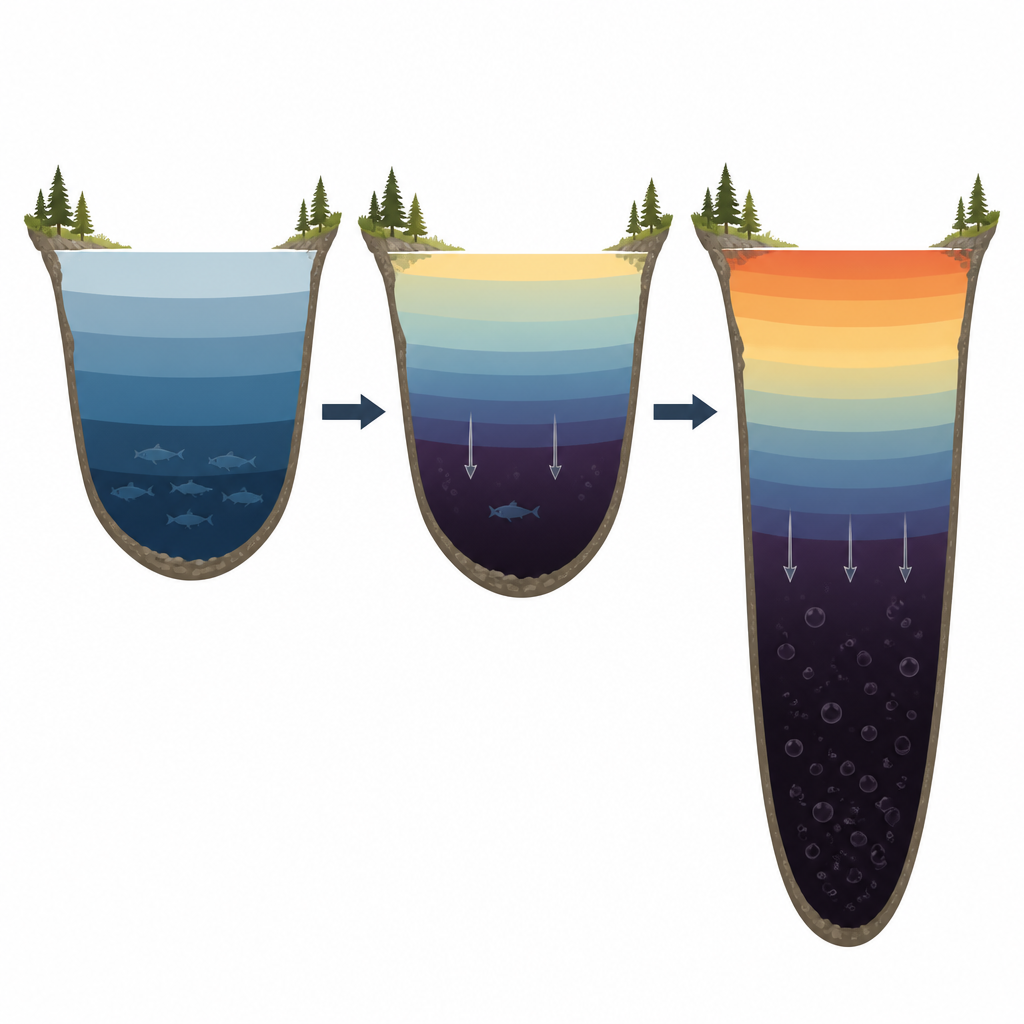
Hidden risks even for seemingly healthy lakes
The results show that low nutrient, clear lakes are not automatically safe. In some cooler, deep lakes, high starting oxygen and shorter summers kept deep waters livable. But in others, especially where climates are already warm, rising deep water temperatures sped up oxygen loss despite modest nutrient levels. The study also finds large differences among lakes with similar nutrient status, due to contrasts in depth, shape, regional climate, and how strongly they stratify. Smaller or shallower lakes, and those in warmer regions, are particularly vulnerable because they store less oxygen and warm more rapidly at depth.
What this means for water, fish, and management
More intense and persistent oxygen loss in lake bottoms has many knock on effects. It can squeeze habitat for cold loving fish, release nutrients and metals from sediments back into the water, fuel more algae growth, and increase greenhouse gas emissions from lakes. The authors conclude that even if engineered fixes like deep water aeration can help some high value lakes, the most practical widespread defense is reducing nutrient pollution from farms, cities, and wastewater. Cutting nutrient loads can hold lakes in lower productivity states, slowing oxygen depletion in a warming world and helping safeguard drinking water and aquatic life even as climate change continues.
Citation: Nkwalale, L.G.T., Rinke, K., Feldbauer, J. et al. Global lake anoxia is projected to intensify under climate change. Commun. Sustain. 1, 86 (2026). https://doi.org/10.1038/s44458-026-00093-z
Keywords: lake oxygen, climate change, water quality, eutrophication, aquatic ecosystems