Clear Sky Science · en
Characterization of classical swine fever virus responsible for 2018-2023 outbreaks in Brazil
Why a Pig Disease in Brazil Matters to Everyone
Classical swine fever is a viral disease of pigs that can wipe out herds and shut down international trade in pork. Brazil is one of the world’s largest pork exporters, and while most of the country is officially free of this disease, a large northern region is not. This study looks closely at the virus behind recent outbreaks in that high‑risk area, asking two key questions: how is the virus changing over time, and how sick does it actually make pigs? The answers shape how Brazil – and by extension the global food system – can best prevent future crises.
Where the Problem Is
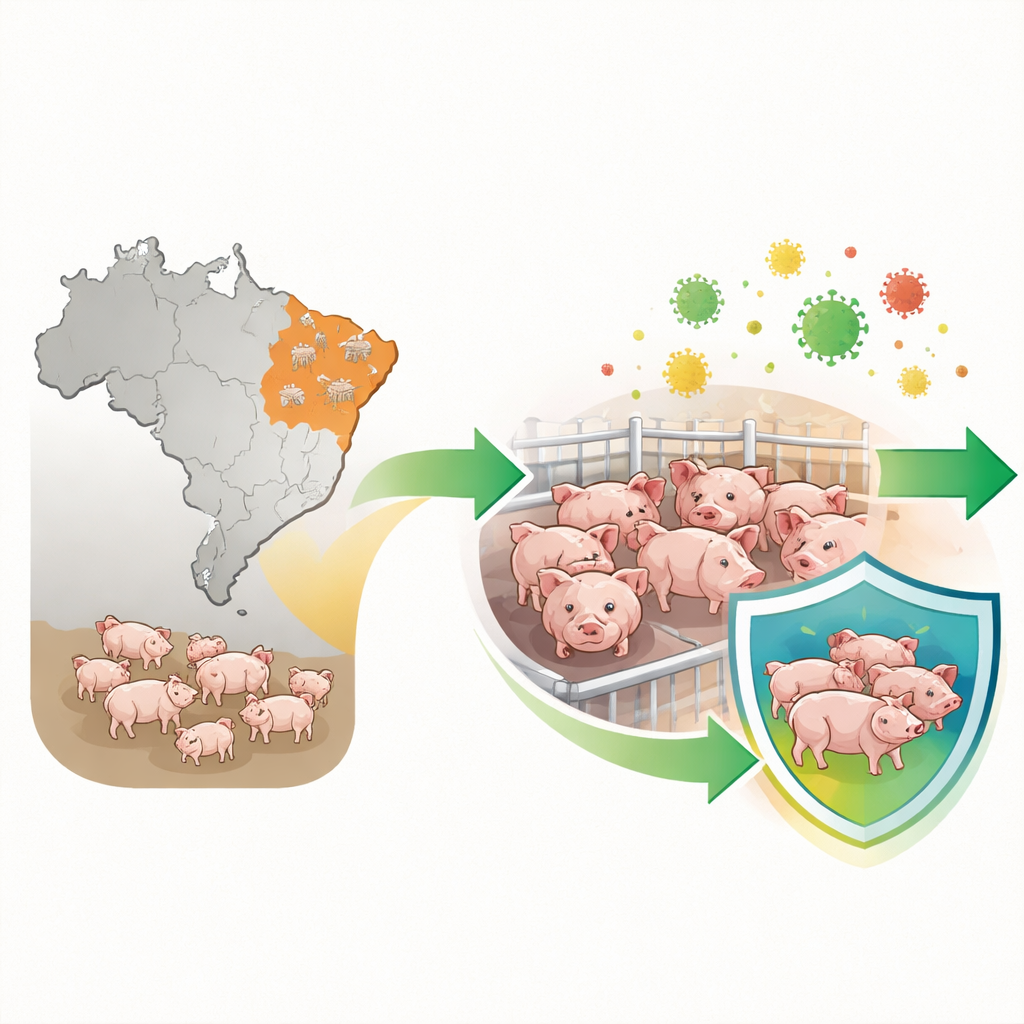
Brazil divides its territory into a swine fever–free zone and a non‑free zone. The non‑free zone covers much of the north and northeast, including the states of Ceará and Piauí. It has relatively little industrial pig farming but millions of animals kept on small family farms, often with limited resources and low biosecurity. This mix of many animals, informal movement of pigs and pork, and weaker veterinary services creates ideal conditions for the virus to persist and spread, even while most of Brazil maintains its prized disease‑free status for export markets.
Tracking the Virus Family Tree
The researchers analyzed virus samples from outbreaks that took place between 2018 and 2023 in Ceará and Piauí. Using whole‑genome and E2 gene sequencing, they compared these viruses to earlier strains from Brazil and other countries. All recent samples fell into a group known as sub‑genotype 1.5, which had already caused outbreaks in northeastern Brazil in the early 2000s. However, the new sequences formed their own branch within that group, showing that the virus has continued to evolve locally rather than being repeatedly reintroduced from abroad. The viruses from different farms and years were remarkably similar to each other, suggesting a single, slowly changing lineage has been circulating in the region.
What Happens When Pigs Get Infected
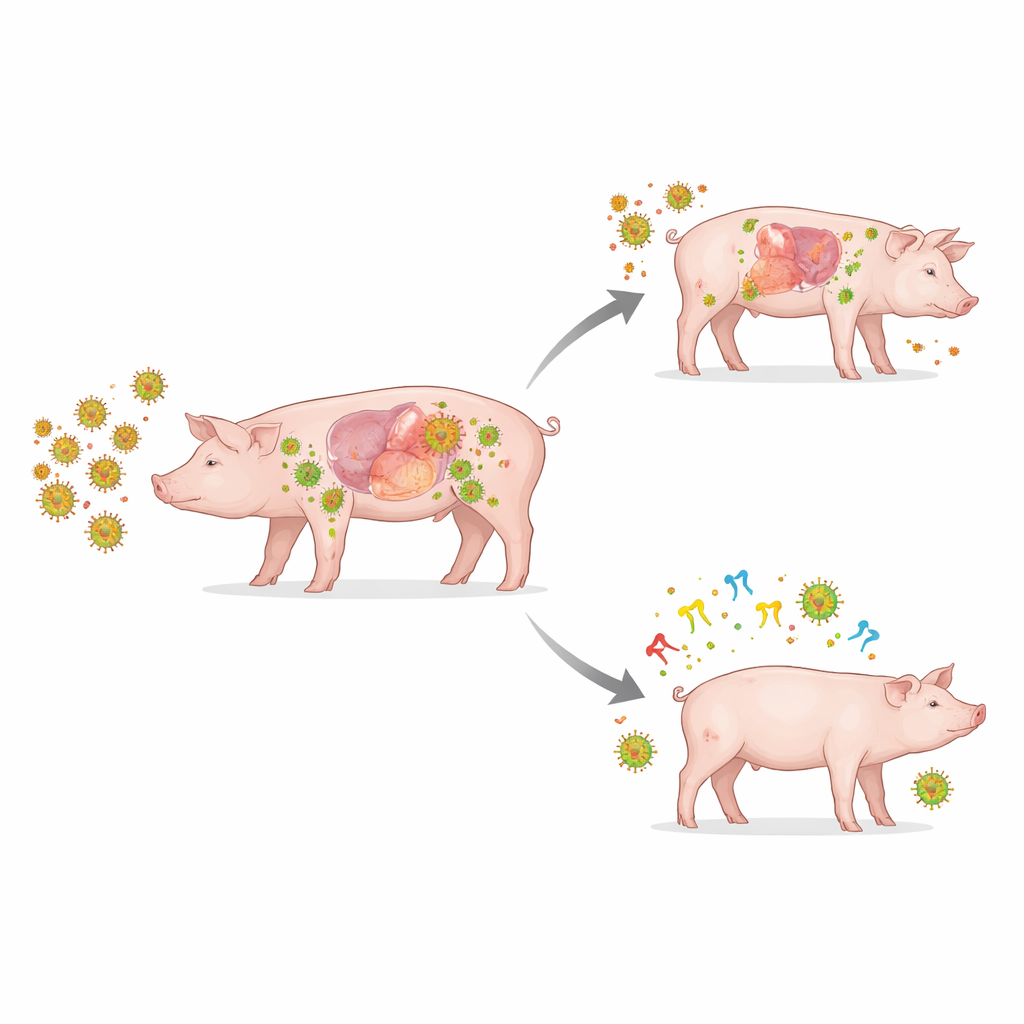
To understand how dangerous this strain is in practice, the team infected six young pigs in a high‑containment facility with one representative virus, named Brazil 2019‑0571. All animals became infected, developed fever, and shed virus in their blood, saliva, nasal secretions, and feces. The virus was also found widely in lymph nodes, bone marrow, and other organs. Yet most pigs showed only mild signs such as brief eye swelling, mild diarrhea, or small skin spots. Two pigs developed serious bleeding problems late in the study and had to be put down, but the other four stayed active, continued eating well, and survived to the end of the 34‑day observation period.
How the Pig’s Defenses Respond
Blood tests revealed that white blood cells and platelets dropped in all pigs after infection, which fits with the virus targeting the immune system and blood‑forming tissues. In the two pigs that died and in a third with persistent fever, platelets fell to very low levels and virus remained abundant in many tissues. These animals failed to mount a strong antibody response. In contrast, the three pigs that recovered produced solid levels of virus‑blocking antibodies and gradually cleared much of the virus from their blood and organs. Under the microscope, their lymphoid tissues looked almost normal, whereas the sicker pigs had more obvious but still relatively mild damage compared with what is seen in classic, highly aggressive strains.
What This Means for Control Efforts
Putting all the evidence together – mild to moderate illness in most animals, only partial blood changes, limited tissue damage, and survival of two‑thirds of infected pigs – the authors conclude that the current Brazilian sub‑genotype 1.5 virus is of low virulence. That does not make it harmless. Because it produces subtle signs while still spreading efficiently, it can circulate unnoticed in backyard herds and threaten the country’s disease‑free export zone. The work underscores that Brazil’s strategy cannot rely on spotting obviously sick pigs alone. Instead, long‑term success will require a layered approach that combines careful clinical observation with routine blood testing and virus detection across both the non‑free and free zones to catch this quiet but persistent infection.
Citation: Robert, E., Goonewardene, K., Hochman, O. et al. Characterization of classical swine fever virus responsible for 2018-2023 outbreaks in Brazil. npj Vet. Sci. 1, 4 (2026). https://doi.org/10.1038/s44433-026-00005-w
Keywords: classical swine fever, Brazil pig farms, low virulence virus, animal disease surveillance, pork trade