Clear Sky Science · en
Machine learning models for dementia risk prediction: evidence from the Sydney Memory and Ageing Study
Why this matters for healthy aging
Dementia is one of the most feared conditions of later life, yet many people only receive a diagnosis when memory and thinking problems are already advanced. This study asks a hopeful question: using information that clinics already collect—such as age, simple thinking tests, blood sugar, and heart health—can we flag who is more likely to develop dementia up to a decade in advance? If so, doctors could focus monitoring and preventive efforts on those who need them most.
A closer look at a long-running aging study
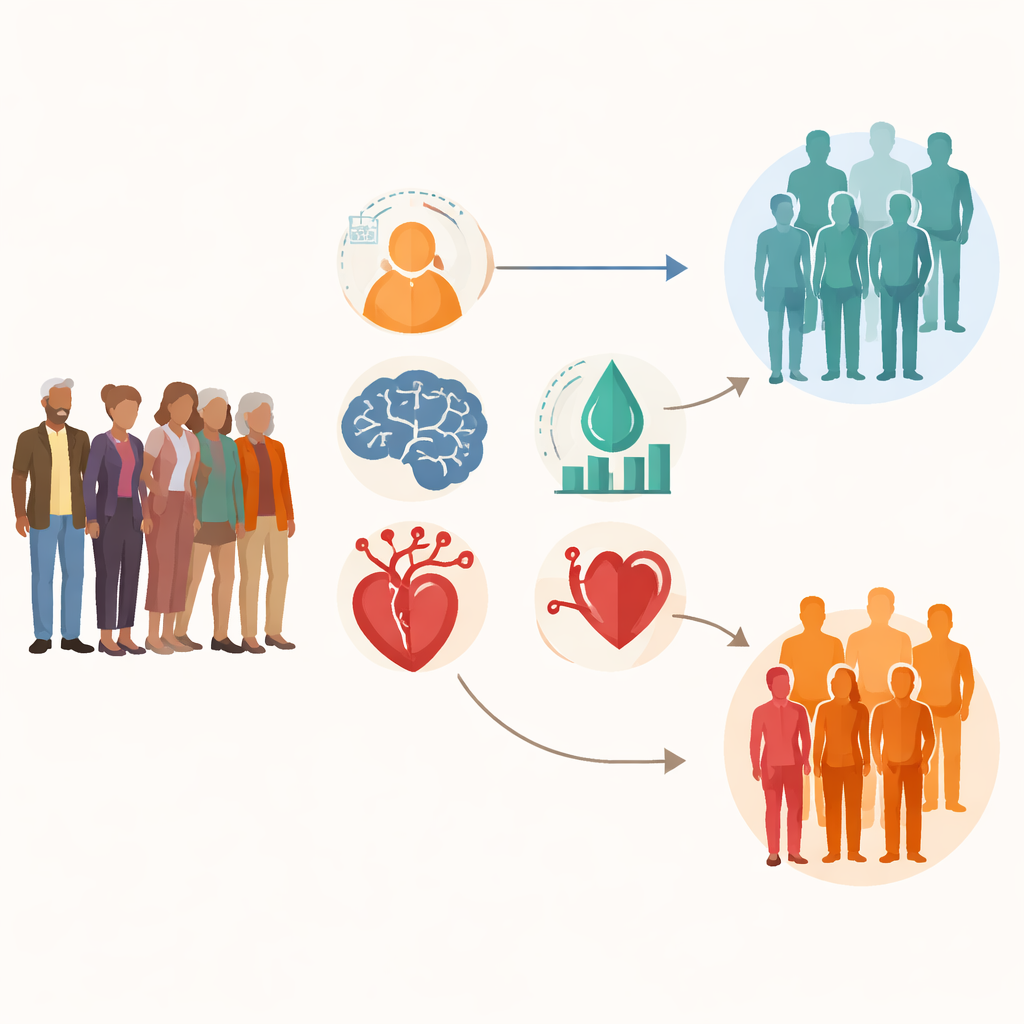
The researchers drew on the Sydney Memory and Ageing Study, which has followed more than a thousand Australians who were 70 years or older and free of dementia when they enrolled. Over about ten years, some of these participants went on to develop dementia, while others did not. At the start, everyone completed detailed thinking and memory tests, questionnaires about mood, and medical checks including blood tests and measures of heart and blood vessel health. By seeing which starting features were most common among those who later developed dementia, the team could train computer models to recognize high-risk profiles.
Teaching machines to spot future risk
To build these prediction tools, the authors compared several common machine learning methods. All models tried to answer the same question: given a person’s baseline information, how likely are they to have dementia ten years later, assuming they are still alive and assessed? The computer algorithms were trained on data from about 70 percent of the participants and then tested on the remaining 30 percent who were kept aside as an unseen check. Inputs included age, education, mood symptoms, detailed thinking scores, waist–hip ratio, a standard heart disease risk score, and blood measures such as cholesterol, triglycerides, uric acid, kidney function, inflammation markers, and fasting glucose. A genetic risk marker known as APOE ε4 was examined later as an optional add-on.
Four simple measures carry most of the signal
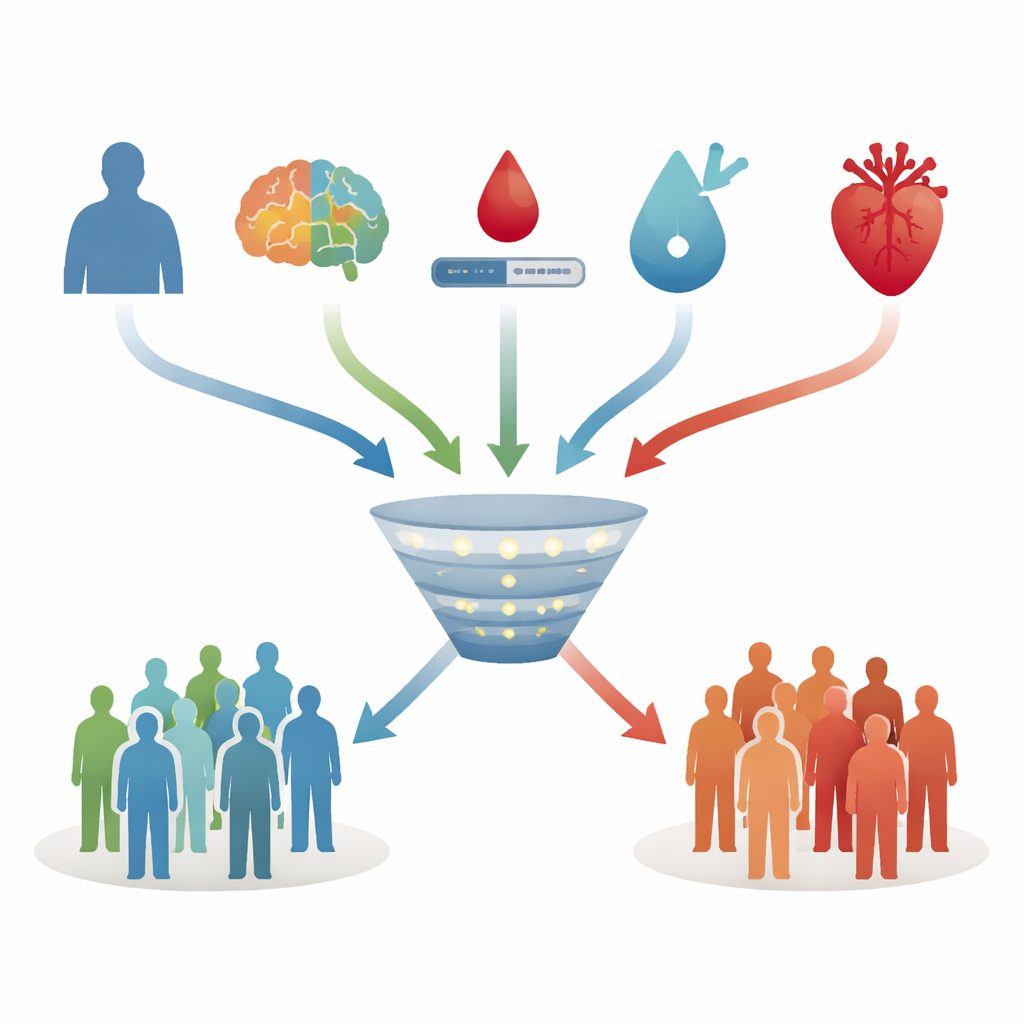
Among the different approaches, a streamlined method called LASSO regression worked best. Despite starting with many candidates, this model kept only four predictors: age, overall thinking performance, fasting blood glucose, and a combined score of heart and blood vessel risk. Older age, higher glucose, and poorer cardiovascular profile each nudged the predicted risk upward, while stronger thinking scores pushed it down. In the held-out test group, this four-factor model could correctly rank a person with future dementia above a person without dementia about three-quarters of the time, a level considered acceptable for clinical risk tools. It also offered a good balance between catching true future cases and avoiding too many false alarms.
What did not add much and how to use the tool
Surprisingly, adding APOE ε4 genetic status to the best-performing model did not improve its accuracy and slightly worsened some measures, once age, thinking performance, blood sugar, and heart risk were already included. This suggests that, at least in this group of older adults, the main story is told by routine clinical information rather than by genetic testing or experimental blood markers. The authors provide a simple formula that can be implemented in a spreadsheet to turn these four numbers into an estimated ten-year dementia risk, which can then be compared with a suggested cut-off for classifying someone as “elevated risk” versus “lower risk.” They also explain how health systems could adjust the model’s starting point if dementia is more or less common in their own populations or in different age bands.
What this means for patients and clinicians
For now, this work is a proof-of-concept rather than a ready-made screening program. It shows that a small set of familiar measures—age, a structured thinking test, fasting glucose, and a standard heart risk score—can meaningfully sort older adults into lower and higher dementia risk groups up to a decade ahead of diagnosis. Before being used widely, the model needs to be tested in other countries, with simpler thinking tests that fit everyday practice, and alongside real-world questions about how patients and clinicians respond to probabilistic risk estimates. Still, the message is encouraging: paying attention to brain health, blood sugar, and heart health together may help identify who could benefit most from closer monitoring and early preventive strategies.
Citation: Chalmers, R.A., Cervin, M., Choo, C. et al. Machine learning models for dementia risk prediction: evidence from the Sydney Memory and Ageing Study. npj Dement. 2, 27 (2026). https://doi.org/10.1038/s44400-026-00071-1
Keywords: dementia risk prediction, machine learning, cognitive aging, cardiometabolic health, early detection