Clear Sky Science · en
Exploring the co-benefits of truck payload management on profitability and CO2 emissions
Why truck loading matters to everyday life
Most of the goods we buy—food, packages, and building materials—travel by truck. How much weight those trucks carry on each trip turns out to matter not just for company profits, but also for road safety and climate change. This study looks at what happens when freight companies manage truck loading more carefully: avoiding dangerously overloaded vehicles while also cutting down on wasteful empty trips. Using detailed data from hundreds of trucks in Shanghai, the researchers show that smart payload management can reduce carbon emissions and sometimes even save money for operators.
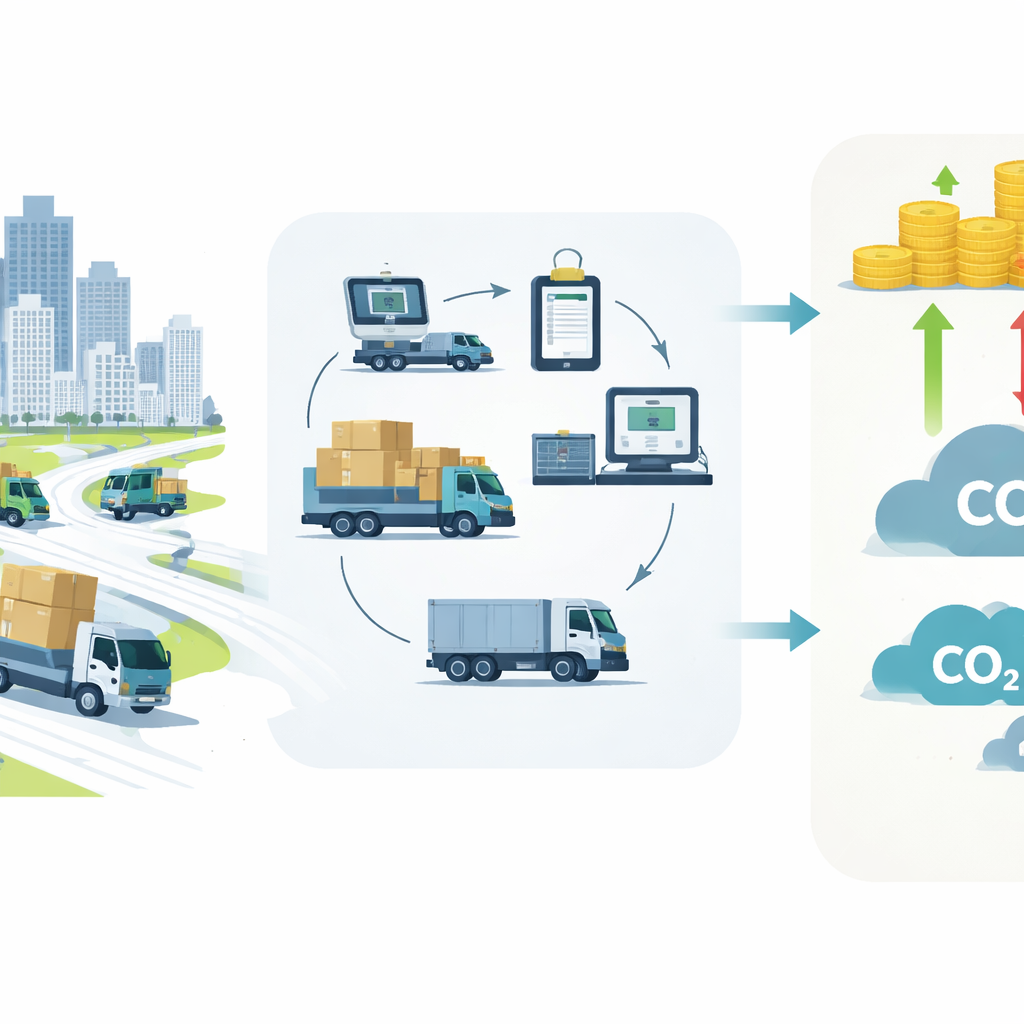
Looking inside real trucks on real roads
Instead of relying on small experiments or broad averages, the team combined three kinds of real-world information: weight measurements from highway toll stations, second-by-second driving and fuel-use records from on-board monitoring devices, and basic vehicle details such as engine size and age. They focused on 577 diesel trucks that handled city freight, construction waste, and concrete. By matching these data sources trip by trip, they built a fine-grained picture of how fast the trucks traveled, how heavily they were loaded, how the drivers behaved, and how much fuel was burned on each journey. This allowed them to see how loading practices differed among light-, medium-, and heavy-duty trucks and across different uses.
Heavy loads, light loads, and fuel use
The analysis revealed that fuel use rises steadily as trucks carry more weight. On average, every extra tonne of payload increased fuel consumption by about 2.2 percent, with the effect ranging from 1.9 to 7.0 percent depending on truck class. Lighter trucks were actually more sensitive to added weight than the biggest ones. The study also found striking differences in how trucks were used. Light-duty goods vehicles frequently operated far above their rated capacity, with typical loads nearly 80 percent higher than allowed and some trips carrying more than triple their legal payload. By contrast, many medium and heavy trucks spent a large share of their time running empty, especially the heaviest vehicles, which often returned from deliveries without cargo. Together, these patterns mean fuel is wasted both when trucks haul too much and when they haul nothing at all.
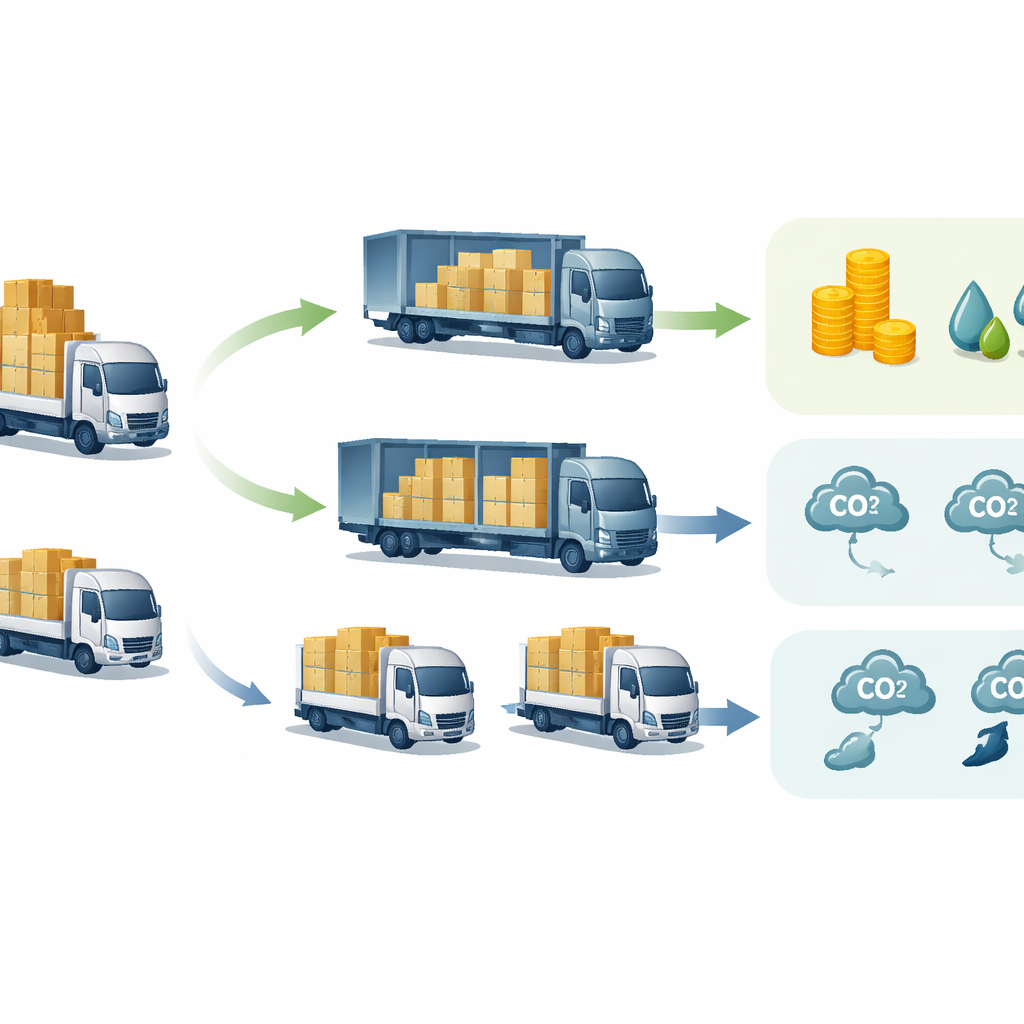
Testing smarter loading strategies
The researchers examined two complementary approaches to managing payloads. The first was strict enforcement of maximum legal loads, which removes overloading but forces companies to add trips to move the same amount of freight. The second was "empty-running optimization": filling what would otherwise be empty or nearly empty trips by better matching available cargo with available trucks, for example through digital freight platforms or tighter coordination among shippers. Using a regression model that accounted for driving style, weather, vehicle features, and speed, the team estimated how these strategies would change fuel use, trip numbers, and operating costs per tonne-kilometer of freight moved.
Profits, pollution, and who wins
The results paint a nuanced picture. Enforcing legal weight limits consistently cuts carbon dioxide emissions for all truck types, because even though more trips may be needed, each trip becomes less fuel-hungry per unit of freight. When the gains from filling empty runs are added, the net climate benefit ranges from about 2.6 to 9.0 grams of CO2 saved per tonne-kilometer. Economic outcomes are more mixed. Most medium and heavy trucks can recover or even improve their profits once empty-running is optimized, with dump trucks showing the largest financial upside. However, light-duty delivery trucks—often used for last‑mile services in dense urban areas—suffer clear economic losses when overloading is removed, because they start from very high overload levels and must add many more trips to meet the same demand.
What this means for safer, cleaner roads
For a layperson, the key takeaway is that how we load trucks is a powerful but underused lever for cleaner and safer transport. The study shows that keeping trucks within legal limits, while coordinating them to avoid empty returns, can lower fuel use and emissions without necessarily hurting the bottom line—especially for larger vehicles. At the same time, light-duty trucks that serve city streets stand out as both heavily overloaded and economically vulnerable when pushed to comply. The authors argue that governments and companies should move from punishment-only rules to a mix of penalties for overloading and incentives for efficient, compliant operations, supported by intelligent freight-matching systems. Done right, better payload management can make our deliveries safer, our roads less damaged, and our freight system a quieter contributor to climate change.
Citation: Li, H., Wu, X., Lin, H. et al. Exploring the co-benefits of truck payload management on profitability and CO2 emissions. npj. Sustain. Mobil. Transp. 3, 33 (2026). https://doi.org/10.1038/s44333-026-00103-6
Keywords: truck overloading, freight emissions, payload management, road freight economics, empty-running optimization