Clear Sky Science · en
Divergent urban pathways to autonomous mobility across thirty Chinese cities
Why cities matter for self-driving cars
Self-driving cars are often described as a high-tech marvel, but whether they actually make everyday travel safer, cleaner, and more convenient depends heavily on what happens in cities. This paper looks at how 30 Chinese cities are rolling out autonomous vehicles, not just as gadgets on wheels but as part of much larger changes in roads, rules, and local economies. By comparing big coastal megacities with inland factory towns and smaller hubs, the authors show that there is no single “Chinese model” of self-driving mobility, but several distinct paths shaped by local strengths and needs.
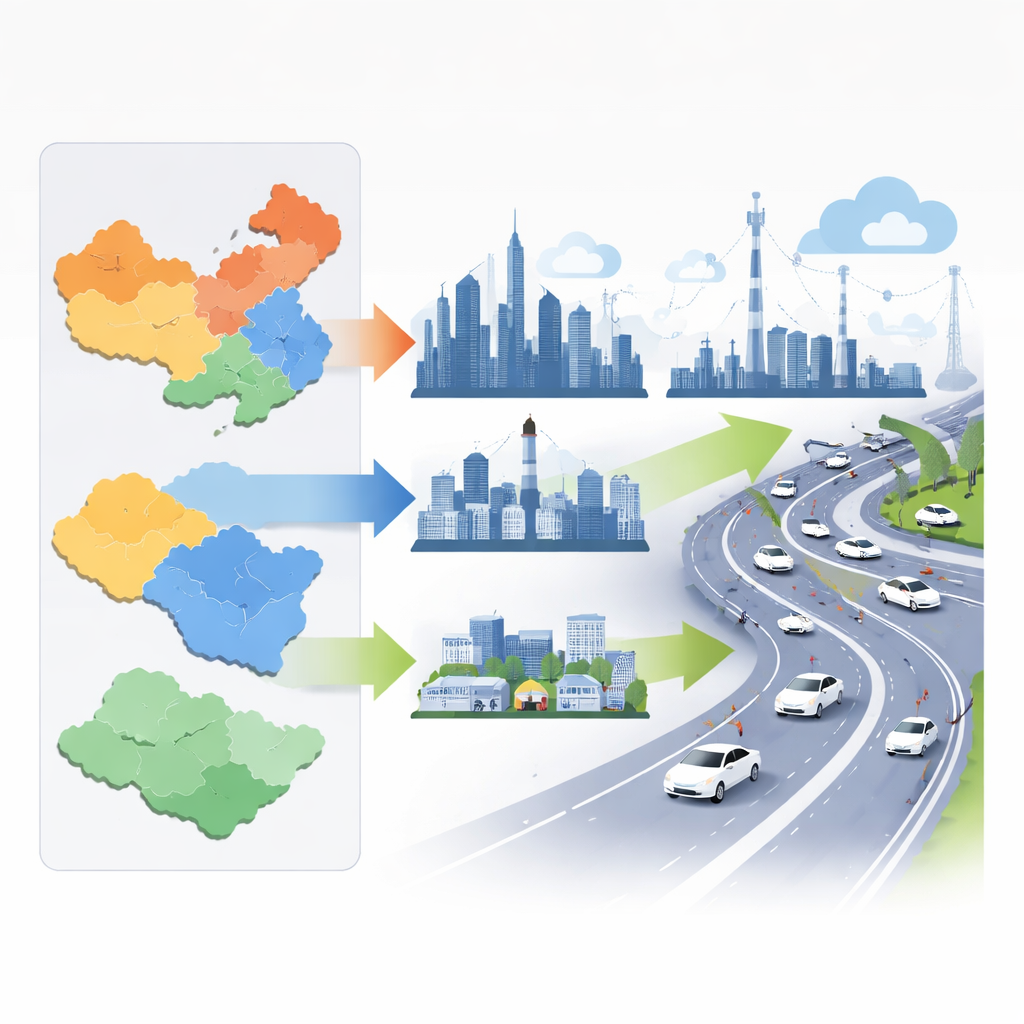
Three kinds of cities, three different roles
The researchers group the 30 pilot cities into three archetypes. “Innovation Leaders” are four giant metros—such as national political and financial centers—with deep pockets, dense populations, heavy traffic, and strong tech and car industries. They have the most test roads, the most projects, and the thickest web of local rules for autonomous vehicles. “Specialized Developers” are nine prosperous regional hubs with strong factories and digital firms but somewhat less money and regulatory freedom. “Emerging Participants,” the remaining 17 cities, are smaller or more industrial, often anchored in traditional car making or logistics. These places are newer to self-driving experiments and tend to have weaker public transport and less everyday demand for shared robotaxis.
How cities experiment on their streets
Across all three groups, pilot projects are the laboratories where new ideas meet real roads. The study tracks 116 such pilots and finds that Innovation Leaders use them to push quickly from closed test tracks to fully driverless commercial services. Their portfolios include robotaxis and driverless buses alongside delivery vehicles, street sweepers, and patrol cars, weaving autonomous services into busy urban districts. Specialized Developers and Emerging Participants, by contrast, lean more on using pilots to build digital infrastructure—roadside sensors, data centers, cloud-control platforms—and to support factories and industrial parks. Their on-road trials are more often limited to low-speed shuttles, delivery vehicles, or services inside industrial zones far from city centers, so the impact on everyday mobility remains modest.
Policies behind the steering wheel
Behind these experiments sits a dense layer of local rules and strategies: 881 policy documents in total. All cities rely heavily on top-down planning, but they focus on different parts of the self-driving “market.” Leaders steadily shift their attention from helping companies develop components toward preparing roads and creating actual demand for services. They use subsidies, test zones, and new licensing rules to make it easier for firms to run driverless services and for residents to try them. These same cities also move early to address tricky questions of safety, insurance, and responsibility in crashes, crafting local regulations that later guide national rules. Specialized Developers follow this general direction but emphasize factory upgrades, core sensors, chips, and data networks, treating autonomous vehicles partly as a spin-off of broader artificial intelligence and 5G strategies. Emerging Participants mostly copy national plans or big-city templates, focusing on supporting local car plants and basic digital upgrades, with far fewer concrete tools to nurture real markets for self-driving services.
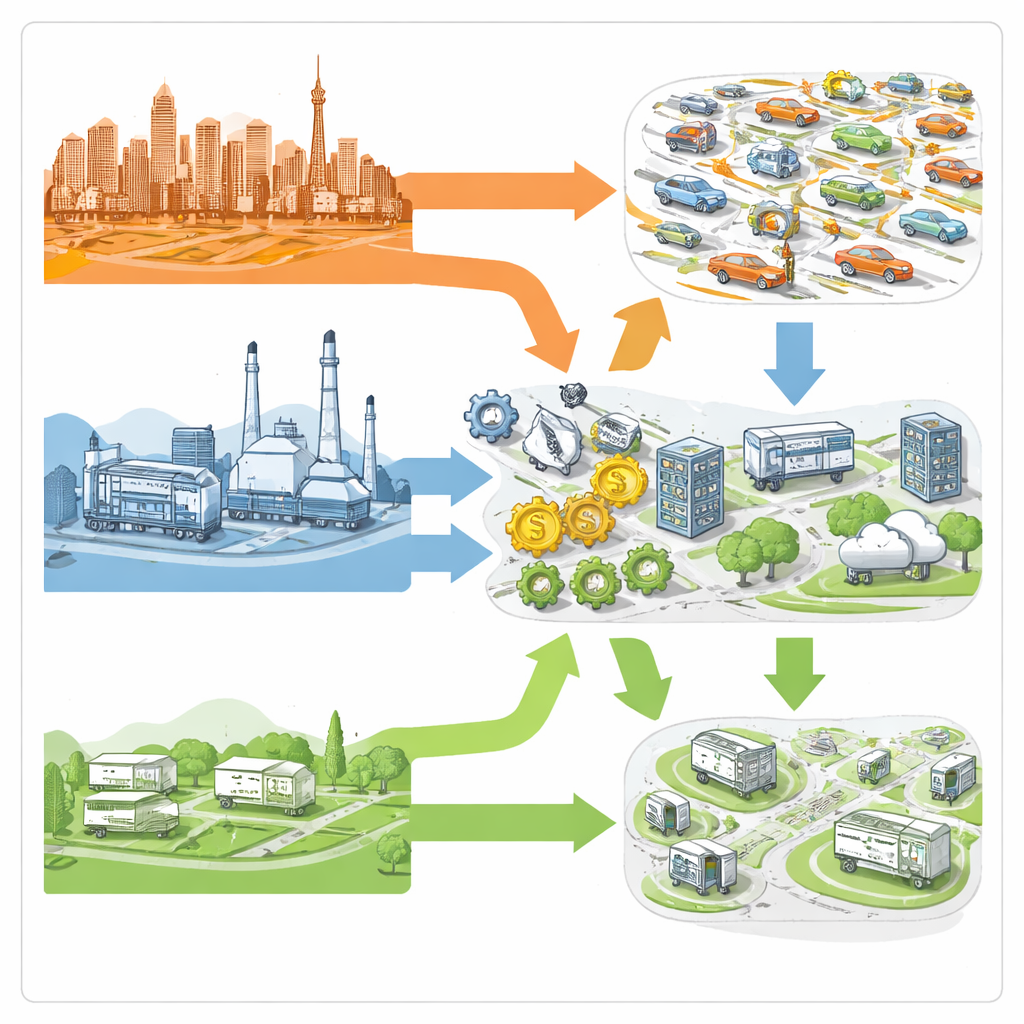
Building innovation ecosystems over time
To understand how these choices add up, the authors look at which “functions” of an innovation system each city’s policies support—such as guiding long-term goals, funding projects, encouraging trials, or winning public trust. Early on, nearly all cities concentrate on setting visions and targets. Over time, Leaders pivot toward hands-on experimentation, market building, and public acceptance, for example by funding trials, opening more roads, and running public ride events. Specialized Developers invest strongly in knowledge creation and cross-sector spillovers, using shared test platforms and industrial parks to spread expertise from information and communication technologies into vehicles. Emerging Participants, however, remain stuck for longer in vision-setting mode, with smaller, copycat pilots that rarely grow into stable services. This pattern suggests that many cities see autonomous vehicles less as a way to solve transport problems and more as a lever to modernize old-line industries.
What this means for the future of urban travel
For non-specialists, the key message is that the same self-driving technology can lead to very different futures depending on how cities use it. In China, big coastal megacities are turning autonomous vehicles into everyday services and test beds for new rules, while industrial cities concentrate on making parts and building digital infrastructure. Together, these varied efforts help China advance quickly in the global race for autonomous mobility—but they also risk wasting money on overlapping projects if coordination is weak. The authors argue that national and local leaders should treat cities as complementary pieces of a larger puzzle: some focusing on breakthrough services, others on manufacturing and data networks. When these roles are aligned, self-driving technologies are more likely to improve daily mobility and sustainability instead of becoming isolated tech showcases.
Citation: Wang, Q., Trencher, G. & Taeihagh, A. Divergent urban pathways to autonomous mobility across thirty Chinese cities. npj. Sustain. Mobil. Transp. 3, 29 (2026). https://doi.org/10.1038/s44333-026-00096-2
Keywords: autonomous vehicles, urban governance, Chinese cities, innovation policy, smart mobility