Clear Sky Science · en
Scenario planning to support the transformative adaptation of a collapsing fishery
Why this struggling sea matters to us
Along the German coast of the Western Baltic Sea, fishing has supported families, food, and local culture for generations. Today, this fishery is close to collapse as climate change, overfishing, and pollution undermine once-reliable catches of cod and herring. The paper behind this summary asks a simple but vital question: instead of just reacting to each new crisis, how can coastal communities deliberately reshape their future so that both the sea and the people who depend on it can thrive?
A sea under pressure
The authors describe the Western Baltic as a textbook example of a social and ecological system in trouble. Fish catches have fallen to less than a tenth of what they were in the late 1990s, and the number of fishing vessels has been cut in half. Warmer waters, oxygen-poor "dead zones" from nutrient pollution, and long years of heavy fishing have pushed key stocks like cod and herring to the brink. Because small-scale coastal fishing plays an outsized role in local identity and tourism, these losses are not just economic; they also threaten the character and cohesion of coastal communities.
Imagining different futures
To move beyond short-term fixes, the researchers used a structured form of "scenario planning"—a kind of guided imagination exercise grounded in expert knowledge. In workshops, an interdisciplinary team mapped out what is known and what is uncertain about the region’s climate, ecology, economy, and politics. They then built four contrasting storylines about the future of the fishery, organized along two key uncertainties: how strongly climate change will reshape fish communities, and how much support society will give to keeping coastal fisheries alive.
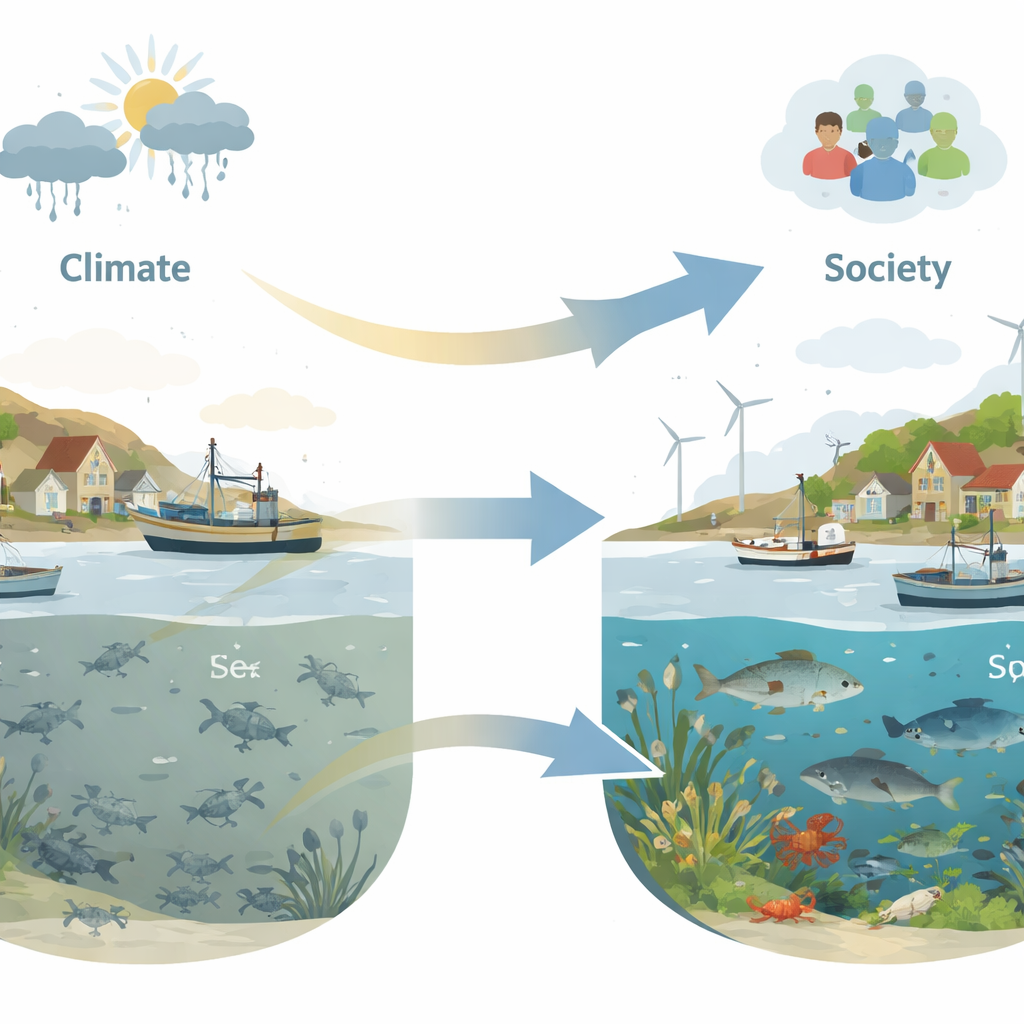
Four paths the fishery could follow
In the first scenario, cod and herring slowly recover and society places high value on coastal fisheries. Strong public pressure and government backing lead to cleaner waters, careful spatial planning that balances wind farms, protected areas, and fishing grounds, and modern ecosystem-based management. Fishers use low-impact gears, sell more directly to consumers, and diversify into tourism and educational roles. In the second scenario, climate change prevents cod and herring from bouncing back, but new warm-loving species such as mullet and anchovy move in. With similar societal support and forward-looking management, fishers shift to these new species, maintain small-scale, low-impact fleets, and again blend fishing with tourism and science-related activities.
The remaining two scenarios show what happens when society largely turns its back on coastal fisheries. In the third, climate impacts are mild enough that cod and herring could recover, but weak political interest and fading infrastructure cause the professional fleet to disappear just as stocks improve. Recreational anglers and tourism capture the benefits instead, while fishing knowledge and cultural heritage decay. In the fourth scenario, strong climate impacts and a public focus on protection and offshore energy leave only a tiny, heavily restricted fishery targeting new species. Over time, most commercial fishing vanishes, and local demand is met by imported seafood.
A strategy for turning the tide
Across these storylines, one pattern stands out: the fishery does best when it is both prepared for an uncertain climate and firmly woven into society. From this insight, the authors distill a "no-regret" strategy built on four linked fields of action. First, management must shift from focusing on single species to an ecosystem-based approach that tracks whole fish communities, environmental change, and human pressures. Second, rules for sharing fishing opportunities should reward low-impact, flexible fishers who can switch between species and use cleaner vessels and gear. Third, communities should support fishers in diversifying their livelihoods through tourism, direct marketing, and new service roles such as ecosystem monitoring or "sea ranger" work. Fourth, scientists, fishers, policymakers, and citizens need to co-create solutions through long-term, trust-based collaboration rather than top-down decisions.
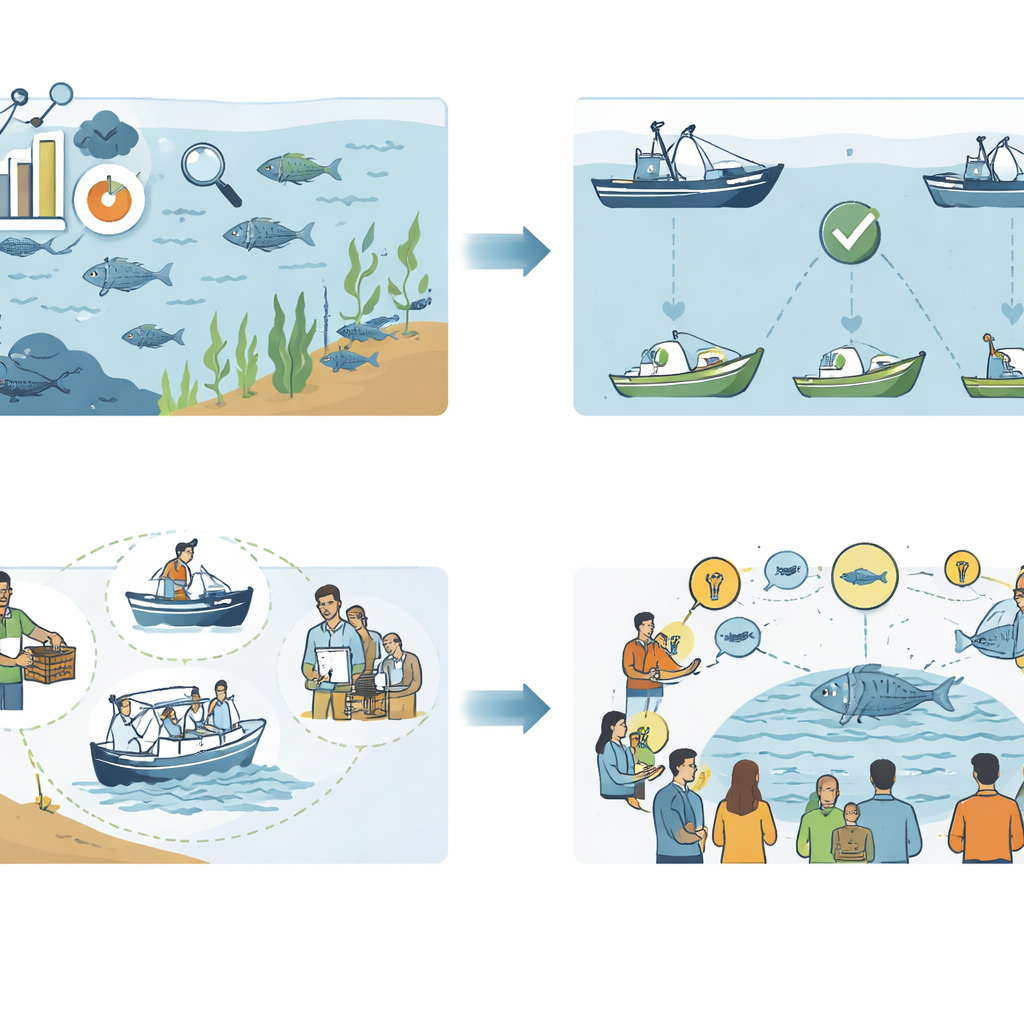
What this means for coasts and communities
For non-specialists, the core message is straightforward: when a fishery nears collapse in a rapidly changing climate, simply trimming quotas or hoping for a return to the past is not enough. The Western Baltic case shows that communities can instead deliberately steer toward new, more resilient arrangements—ones that protect marine life, keep small-scale fishing viable, and create fresh income streams tied to tourism, education, and stewardship. By combining better ecosystem care, fairer access to resources, diversified livelihoods, and closer cooperation between science and society, this approach offers a hopeful blueprint for other coastal regions facing similar storms.
Citation: Möllmann, C., Blenckner, T., Clemmesen, C. et al. Scenario planning to support the transformative adaptation of a collapsing fishery. npj Ocean Sustain 5, 17 (2026). https://doi.org/10.1038/s44183-026-00188-z
Keywords: Baltic Sea fisheries, climate adaptation, scenario planning, small-scale fishing, ecosystem-based management