Clear Sky Science · en
Measuring gross motor skills in African children using the PERF-FIT
Why Moving Well Matters for Children
Running, hopping, throwing a ball, or balancing on one leg may seem like simple childhood games, but they are building blocks for lifelong health. In many African countries, children’s ability to move confidently is rarely measured with tools designed for their cultures and environments. This article describes a new, African-led approach to testing children’s gross motor skills and fitness, called the PERF-FIT test battery, and explains how it can help identify children who may be at risk for health problems later in life.
The Health Challenge Behind Everyday Play
Africa is experiencing a rapid rise in non-communicable diseases such as diabetes and heart disease, driven in part by changes in diet and more sedentary lifestyles. Children who struggle with basic movement skills—like running, jumping, or catching—tend to avoid sports and active play. Over time, this can lead to poorer physical fitness and a higher chance of obesity and heart problems in adulthood. Yet most existing tests of children’s motor skills were created in Western countries, are expensive, and rely on norms that do not reflect African children’s daily lives, games, or school environments. When these tools are used in Africa, they often label far too many children as impaired, not because the children are truly behind, but because the tests are mismatched to their context.
Designing a Test That Fits African Classrooms
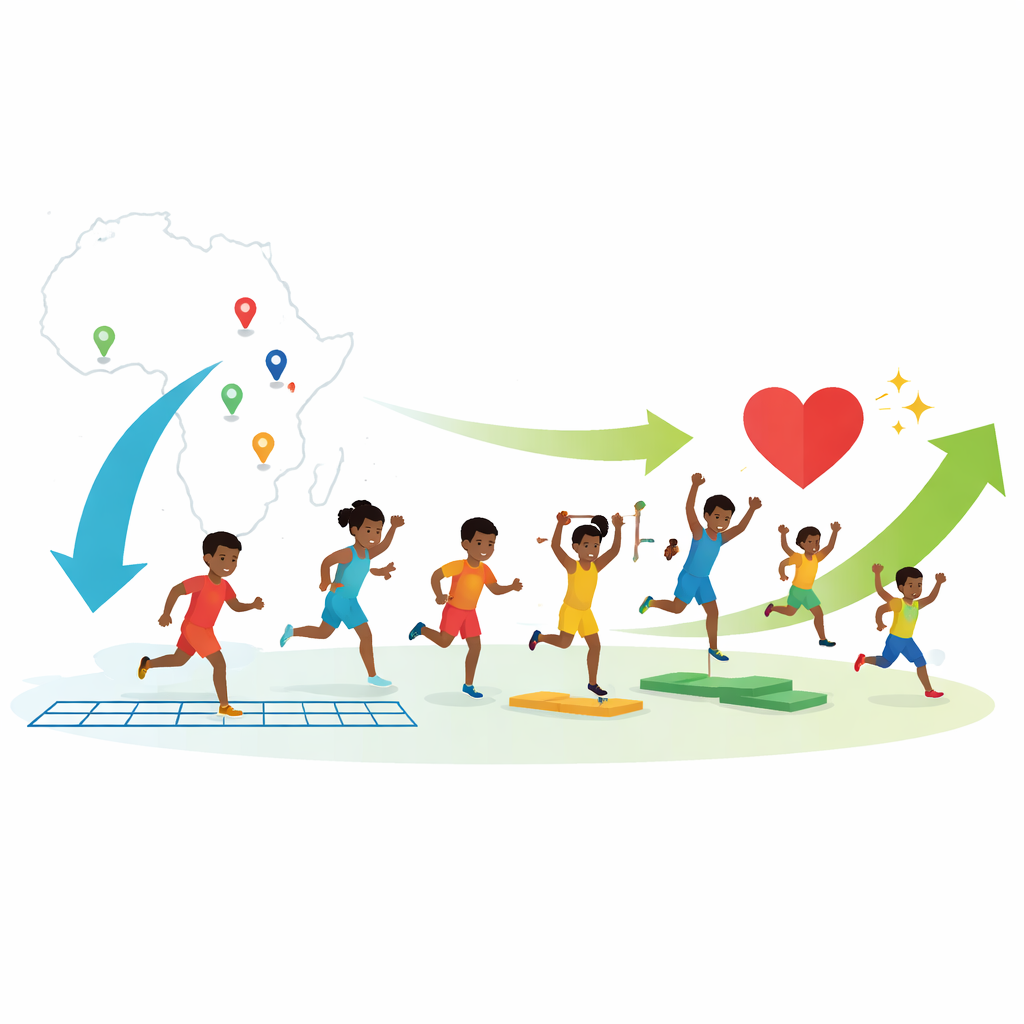
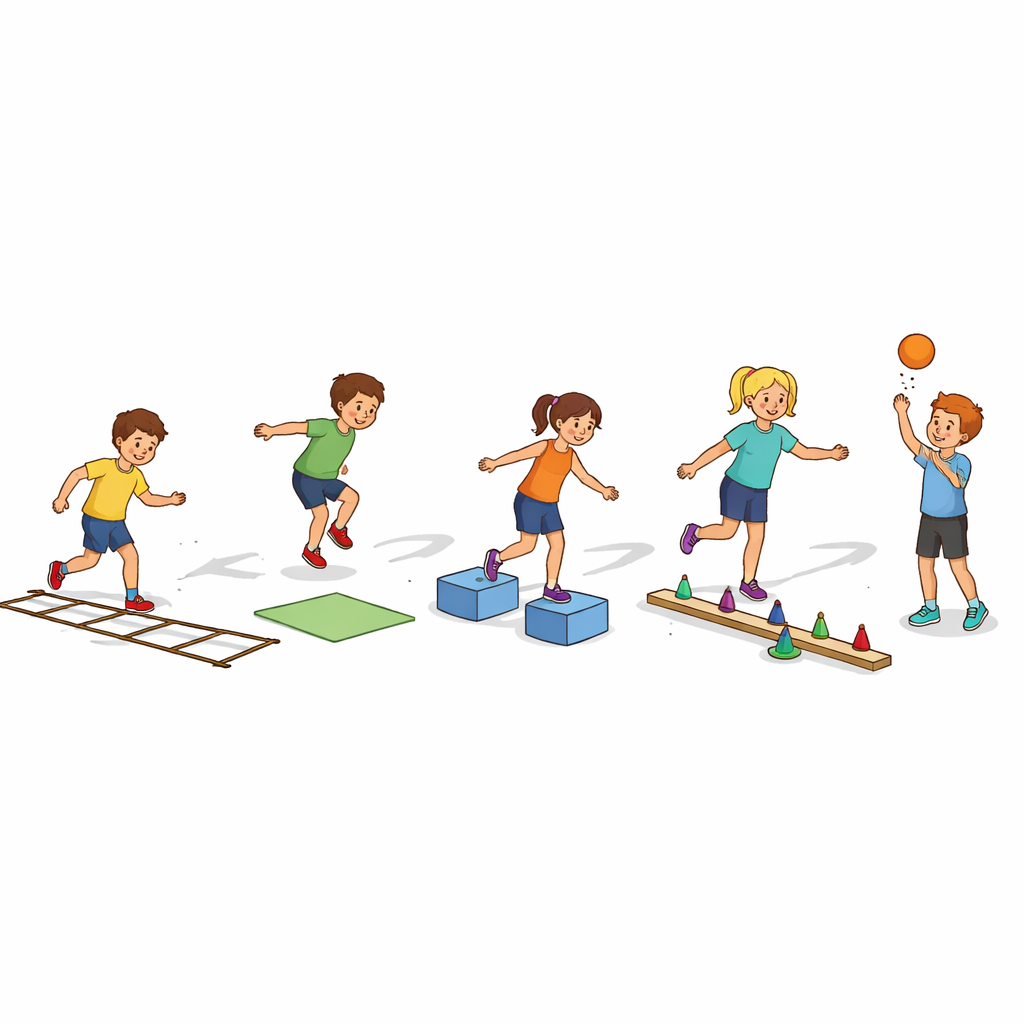
To close this gap, researchers from several African countries worked together to design the PERFormance and FITness (PERF-FIT) test battery specifically for children aged 6 to 12 years living in low-resource settings. They set clear goals: the test had to be free to use, require only simple equipment, be easy to run in crowded schools, and reflect movements that are familiar to African children. Experts in child development and movement science helped select and refine ten test items that tap into key abilities such as agility, power, coordination, balance, and reaction time. Examples include running and stepping through a short ladder on the ground, performing a standing long jump, side-jumping in place, throwing a sandbag while kneeling, bouncing and catching a ball, and completing static and dynamic balance tasks.
Gathering a Continent-Spanning Picture of Skill
The team collected data from 2,817 children attending primary schools in five African countries: Nigeria, Ghana, Ethiopia, Tunisia, and South Africa. Schools were chosen from diverse settings, including cities, townships, and rural areas, to capture a wide range of living conditions. After excluding children with severe underweight or obesity—conditions known to strongly affect movement—the researchers used results from 2,604 children to create “norms,” or typical score ranges, for each age and for boys and girls separately. Children completed the PERF-FIT items in small groups at school, often in their uniforms and barefoot, under the guidance of trained testers following a detailed manual to keep procedures consistent.
What the New Norms Reveal
Analysis showed that movement skills and related fitness improve steadily with age on nearly all test items, confirming that older children can run faster, jump farther, and perform more complex balance and ball tasks than younger ones. The team also found small but consistent differences between boys and girls. Boys tended to perform better on tasks that emphasized power and ball throwing, while girls generally did better on agility and balance tasks. These patterns mirror findings from other parts of the world but are now documented with data collected in African settings. Using the scores, the researchers created easy-to-use scales and percentiles that classify performance as typical, below average, or clearly delayed, with computer sheets that automatically convert raw scores into these categories.
How This Tool Can Help Children Thrive
The PERF-FIT norms offer clinicians, teachers, and policymakers a practical way to spot children whose motor skills fall well below what is expected for their age and sex in African contexts. A child scoring in the lowest percentiles on several items, for instance, may benefit from further assessment or from targeted activities to build strength, coordination, and confidence in movement. At the same time, the authors stress that test scores should never be the only basis for important decisions about a child; they are one piece of a bigger picture that includes health, growth, and opportunities for play. By providing a free, culturally grounded, and scientifically sound benchmark for gross motor skills, the PERF-FIT test can support earlier intervention, better-designed school and community programs, and ultimately healthier, more active futures for millions of African children.
Citation: Smits-Engelsman, B., Coetzee, D., Doe-Asinyo, R.X. et al. Measuring gross motor skills in African children using the PERF-FIT. Commun Med 6, 258 (2026). https://doi.org/10.1038/s43856-026-01592-9
Keywords: gross motor skills, African children, physical fitness, PERF-FIT test, child health