Clear Sky Science · en
Assessment of pneumonitis in patients with lung cancer undergoing radioimmunotherapy and immune checkpoint inhibitor rechallenge
Why this matters for people with lung cancer
As newer cancer treatments help people with lung cancer live longer, they can also bring serious side effects. One of the most worrying is a type of lung inflammation called pneumonitis, which can cause cough, shortness of breath, and even be life‑threatening. This study looks at how often this problem happens when radiation and immunotherapy are used together, what makes it more likely, and when it may be safe to restart immunotherapy after pneumonitis has occurred.
Modern treatments, modern risks
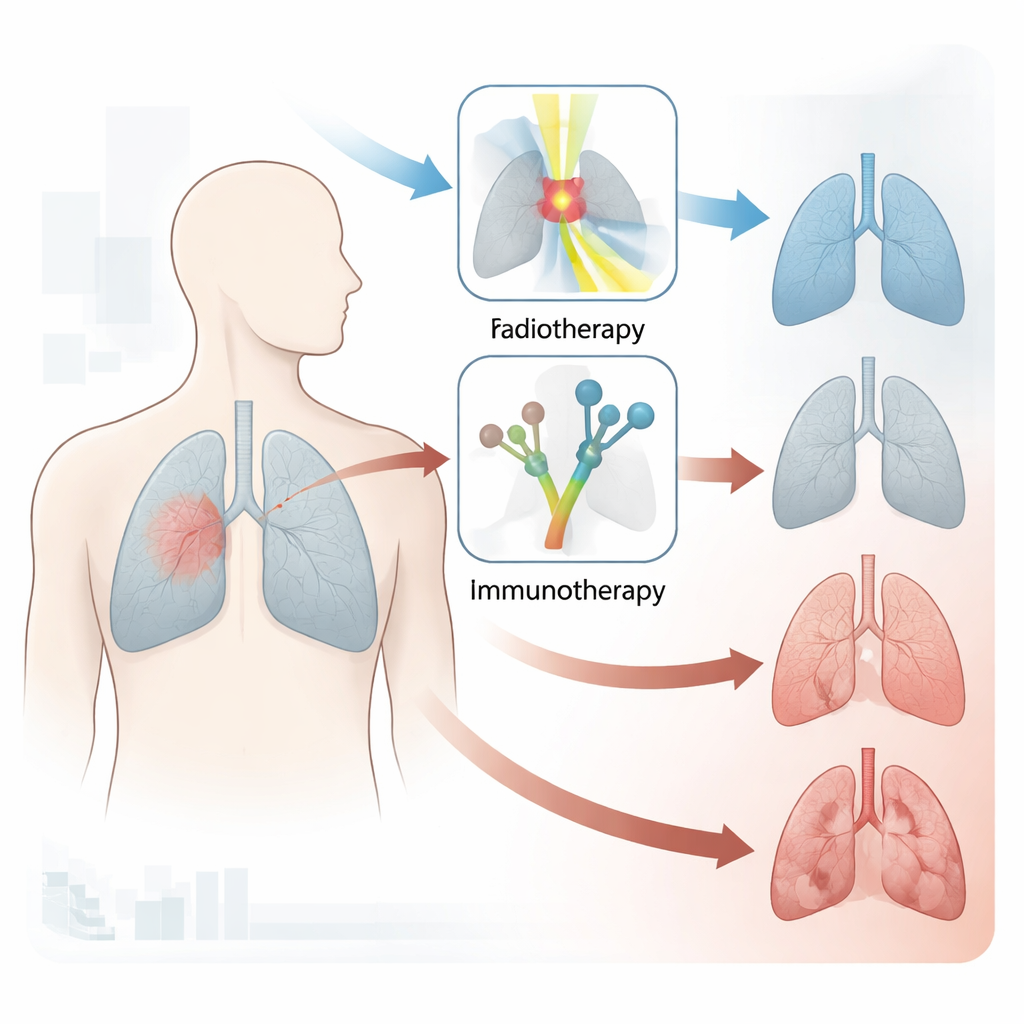
Radiotherapy and immune checkpoint inhibitors have changed the outlook for many people with advanced lung cancer. Radiation aims focused energy at tumors in the chest, while immunotherapy drugs help the body’s own defenses attack cancer. When used together, this “one‑two punch” can improve survival. But because both treatments affect the lungs, they can also trigger treatment‑related pneumonitis, an inflammatory reaction in lung tissue. Until now, doctors had limited data to predict who is at highest risk and how to safely restart immunotherapy in patients who have already developed this complication.
Who was studied and what was measured
The researchers reviewed the medical records of 262 people with lung cancer treated at two hospitals in China between 2021 and 2023. All received both chest radiotherapy and immune checkpoint inhibitors (either PD‑1 or PD‑L1 drugs). The team collected information on age, smoking history, lung conditions such as chronic obstructive pulmonary disease and interstitial lung disease, tumor type and stage, treatment details, and how much radiation the lungs received on average (the “mean lung dose,” or Dmean). They then tracked who developed pneumonitis, how severe it was, how long it took to appear, and what happened in the subset of patients who later restarted immunotherapy.
How often lung inflammation occurred
More than half of the patients in this study—about 58%—developed treatment‑related pneumonitis. Most cases were mild to moderate, but nearly 8% developed severe forms, and one person died from the complication. Pneumonitis usually appeared a few months after treatment, with a typical onset around 3–4 months. The analysis showed that people treated with PD‑1 drugs were more likely to develop pneumonitis than those receiving PD‑L1 drugs. Interestingly, patients who had received more cycles of immunotherapy before pneumonitis were actually less likely to have it, likely reflecting the fact that people who tolerate treatment well are the ones who stay on it longer.
The importance of average lung radiation dose
The clearest and most consistent signal in the data was the link between mean lung dose and pneumonitis risk. As the average radiation dose to the lungs rose, pneumonitis became more frequent and more severe. The researchers were able to define dose levels at which the chance of pneumonitis reached about 50%: roughly 8.7 units of dose for any pneumonitis, 15.3 for moderate or worse, and 23.4 for severe cases. In practical terms, when the average lung dose exceeded 15.3, the odds of at least moderate lung inflammation increased sharply. This pattern held true even when focusing only on people with non‑small cell lung cancer, suggesting it is a robust signal. Pre‑existing scarring‑type lung disease also raised risk, while tumors in the outer parts of the lung appeared somewhat safer than centrally located tumors.
When it may be safe to restart immunotherapy
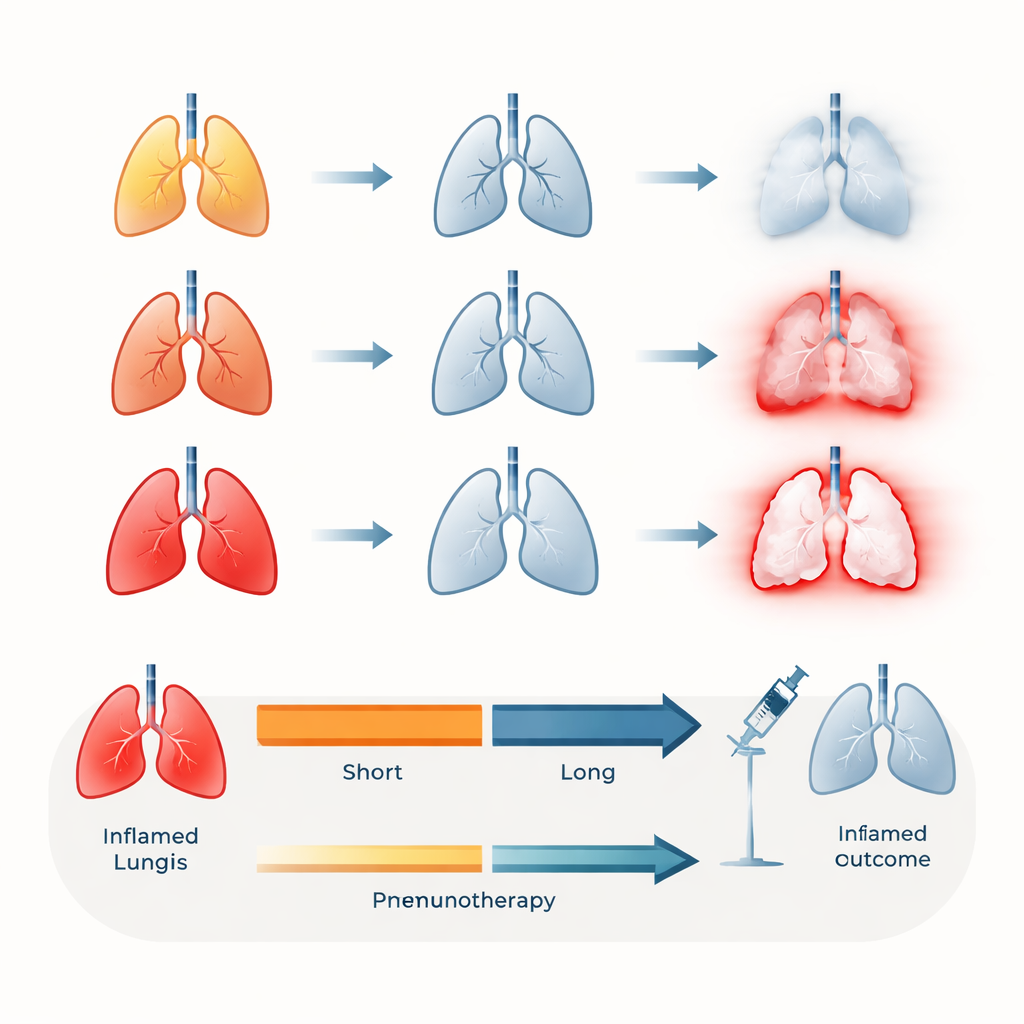
A key question for patients and doctors is whether it is safe to restart immunotherapy after pneumonitis has been brought under control. Among 53 patients who were re‑treated with immune drugs after their lung inflammation improved, about one in four developed pneumonitis again. The single strongest factor linked to this recurrence was timing: those who restarted immunotherapy less than four weeks after the first episode were much more likely to have another flare. By contrast, waiting at least four weeks after pneumonitis onset before restarting immunotherapy was associated with a dramatic drop in recurrence risk, and no deaths from recurrent pneumonitis were seen in this group.
What this means for patients and clinicians
This study suggests two practical rules of thumb that could help make combined radiation and immunotherapy safer for people with lung cancer. First, keeping the average radiation dose to the lungs as low as possible—especially below about 15 units—may reduce the risk of moderate or worse pneumonitis in patients receiving immunotherapy. Second, for those who do develop pneumonitis but may benefit from restarting immune treatment, waiting at least four weeks appears to offer a safer window for doing so. While more prospective research is needed, these findings give doctors clearer numbers to aim for when planning treatment and counseling patients about risks.
Citation: Ruan, Y., Ruan, M., Fang, Z. et al. Assessment of pneumonitis in patients with lung cancer undergoing radioimmunotherapy and immune checkpoint inhibitor rechallenge. Commun Med 6, 247 (2026). https://doi.org/10.1038/s43856-026-01505-w
Keywords: lung cancer, radiotherapy, immunotherapy, pneumonitis, treatment safety