Clear Sky Science · en
Potential overestimation of carbon dioxide emissions from croplands on organic soils in cool temperate and boreal regions based on a case study from Norway
Why northern farm soils matter for climate
Across the cool temperate and boreal regions of the world, many farms sit on deep layers of peat, a dark, sponge-like soil rich in ancient plant material. When these peatlands are drained to grow crops and grass, they can release large amounts of carbon dioxide to the air. Governments currently rely on simple global rules of thumb to estimate these emissions, which feed into national climate reports and shape decisions about which climate actions are worthwhile. This study asks whether those rules are giving an accurate picture for Norway, and what that means for climate planning.
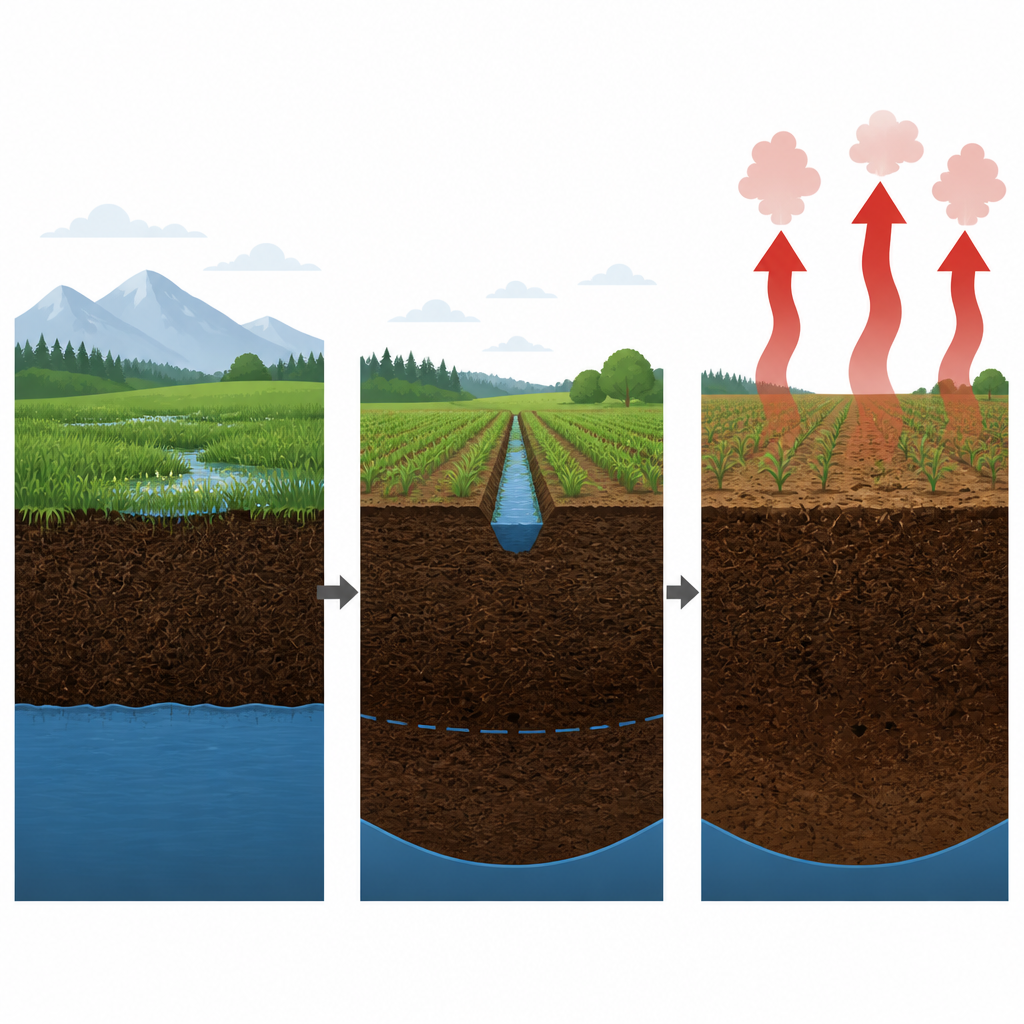
Peat soils, drainage and rising gases
Peatlands store vast quantities of carbon because waterlogged, oxygen-poor conditions slow the breakdown of dead plants. For centuries, however, many peatlands in Europe have been drained with ditches and pipes to create farmland. Lowering the water table exposes peat to air, speeds up decomposition and drives a steady flow of carbon dioxide from soil to atmosphere. Norway has around 67,000 hectares of such cultivated peatlands, a small fraction of its land surface yet the largest single source of emissions in its land use sector. Official statistics estimate these emissions using “Tier 1” emission factors from the Intergovernmental Panel on Climate Change, which assume a single average emission rate for all croplands on organic soils within a broad climate zone.
Testing a simple rule with a detailed model
Because direct, long term gas measurements are scarce, the researchers turned to a process based ecosystem model called CoupModel. They calibrated this model using field data from two Norwegian peatland farms: Farstad on the wet, mild Atlantic coast, and Pasvik in the much colder, drier north. At both sites, instruments tracked carbon dioxide exchange between land and air, water table depth, soil moisture, temperature and harvests of grass crops. The tuned model reproduced the overall patterns of carbon dioxide fluxes reasonably well, including when fields acted as net sources or sinks at different times of year and under different drainage conditions.
What happens across Norway’s peat farms
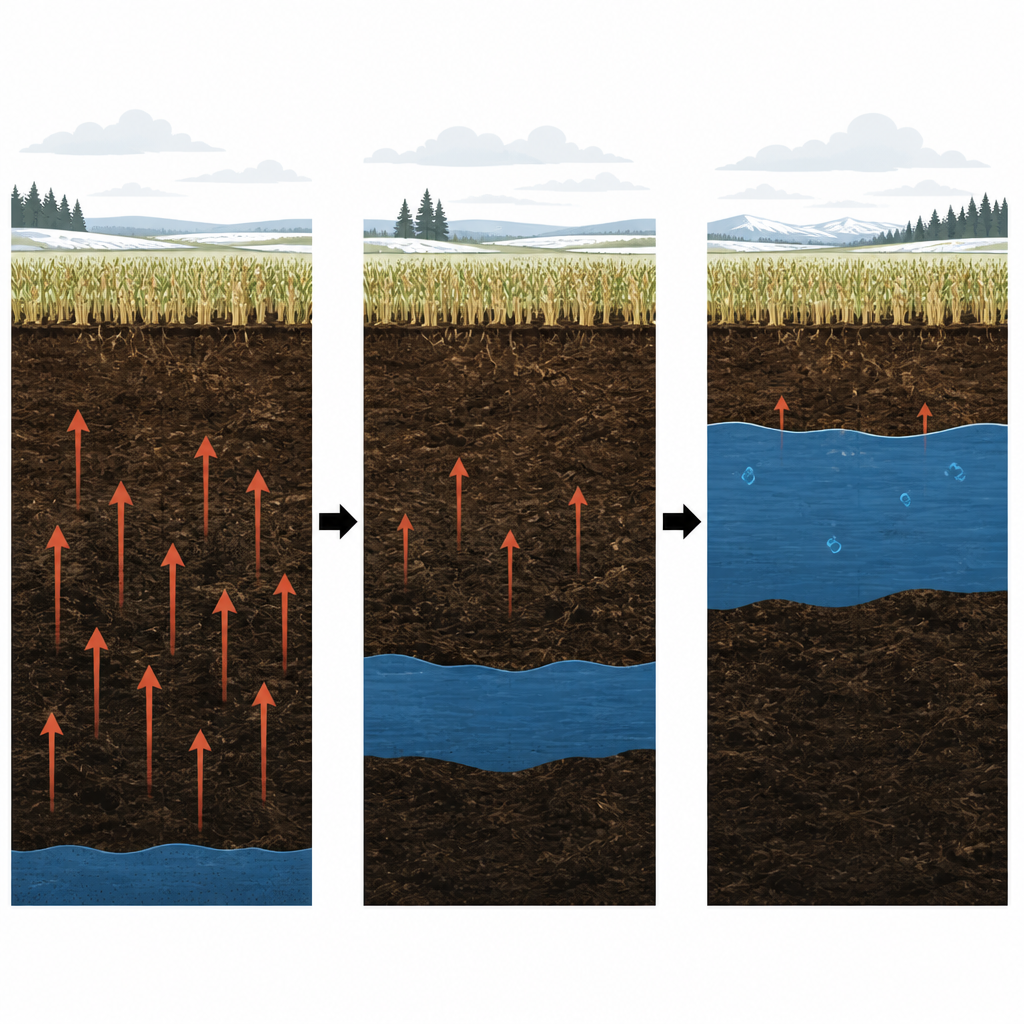
Armed with the calibrated model, the team simulated carbon dioxide emissions for 50 representative cultivated peat sites across Norway from 2001 to 2022. These sites span most of the country’s range in temperature and rainfall. The simulations showed a clear message: water table depth is the main control on emissions. Deeply drained sites with water tables well below the surface released the most carbon, while raising the water level sharply reduced net emissions and could even turn warmer sites into net carbon sinks. The model also revealed that cooler regions remain carbon sources even under higher water tables because shorter growing seasons limit plant uptake.
Are current accounting rules overshooting
To compare with the IPCC Tier 1 rule, the researchers converted their results into a net ecosystem carbon balance, combining net carbon dioxide exchange with carbon removed in harvested crops. For sites with very deep drainage, where the mean water table lay below about 0.7 meters, the modelled carbon losses closely matched the Tier 1 emission factor. However, for the many sites where the water table sat between 0.7 and 0.3 meters below the surface, the Tier 1 value was 31 to 88 percent higher than the model estimates. Field data from the Pasvik site, where plots experienced different drainage levels within the same field, supported this pattern. In simple terms, the standard global factor appears to assume emissions typical of the driest fields, then apply that number to much wetter ones.
What this means for climate choices
The study concludes that Norway’s current use of the Tier 1 approach likely overestimates carbon dioxide emissions from many cultivated peatlands in its cool temperate and boreal regions. That exaggerates the apparent climate benefit of certain mitigation measures and hides important differences between regions, farm practices and water levels. The authors argue that countries should invest in more field monitoring and use more detailed Tier 2 or Tier 3 methods whenever possible, tailoring emission factors to local climate, crop types and drainage conditions. Doing so would give policymakers a clearer picture of where raising water tables or changing land use can genuinely cut greenhouse gas emissions from peat soils, and where expectations may need to be scaled back.
Citation: Zhao, J., Takriti, M., Jansson, PE. et al. Potential overestimation of carbon dioxide emissions from croplands on organic soils in cool temperate and boreal regions based on a case study from Norway. Commun Earth Environ 7, 461 (2026). https://doi.org/10.1038/s43247-026-03464-5
Keywords: peatlands, carbon dioxide, greenhouse gases, water table, Norway agriculture