Clear Sky Science · en
Tibetan lakes have been persistent CO2 sources since the Last Glacial Maximum
Why ancient mountain lakes matter today
When we talk about climate change, we usually think of smokestacks, forests, and oceans. But thousands of high‑mountain lakes quietly trade carbon dioxide (CO2) with the air as well, shaping the planet’s long‑term climate. This study asks a deceptively simple question: have lakes on the Tibetan Plateau—sometimes called Earth’s “Third Pole”—been soaking up CO2 from the atmosphere, or sending it back out, over the last 26,000 years? The answer reveals that these remote waters have long acted as persistent CO2 sources, especially during the critical transition out of the last ice age. 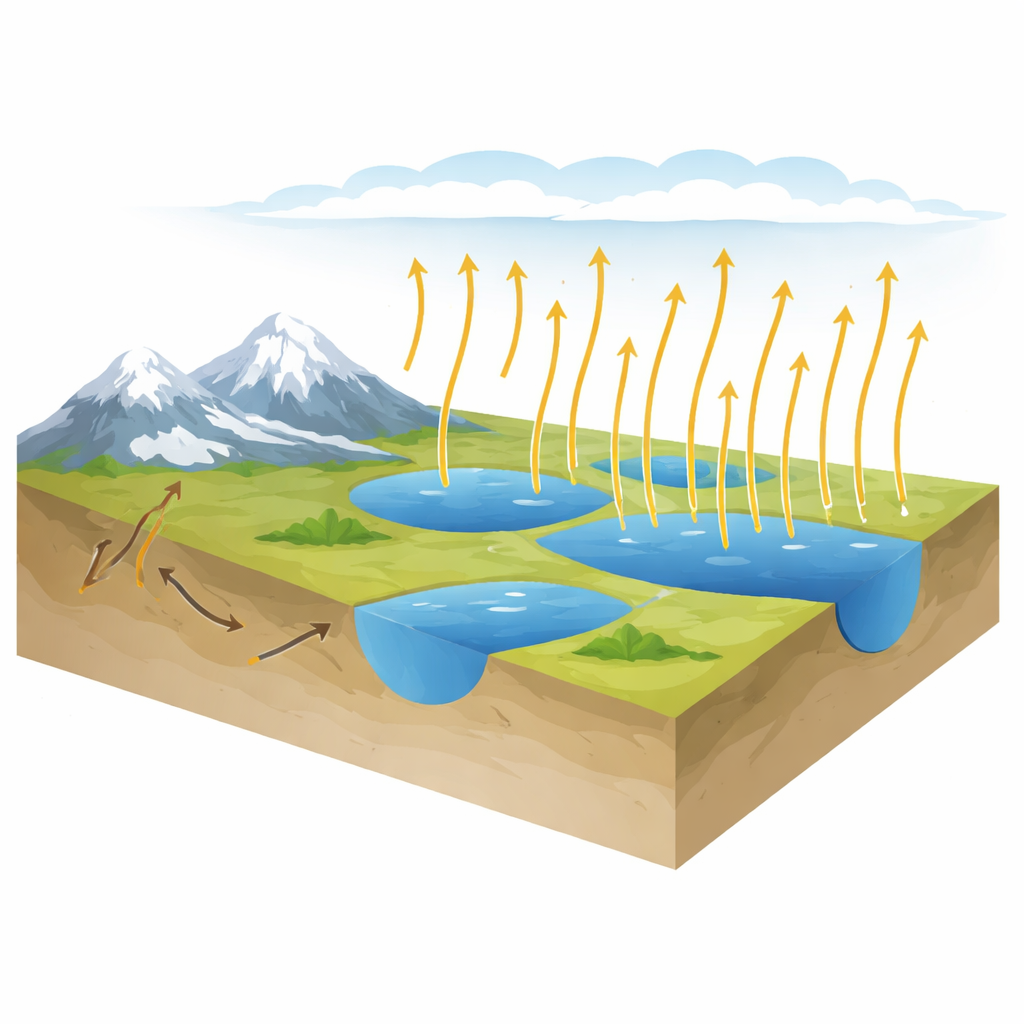
Reading the carbon story in lake plants
To peer into the past, the researchers needed a trustworthy “thermometer” for ancient lake CO2 levels. They turned to the tiny remains of aquatic plants buried in lake mud. Like land plants, aquatic plants build their tissues using dissolved carbon from the water around them. The relative amounts of light and heavy carbon atoms (expressed as δ13C) in their tissues shift depending on how much CO2 is dissolved in the water and how acidic or alkaline that water is. The team collected modern aquatic plants and water samples from 105 lakes across China, spanning cold highlands, dusty plateaus, river plains, and desert basins. By comparing the carbon fingerprints in plant tissues to measured CO2 in the water, they tested whether plant remains could reliably track past CO2 levels.
A new tool for measuring past lake CO2
The modern survey showed a remarkably tight link between aquatic plant carbon signatures and the amount of dissolved CO2. When lake water contained a lot of CO2, plant δ13C values were strongly shifted in one direction; when CO2 was scarce, the signal shifted the other way. This relationship held across different plant types—submerged, floating, and algae—and across lakes with very different chemistry. The plants’ carbon also tracked water acidity (pH), which governs how carbon moves between dissolved CO2 and other dissolved forms. Although details such as species, salinity, and depth introduce some noise, the overall patterns were so strong that the authors could derive a mathematical calibration: given the δ13C of plant remains, they could reconstruct the likely CO2 concentration in the lake at the time those plants grew.
Replaying 26,000 years of Tibetan lake history
Armed with this calibration, the team turned to sediment cores—natural archives drilled from lake bottoms—from four Tibetan Plateau lakes, and combined these new records with previously published carbon data from ten more lakes. Together they span the last 26,000 years, from the cold peak of the last ice age through the warming that followed and into the present. Applying their plant‑based proxy, the scientists reconstructed how lake CO2 and pH have risen and fallen over time. The picture that emerged is striking: throughout the entire period, Tibetan lakes generally held more CO2 than would be expected if they were in simple balance with the atmosphere, meaning they consistently leaked CO2 to the air. Emissions peaked between about 8,000 and 18,000 years ago, during the last deglaciation and early Holocene, when the world’s climate was rapidly warming. 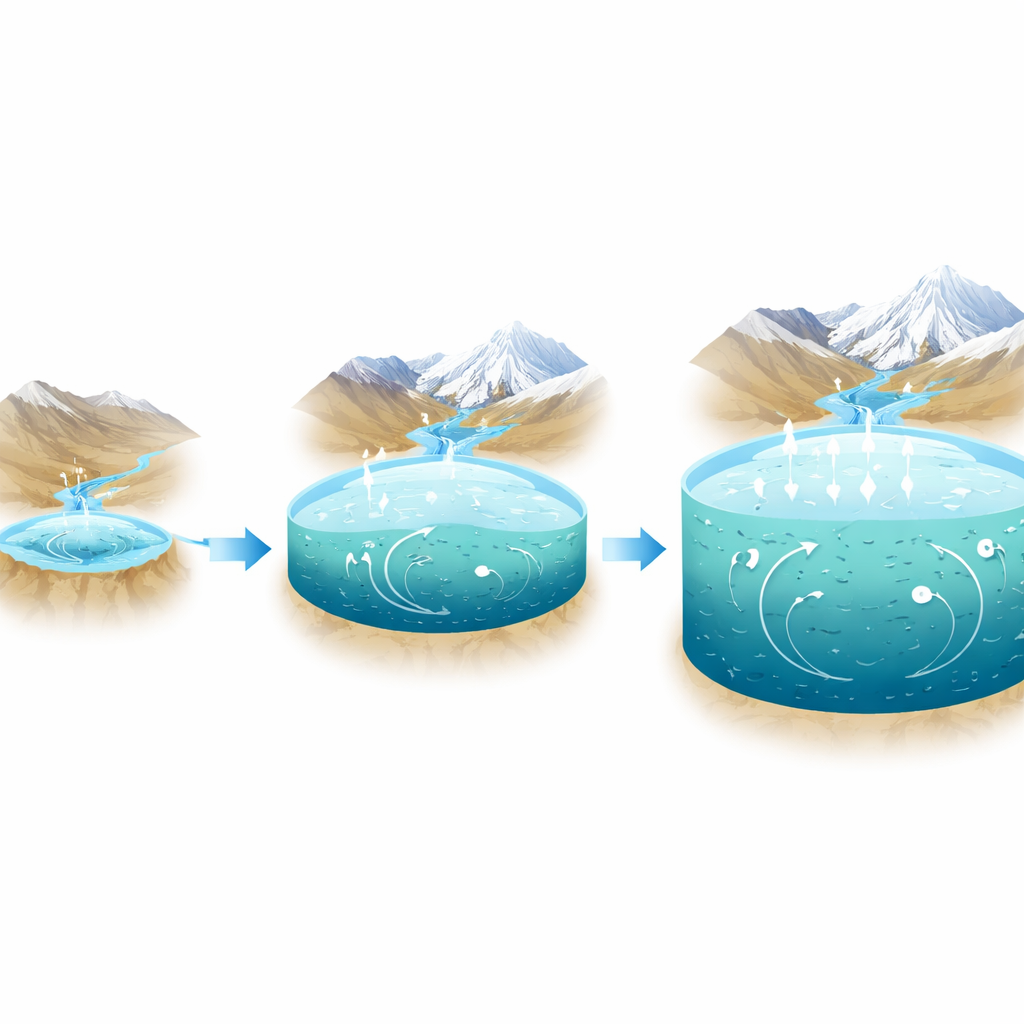
Why CO2 peaked after the ice age
The timing of maximum lake CO2 does not line up neatly with the global rise in atmospheric CO2 recorded in polar ice cores, nor with simple measures of how much organic matter or nutrients accumulated in lake mud. Instead, the key seems to be water balance and acidity. As climate warmed after the last ice age, more rain and meltwater flowed into Tibetan lakes. These inflows carried carbon from soils and rivers and tended to lower lake pH, shifting the water’s internal chemistry so that more of the dissolved carbon existed as free CO2. Modern measurements show that lower pH is closely associated with higher CO2 in lake water, and the reconstructed pH histories support this link: lakes were less alkaline and CO2‑rich during deglaciation, then more alkaline and more varied from lake to lake in the mid‑ to late Holocene, much like today.
What this means for the global carbon cycle
The finding that Tibetan lakes were 2–3 times richer in dissolved CO2 than today during deglaciation suggests they may have been a non‑trivial contributor to the global rise in atmospheric CO2 during that time. Modern lakes worldwide already emit CO2 equal to a sizable fraction of the ocean’s carbon uptake; in a warmer, wetter post‑ice‑age world, that contribution may have been even larger, especially from high‑altitude and dry‑region lakes like those on the Tibetan Plateau. While this study focuses on one region, it offers a powerful new tool—using aquatic plant remains to read ancient CO2 levels—that can be applied to lakes around the world. It also reminds us that as climate, water, and ecosystems interact, even seemingly isolated mountain lakes can play important roles in shaping Earth’s long‑term climate story.
Citation: Liu, H., Liu, W., Wang, Z. et al. Tibetan lakes have been persistent CO2 sources since the Last Glacial Maximum. Commun Earth Environ 7, 330 (2026). https://doi.org/10.1038/s43247-026-03360-y
Keywords: Tibetan Plateau lakes, lake carbon cycle, paleoclimate, aquatic plant isotopes, CO2 emissions