Clear Sky Science · en
Future climate will not save high-elevation white pines
Why mountain pines matter to us
High on the ridgelines of the American West, tough white pines anchor thin soils, slow snowmelt, shelter wildlife, and feed birds and bears. Many people assume that a warming climate will at least tone down some of the tree diseases that threaten these forests. This study asks a sobering question: will future climate change actually rescue these iconic high-elevation pines from a deadly invasive disease called white pine blister rust—or make things worse?
A quiet killer in the high country
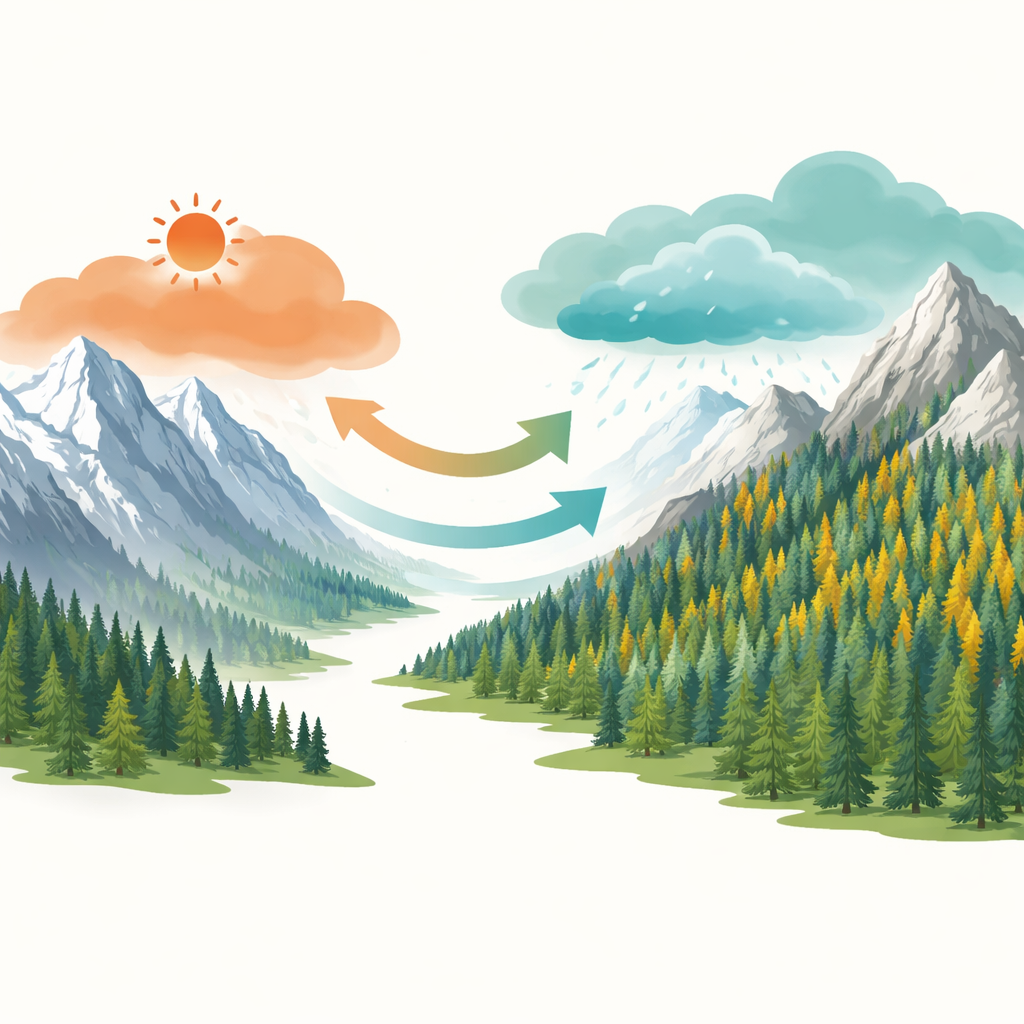
White pine blister rust is a fungal disease accidentally brought from overseas more than a century ago. It needs two kinds of plants to complete its life cycle: high-elevation five-needle white pines (known collectively as “High-5” species) and certain shrubs and wildflowers, especially those that like moist streamside conditions. The fungus thrives in cool, damp air, sending spores from the shrubs to the pines and back again. Over time it girdles branches and trunks, killing pines of all ages. In many western ranges, this disease, along with bark beetles, drought, and fire, has already transformed once-dense white pine stands into sparse, struggling remnants.
Using past patterns to see the future
To find out how climate might change this threat, the researchers assembled nearly 6700 field observations of diseased and healthy trees collected across the western United States between 1995 and 2020. They separated the landscape into two broad zones. In “invading” areas, blister rust is present only at low levels, so spores are still relatively rare. In “established” areas, the disease is common and the air is assumed to carry far more spores. For each zone, they trained computer models to learn which combinations of temperature, humidity, rainfall, and terrain best predicted where the disease shows up on trees. They then applied these models across the full range of High-5 pine species from 1980 onward and projected them through the end of the century using multiple climate change scenarios.
What the climate and land are telling us
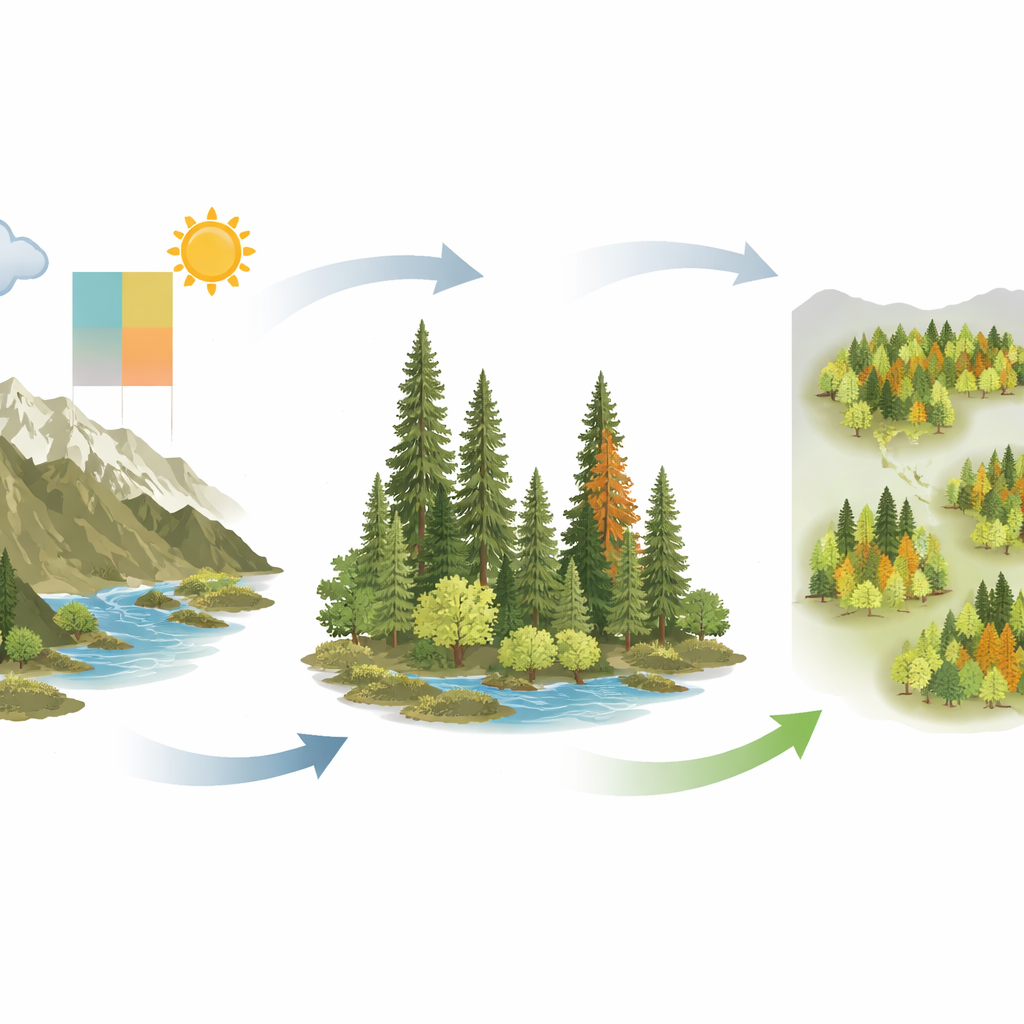
The models show that moist conditions—higher rainfall, higher humidity, more nearby streams, and rugged terrain that traps cool, damp air—consistently raise disease risk. Warmer conditions tend to lower risk, but only up to a point. Moderate warmth combined with enough moisture can still be very favorable to blister rust. In places where the disease is already common, almost the entire High-5 range in the United States has suitable conditions in most years. Where the disease is still invading, risk is lower today but is projected to edge upward as some southern mountain regions become wetter at key times of year. The study also finds that risk can spike in certain “wave years,” when climate lines up just right and very large areas simultaneously become highly favorable for new infections.
Future forests under pressure
Looking ahead to 2030–2099, the study finds little evidence that climate change will naturally push blister rust out of most high-elevation habitats. In the established zone, risk stays high and even increases slightly later in the century. In the invading zone, average risk rises and the lowest-risk years become less safe, even though some years remain relatively unfavorable for the disease. Every High-5 species in the United States is projected to experience at least one year when three-quarters or more of its range faces elevated risk, although some species—such as southwestern white pine—tend to face somewhat lower risk than others. A few scattered locations show persistently lower or less frequent risk and could act as temporary refuges, but even these places are projected to face occasional high-risk years.
What this means for people and pines
For anyone hoping that a hotter, drier climate would simply choke off this disease, the message is clear: future climate alone will not save high-elevation white pines. Instead, conditions suitable for blister rust are likely to persist or expand across most of the High-5 range, especially if the fungus continues to spread and spore levels rise. That makes deliberate action essential. The authors argue for two complementary strategies: proactive work in areas that are still lightly affected—such as planting more pines, fostering genetic resistance, and preparing stands for stress—and intensive restoration where trees have already been heavily hit. With sustained, science-based management, there is still a path to keep these keystone mountain forests functioning for wildlife, water supplies, and future generations.
Citation: Malone, S.L., Schoettle, A.W., Burns, K.S. et al. Future climate will not save high-elevation white pines. Commun Earth Environ 7, 351 (2026). https://doi.org/10.1038/s43247-026-03301-9
Keywords: white pine blister rust, high elevation forests, climate change and disease, western North America pines, forest disease risk