Clear Sky Science · en
More intense and equal compound heatwaves driven by urbanization
Why hotter cities matter to everyone
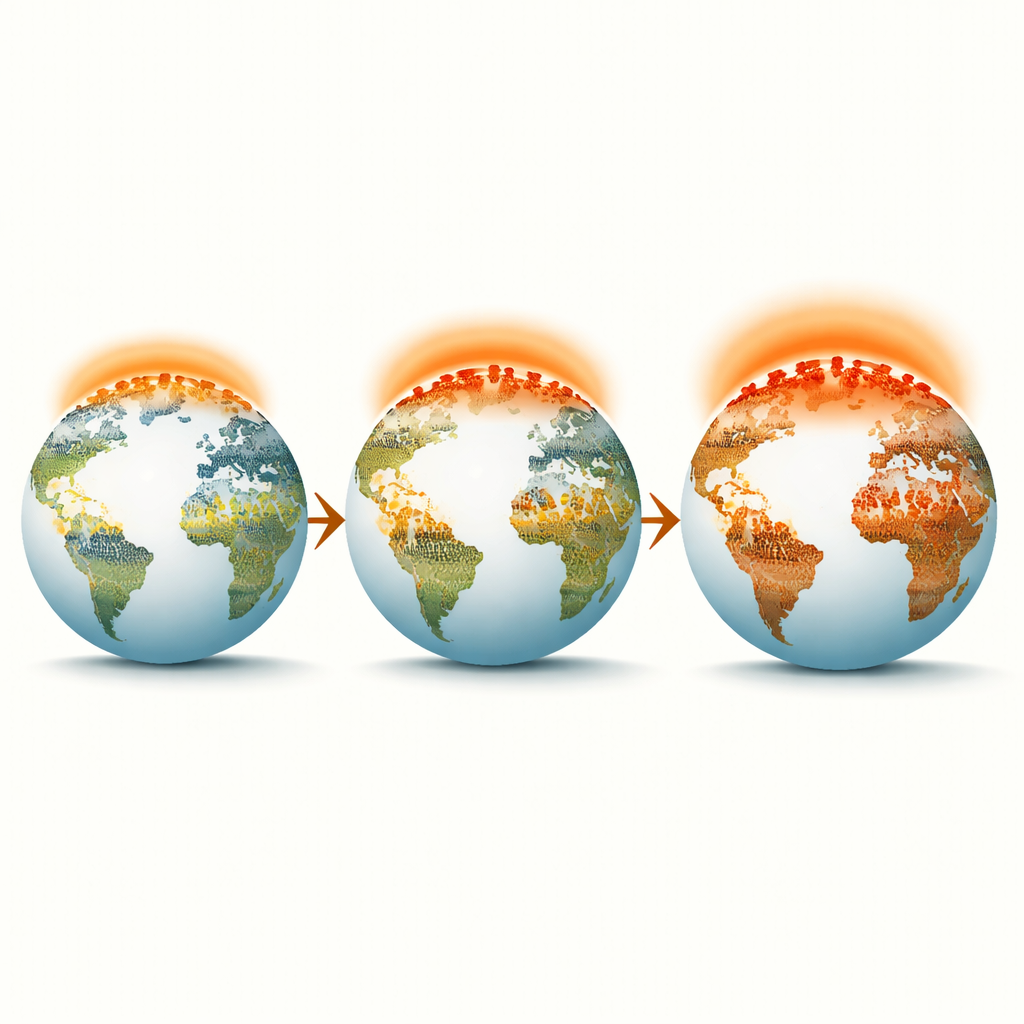
Across the globe, city dwellers are feeling the squeeze of hotter days and nights. This study looks closely at a particularly dangerous kind of heatwave that keeps temperatures high both day and night, and asks two big questions: Are these events getting worse in cities as they grow, and are they shared fairly among residents? By examining nearly a thousand cities worldwide, the authors uncover a surprising pattern: as urban areas expand, these round-the-clock heatwaves become stronger overall, but the differences in heat exposure between neighborhoods actually shrink.
How the study tracks city heat
The researchers focused on “compound” heatwaves, meaning periods when both daytime highs and nighttime lows stay unusually hot for several days in a row. Using satellite-based air temperature data at one–kilometer resolution from 2003 to 2019, they calculated how much extra heat each city pixel experienced during these events and then averaged this across all pixels to describe the overall city heat load. They combined this with detailed maps of where people live to see not just how hot a city gets, but how that heat is shared among its residents. To quantify the unevenness of exposure within each city, they used a standard inequality measure more often seen in economics, adapted here to describe who gets how much heat.
More heat in cities, especially in the Global South
Across the 936 cities studied, the total heat from compound day–night heatwaves rose over the 17‑year period, and two broad patterns emerged. First, cities in wealthier countries of the Global North currently experience higher levels of these events on average than those in the Global South. Second, the rate of increase is faster in the Global South, particularly in lower- and middle-income countries, meaning many rapidly growing cities are catching up in terms of extreme heat. This result held up across several alternative ways of defining heatwaves and using different temperature datasets, suggesting the upward trend is robust rather than an artifact of how heat was measured.
When rising heat becomes more evenly shared
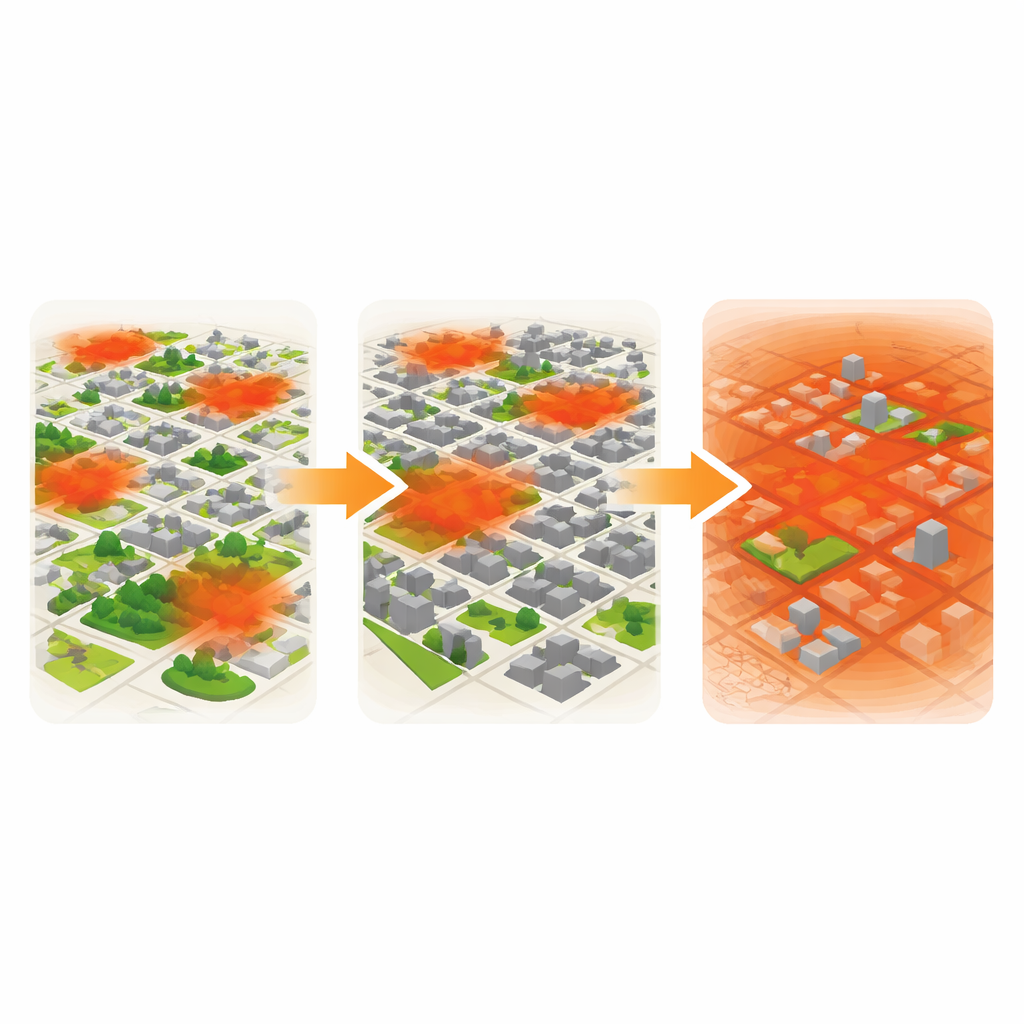
While overall heat burden increased, the inequality of exposure within cities moved in the opposite direction. On average, the study found that the gap between the hottest and coolest parts of a city has been shrinking, with the strongest declines in the Global South and in poorer countries. In about two-thirds of all cities, and in nearly three-quarters of Global South cities, heatwaves became both more intense and more evenly distributed at the same time. Statistical analyses showed a clear negative link: cities with larger increases in heat tended to have larger drops in inequality, and those with higher average heat levels generally had lower disparity in who experiences that heat.
How urban growth reshapes heat patterns
To understand why, the authors examined how physical changes to the city surface influence heat. As urbanization advances, more land is covered by hard, impervious materials such as concrete and asphalt, while vegetation tends to decline. The study shows that more built-up surfaces are strongly associated with stronger compound heatwaves, whereas adding greenery helps soften them. Early in the growth of a city, these changes are very uneven from place to place, creating sharp contrasts between hot, paved districts and cooler, greener areas. Over time, however, many cities become more uniform: the spread of similar building types and surface materials smooths out these contrasts, making the heat field more homogeneous. Modeling work in the study indicates that this decline in spatial variability of heat, more than shifts in population distribution, is the main driver behind falling inequality in exposure.
What this means for fair and livable cities
To a lay observer, a reduction in heat inequality might sound like good news, but the study warns that this trend is largely driven by previously cooler neighborhoods heating up, rather than hot areas getting relief. In other words, more people are being drawn into the danger zone, even if they now share that risk more equally. The authors argue that city leaders should judge progress not only by how evenly heat is distributed but also, and more importantly, by whether overall heat levels are falling. They highlight the need for strategies that both cool cities and reduce unfair burdens, such as expanding urban greenery, improving airflow corridors, and prioritizing protections for vulnerable groups. As urbanization continues, managing the double challenge of stronger and more widespread heatwaves will be central to building healthier, more sustainable cities.
Citation: Gao, S., Chen, Y., Chen, D. et al. More intense and equal compound heatwaves driven by urbanization. npj Urban Sustain 6, 54 (2026). https://doi.org/10.1038/s42949-026-00363-8
Keywords: urban heatwaves, city inequality, urbanization, climate risk, green infrastructure