Clear Sky Science · en
Nucleoli-localized KANSL2 as an epigenetic regulator of ribosome biogenesis in glioblastoma cells
Why this matters for brain cancer
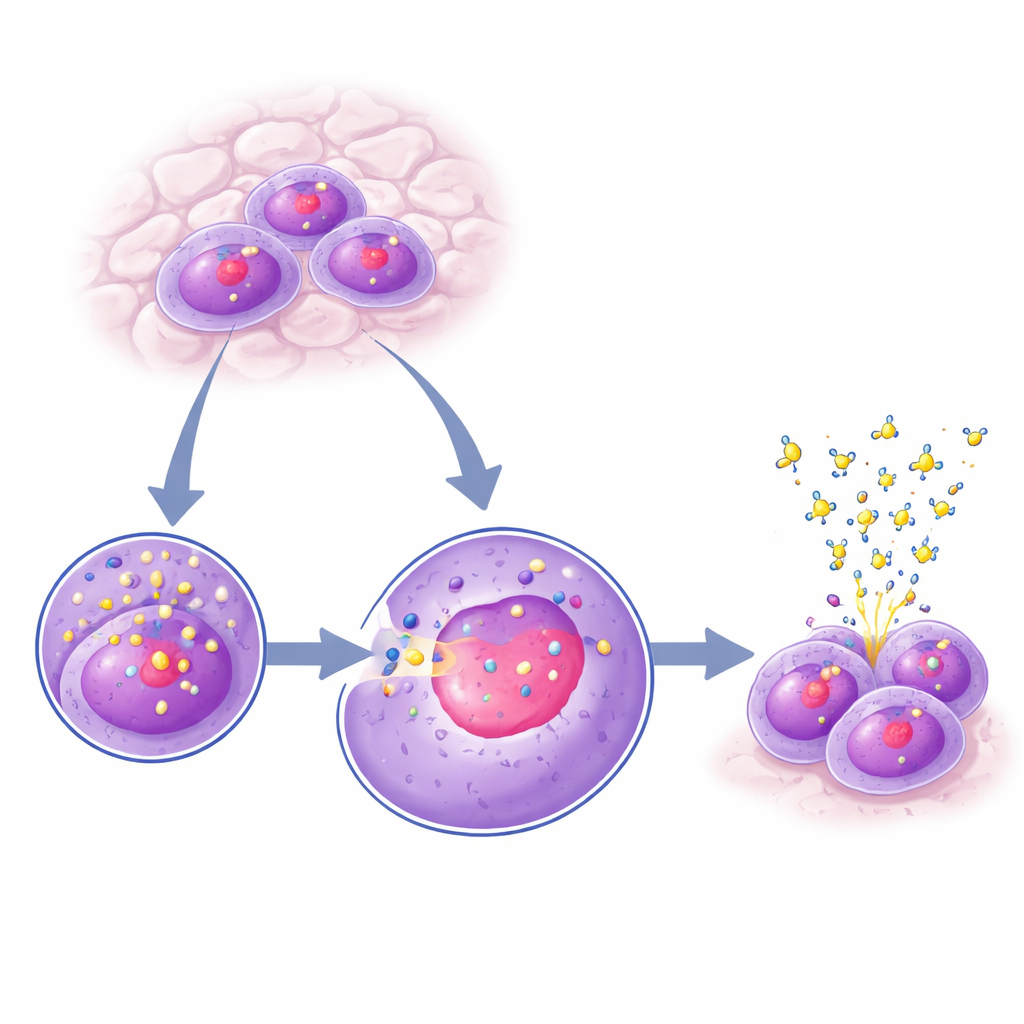
Glioblastoma is one of the deadliest forms of brain cancer, in part because its cells are exceptionally good at growing and bouncing back after treatment. This study uncovers how a little-known protein inside the cell nucleus, called KANSL2, helps these tumor cells turbocharge their internal protein factories, the ribosomes. By showing that KANSL2 directly promotes the production of ribosomes, the work points to a new weak spot that might be exploited to slow or stop glioblastoma growth.
Turning up a hidden growth switch
Researchers first asked whether KANSL2 is simply present in glioblastoma cells or actively linked to their aggressive behavior. Using large public datasets that compare tumor tissue to normal brain, they found that KANSL2 is consistently more abundant in glioblastoma. Tumors with the highest KANSL2 levels also showed stronger signatures of “stem-like” behavior—cells that can self-renew and resist therapy. Gene analysis further revealed that high KANSL2 goes hand in hand with elevated activity of genes involved in building ribosomes, hinting that this protein may be a key switch connecting stemness, growth, and ribosome production.
Finding KANSL2 in the cell’s factory hub
Inside each cell nucleus sits the nucleolus, a dense spot where ribosomes are born. By staining different cell types and looking under the microscope, the team observed that KANSL2 is not evenly spread throughout the nucleus: it becomes concentrated in the nucleolus. This enrichment is dynamic—it is strongest just before and after DNA is copied (the G1 and G2 phases of the cell cycle) and weaker during DNA replication (S phase). When the researchers used a drug that specifically blocks the enzyme responsible for making ribosomal RNA, the core component of ribosomes, KANSL2’s presence in the nucleolus dropped sharply, even though its overall amount in the cell did not change. This suggests that KANSL2 is drawn to the nucleolus when ribosome production is active and leaves when that process is shut down.
From epigenetic marks to ribosome output
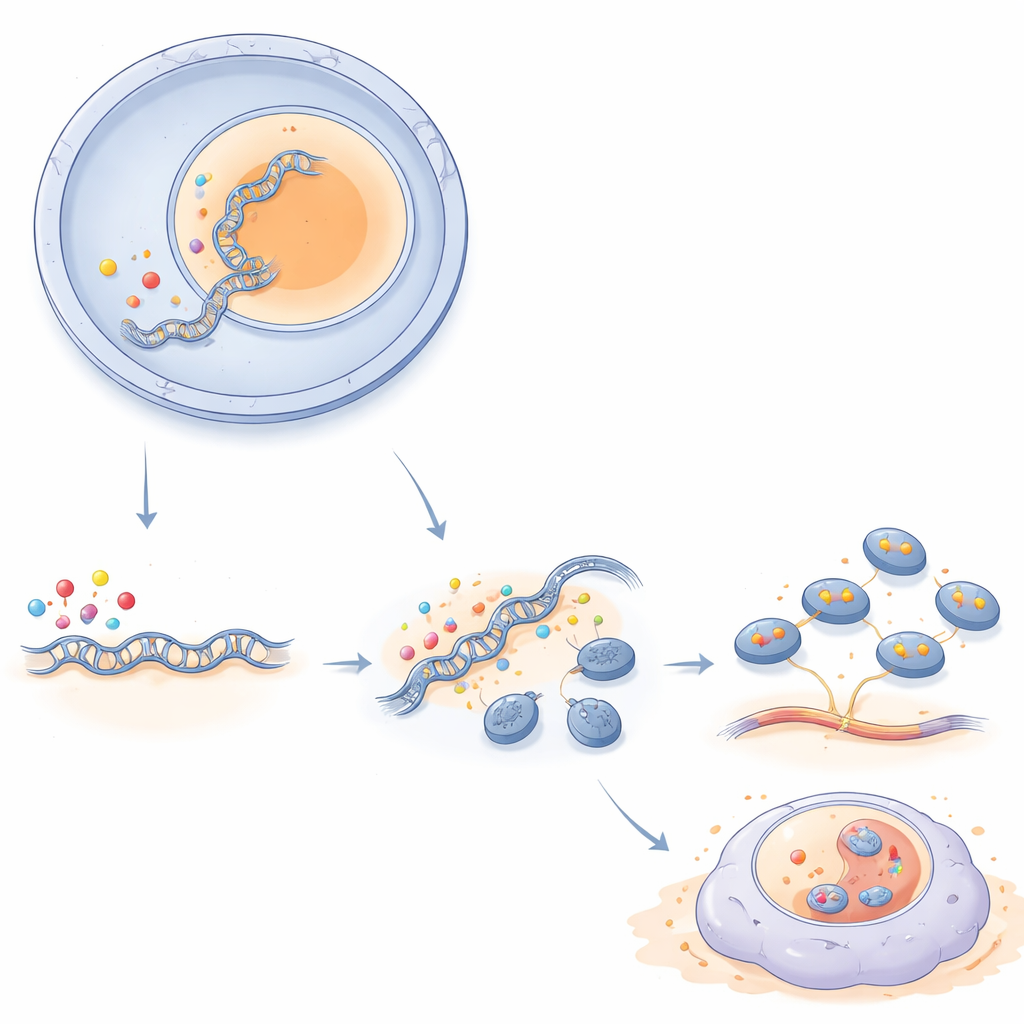
KANSL2 belongs to a larger assembly of proteins known for modifying how DNA is packaged, mainly by placing small chemical tags on histone proteins. These tags can loosen DNA, making genes easier to read. In glioblastoma cells, reducing KANSL2 levels led to a broad loss of specific histone marks on histone H4, including at the stretches of DNA that encode ribosomal RNA. Using chromatin immunoprecipitation, the authors showed that less KANSL2 means less acetylation at the ribosomal DNA promoter, a region that controls the start of ribosomal RNA transcription. Consistent with this, cells lacking KANSL2 produced less of the initial ribosomal RNA transcript (45S) and its processed form (28S), while overexpressing KANSL2 increased these RNA species and boosted the activity of a reporter driven by the ribosomal DNA promoter. Together, these results indicate that KANSL2 acts as an epigenetic regulator that directly turns up the ribosomal RNA machinery.
Ripples across the protein-production system
The impact of KANSL2 went beyond a few molecular markers. When the team measured new protein synthesis using a labeling method that tags freshly made proteins, glioblastoma cells with reduced KANSL2 incorporated significantly less label, a sign that their ribosomes were less active. Bulk RNA sequencing of patient-derived glioblastoma spheroids—three-dimensional cultures that better mimic tumors—showed that silencing KANSL2 caused a broad drop in genes needed for ribosome assembly, ribosomal proteins, and RNA processing. At the cellular level, cells with extra KANSL2 grew faster, whereas cells with KANSL2 knocked down slowed their division and accumulated in an early phase of the cell cycle, linking ribosome output directly to proliferation.
A new vulnerability in stubborn brain tumors
By connecting KANSL2 to the control of ribosome production, this study explains how glioblastoma cells can sustain the heavy biosynthetic load required for rapid growth and the maintenance of stem-like properties. KANSL2 shuttles into the nucleolus during key windows of the cell cycle, helps open up ribosomal DNA through histone acetylation, and thereby boosts ribosomal RNA and ribosome biogenesis. Because these processes are especially hyperactive in aggressive tumors but less so in normal brain cells, targeting KANSL2 or its associated pathways could offer a way to curb tumor growth while sparing healthy tissue, making it an attractive candidate for future therapeutic strategies.
Citation: Budnik, N., Canedo, L., Morellato, A.E. et al. Nucleoli-localized KANSL2 as an epigenetic regulator of ribosome biogenesis in glioblastoma cells. Commun Biol 9, 535 (2026). https://doi.org/10.1038/s42003-026-09808-3
Keywords: glioblastoma, ribosome biogenesis, nucleolus, epigenetic regulation, KANSL2