Clear Sky Science · en
The role of dorsal anterior cingulate cortex in dynamic attitude changes in naturalistic settings
Why changing our minds matters
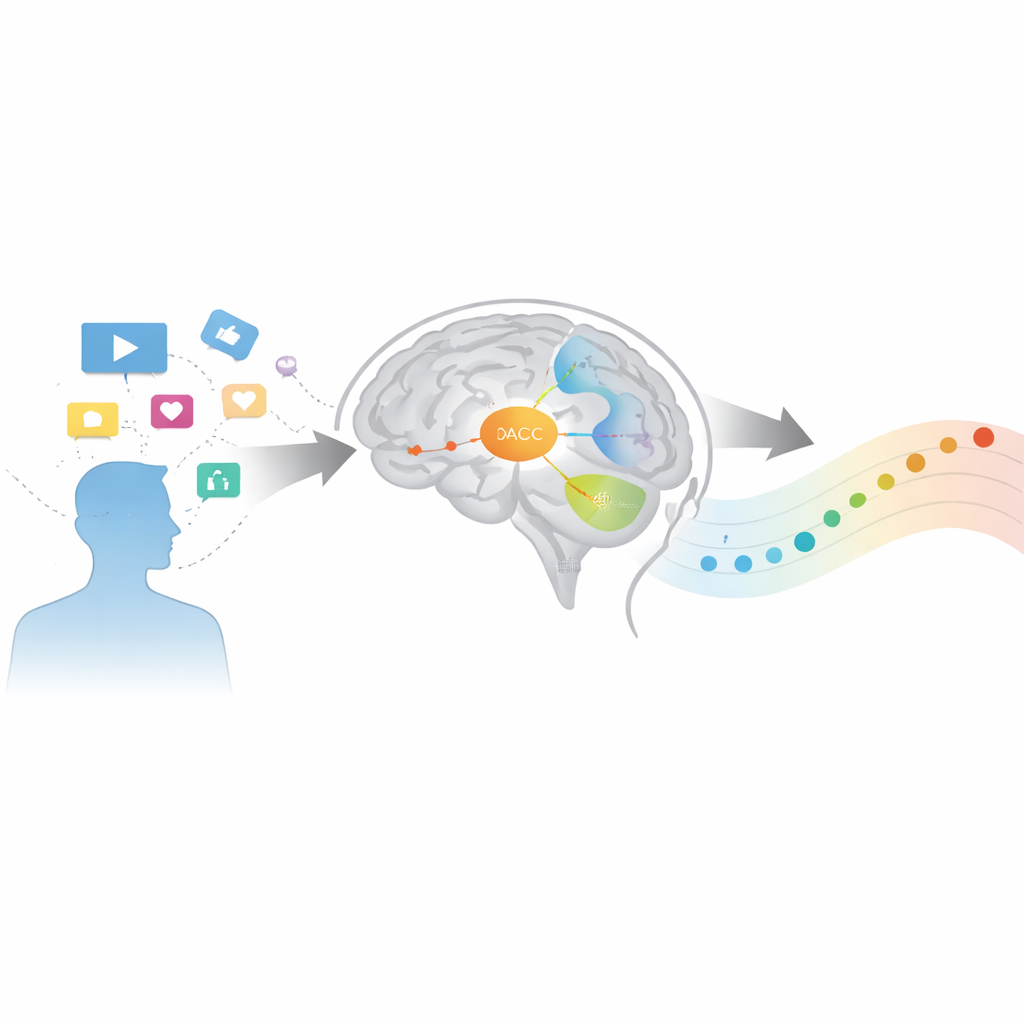
In everyday life, our opinions rarely stay put. A moving speech, a debate show, or a persuasive video can nudge us toward or away from a position without us even noticing. This study asks a deceptively simple question: as our views slowly shift in response to real-world messages, what is happening inside the brain, moment by moment? By watching people’s brains while they follow persuasive arguments, the authors reveal how a key brain hub helps track and guide these quiet changes of heart.
Following opinions in real time
The researchers used television debate clips to mimic the kinds of persuasive experiences we encounter outside the lab. In one experiment, volunteers watched 15 short videos on social issues such as career choices and morality. They rated their position on each topic before and after each clip, allowing the team to measure how much each person’s attitudes shifted overall. In a second experiment, a new group watched a nearly 50-minute debate about a futuristic brain chip. This time, participants continuously adjusted a scale whenever they felt their opinion change, creating a detailed timeline of each person’s changing stance.
A brain hub that tracks changing views
While people watched, the team recorded brain activity using functional MRI. They then compared how similarly pairs of people changed their attitudes with how similarly their brains responded over time. One region stood out: the dorsal anterior cingulate cortex (dACC), a strip of tissue buried near the middle of the brain. People whose attitudes shifted in similar ways also showed more similar moment-by-moment activity in this region. In the long debate, the dACC’s activity closely tracked each person’s evolving opinion, and it reliably ramped up around the moments when participants decided their view had changed.
Networks that signal when and how minds shift
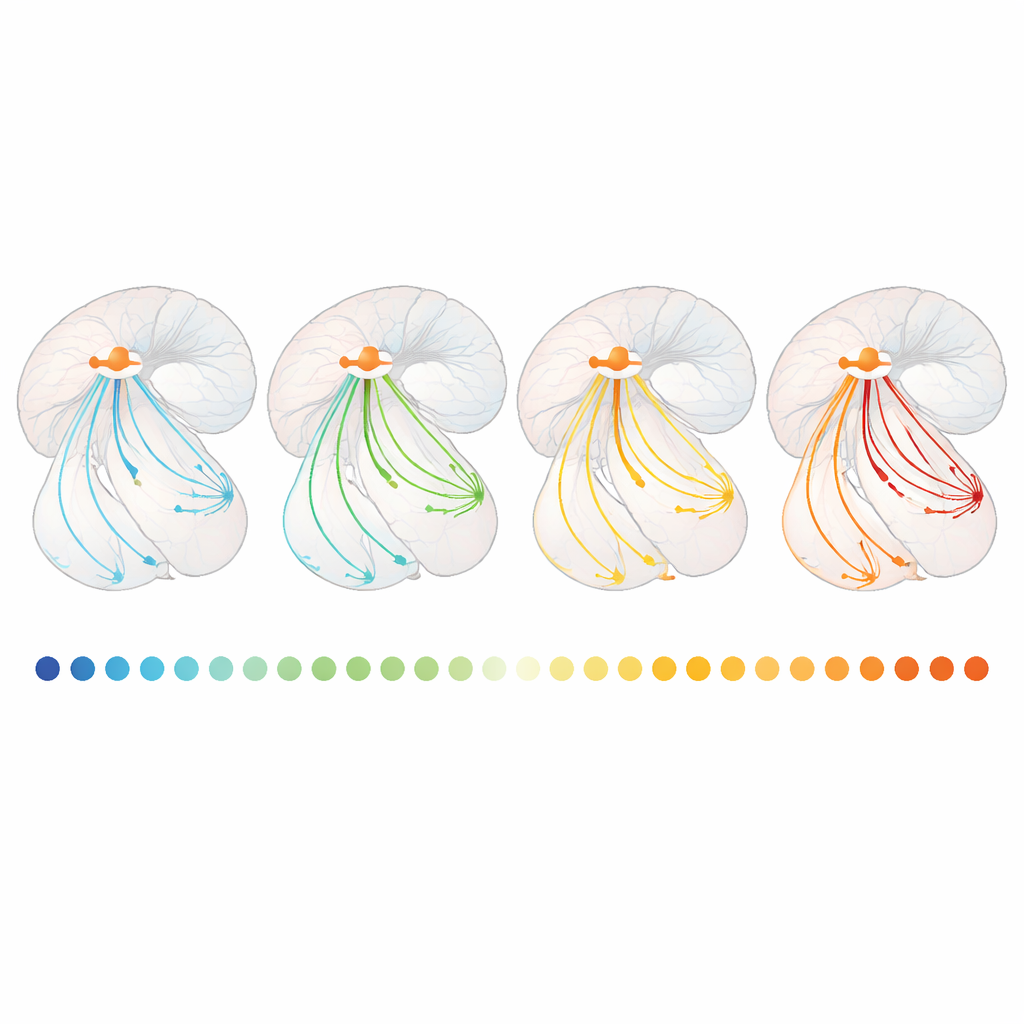
The dACC did not act alone. The study also examined how strongly this hub was temporarily linked to other brain areas as opinions evolved. The authors found that changing patterns of communication between the dACC and a set of regions known collectively as the default mode network—areas involved in internal thought, memory, and imagining—mirrored the way attitudes unfolded over time. Using these signals, simple machine-learning models could tell, above chance, whether a person changed their mind during a given two-minute segment of the debate. Around the exact instant of a shift, the pattern of links between the dACC and the broader brain network even carried information about the direction of change—whether someone was becoming more supportive or more opposed.
Personality and comfort with uncertainty
Not everyone responds to mixed or ambiguous arguments in the same way. The researchers measured each participant’s intolerance of uncertainty—a trait describing how uneasy people feel when outcomes are unclear. Pairs of people who both scored high on this trait showed a tighter match between their brain patterns and their attitude trajectories. In other words, for those who dislike uncertainty, the coupling between dACC-centered brain dynamics and actual shifts in opinion was stronger, suggesting that their brains may engage this hub more heavily when navigating muddy or conflicting evidence.
What this means for everyday persuasion
Together, these findings suggest that changing our minds in natural settings is not a single “lightbulb moment” but a continuous process managed by a flexible control hub in the brain. The dACC appears to monitor how well our current stance fits incoming information, coordinate with networks that weave new arguments into our existing beliefs, and help decide when and how our attitudes should be updated. By studying these processes during realistic debates rather than simple lab tasks, this work moves us closer to understanding how news, social media, and conversations gradually reshape our views in daily life—and why some people’s opinions are more tightly coupled to these brain signals than others.
Citation: Li, H., Yao, S., Zhang, Y. et al. The role of dorsal anterior cingulate cortex in dynamic attitude changes in naturalistic settings. Commun Biol 9, 505 (2026). https://doi.org/10.1038/s42003-026-09794-6
Keywords: attitude change, persuasion, brain networks, fMRI, uncertainty