Clear Sky Science · en
MTAP loss in gastrointestinal cancers is associated with CDKN2A deletion, poor prognosis in gastric carcinoma, and potential relevance for PRMT5-targeted therapy
Why this study matters for patients and families
Cancers of the digestive system, including those of the stomach, esophagus, pancreas, and bile ducts, cause a large share of cancer deaths worldwide. Doctors are urgently looking for better ways to predict which patients will do poorly and to find new weak spots in tumors that medicines can target. This study explores a small missing piece inside many gastrointestinal tumors and shows how it might both worsen outlook for some patients and open the door to future targeted treatments.
A missing repair helper inside tumor cells
Our cells rely on many helpers to recycle building blocks and keep growth under control. One such helper is an enzyme called MTAP, which helps reuse certain molecules needed for cell survival. In many cancers, a DNA segment that carries both MTAP and a well-known safety gene called CDKN2A is deleted. When this happens, tumor cells lose MTAP and change the way they handle vital nutrients. Researchers have become interested in MTAP loss because it seems to make cancer cells more vulnerable to a new class of drugs that block another protein involved in cell growth control.
Taking a broad look across digestive cancers
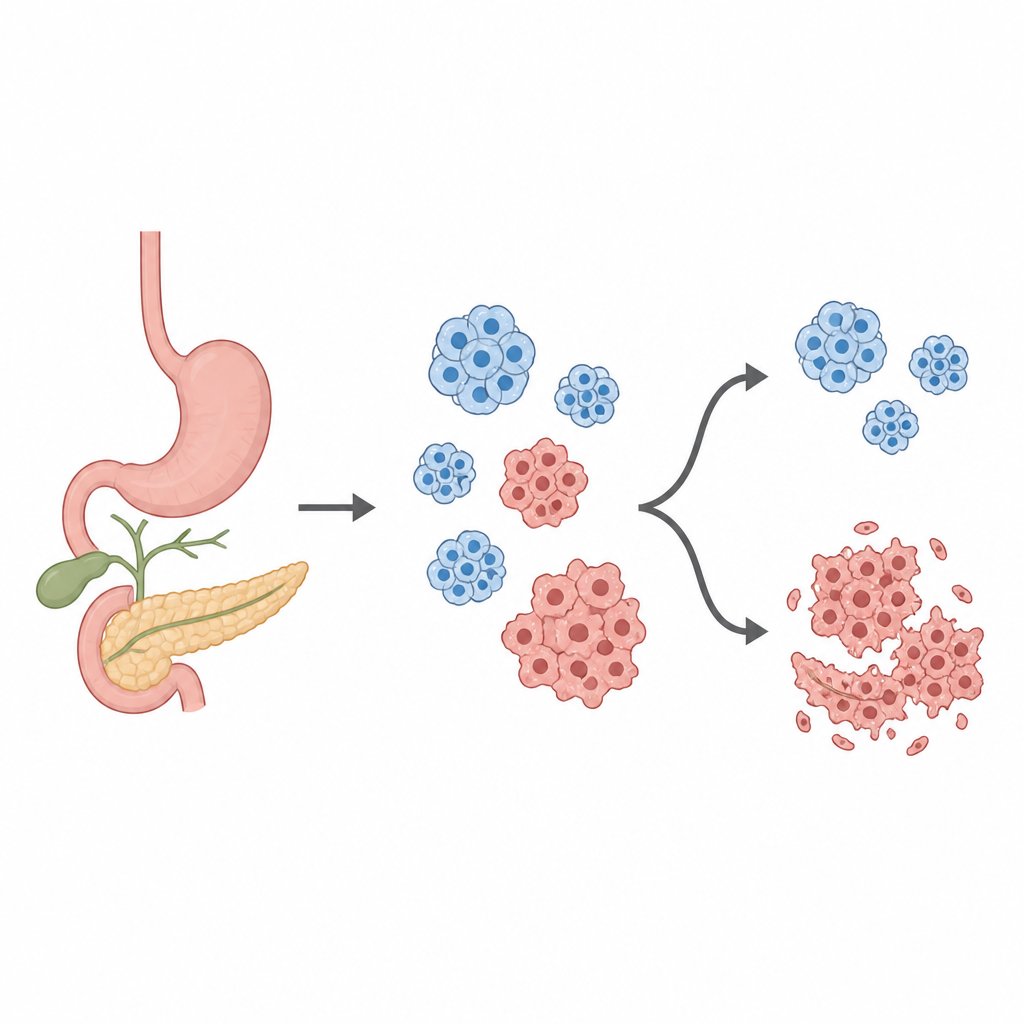
To understand how common MTAP loss is and whether it matters for patients, the authors examined tumor samples from 1545 people with cancers of the esophagus, stomach, pancreas, or bile ducts who had undergone surgery. They used a staining technique to see whether the MTAP protein was present in tumor cells and a separate genetic test to check for loss of the neighboring CDKN2A gene. MTAP loss turned out to be frequent: it appeared in about one quarter of bile duct cancers, nearly one in ten cancers of the esophagus and stomach, and about one in three pancreatic cancers. When MTAP was missing, CDKN2A was usually gone as well, confirming that both genes are often lost together in these tumors.
Link to survival in stomach cancer
The team then asked whether the presence or absence of MTAP affected how long patients lived after surgery. For bile duct, esophageal, and pancreatic cancers, they did not find a clear survival difference between patients whose tumors had MTAP loss and those whose tumors kept it. The picture was different for stomach cancer. Here, patients whose tumors lacked MTAP had shorter overall survival than those whose tumors still produced it. This effect was especially strong in patients who went straight to surgery without receiving chemotherapy or radiation beforehand. Even after accounting for tumor stage, lymph node involvement, and other standard risk features, having MTAP present in the tumor remained an independent sign of better outcome.
How reliable is this marker inside tumors
Because tumors can vary from one area to another, the researchers checked whether MTAP status changed within or between samples. In a set of esophageal tumors, almost all showed a uniform MTAP pattern throughout the whole tumor, and every primary tumor matched its lymph node metastases. Only a small minority displayed mixed staining, suggesting that MTAP status is usually stable and may be suitable as a practical marker in routine pathology. The study also compared MTAP loss to other known markers, such as HER2 or Claudin 18.2, and found no clear overlap, indicating that MTAP defines a separate group of patients.
Pointing toward future targeted treatments
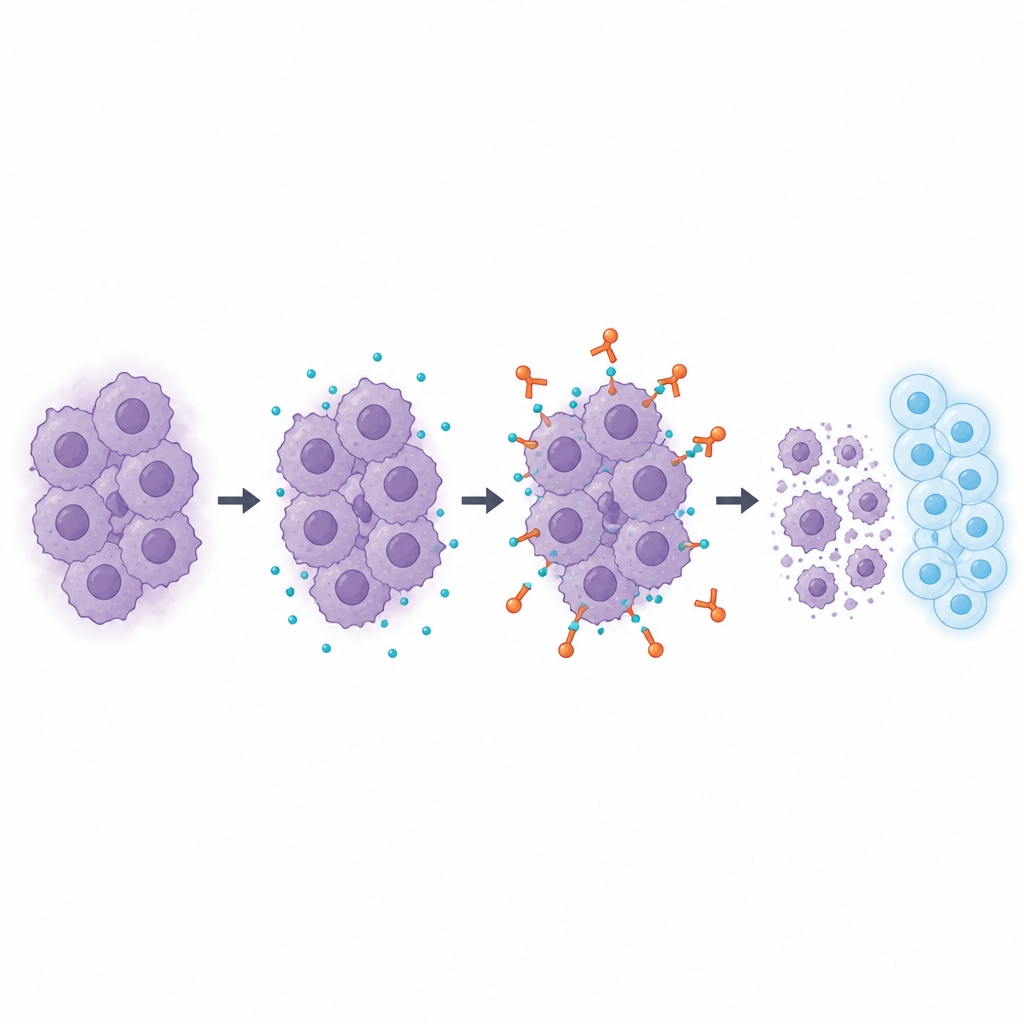
When MTAP is lost, a small molecule called MTA tends to build up around tumor cells and partly blocks another protein, PRMT5, that helps regulate cell division. Drug developers have created PRMT5-blocking compounds that are designed to home in on tumors already stressed by MTAP loss, while sparing healthy tissue. Several of these medicines are now being tested in early-stage clinical trials for solid tumors with MTAP deletion. Because a substantial share of digestive cancers in this study lacked MTAP, the findings suggest that many patients could, in the future, be candidates for such treatments, especially those with stomach cancer where MTAP loss also signals poorer prognosis.
What this means going forward
In simple terms, this study shows that many cancers of the digestive system are missing a small but important cellular helper, and in stomach cancer this loss is linked to shorter survival after surgery. At the same time, this weakness may create a specific vulnerability that new drugs can exploit. While more research and clinical trials are needed, MTAP testing could one day help doctors both judge risk more accurately and steer patients with certain gastrointestinal cancers toward targeted therapies that make the most of this tumor defect.
Citation: Lyu, S.I., Knipper, K., Fretter, C. et al. MTAP loss in gastrointestinal cancers is associated with CDKN2A deletion, poor prognosis in gastric carcinoma, and potential relevance for PRMT5-targeted therapy. Sci Rep 16, 15061 (2026). https://doi.org/10.1038/s41598-026-51370-9
Keywords: MTAP loss, gastric cancer, gastrointestinal tumors, PRMT5 inhibitors, CDKN2A deletion