Clear Sky Science · en
Assessing maternal knowledge of neonatal danger signs in Egypt: a cross-sectional study
Why Recognizing Newborn Warning Signs Matters
The first month of a baby’s life is both precious and precarious. Many newborn deaths around the world happen not because treatment is impossible, but because families do not realize in time that something is wrong. This study from Egypt asks a simple but vital question: how well do mothers recognize the early warning signs that a newborn may be seriously ill, and which life circumstances help or hinder that knowledge?
Looking at Mothers Across Egypt
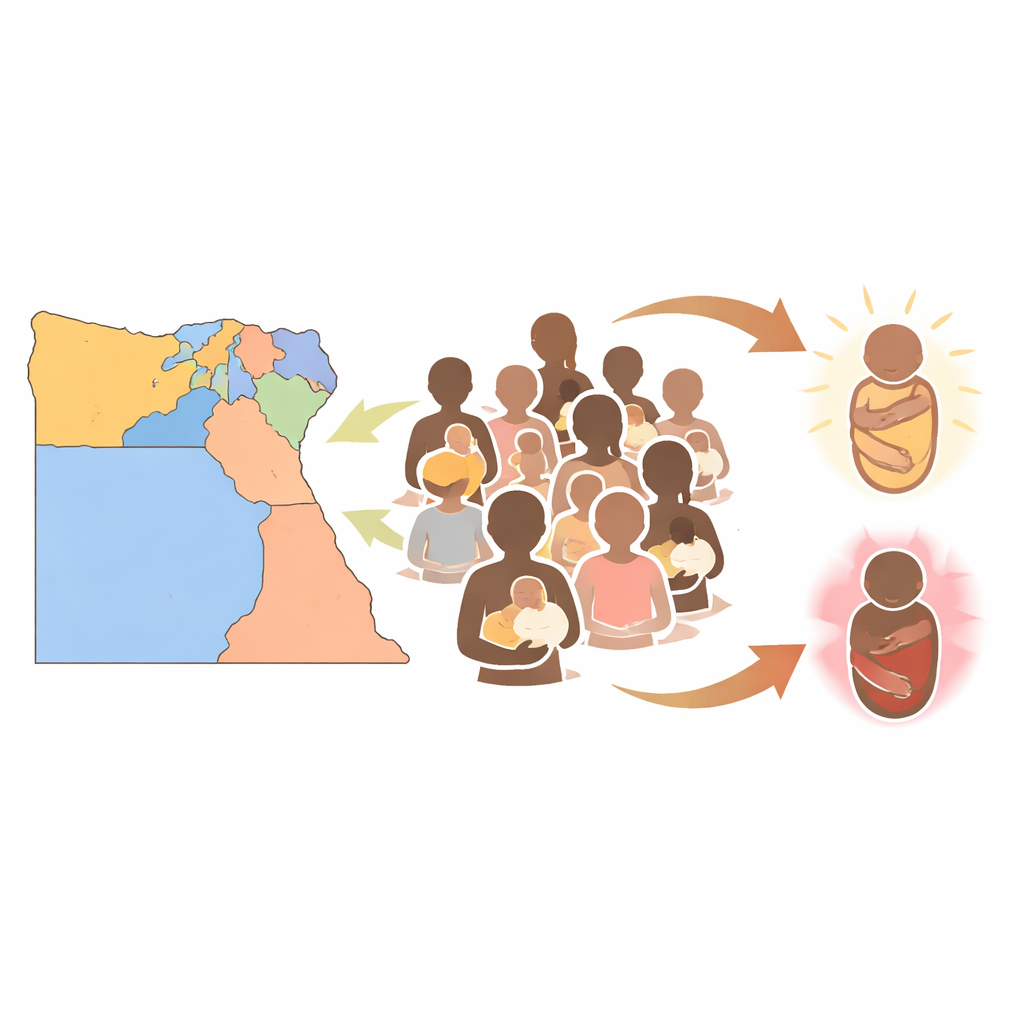
To answer this question, researchers visited public hospitals and primary health centers in nine governorates spread across Upper Egypt, Lower Egypt, and a remote desert region. From January to March 2025, they interviewed 1,831 mothers aged over 18 who had babies between one and 24 months old. Using a structured Arabic questionnaire with 16 items, the team asked mothers whether specific symptoms in newborns were dangerous or not. These symptoms included trouble feeding, breathing problems, fever or low body temperature, yellowing of the skin or eyes, blood in the stool, and other signs that can signal life-threatening illness during the first weeks of life. Each correctly recognized sign added to a total “knowledge score,” allowing the researchers to compare understanding between different social and geographic groups.
What Mothers Already Know—and What They Miss
The results were encouraging but also revealed important gaps. Overall, mothers scored a median of 14 out of 16 points, and about three-quarters scored above 75 percent on the knowledge scale—suggesting that, on the whole, Egyptian mothers are fairly well informed about newborn danger signs. Some symptoms were widely recognized: nearly all mothers identified blood in the stool, severe diarrhea, or obvious birth defects as serious problems. Yellowing of the eyes and skin, which can signal jaundice, was also well known. However, other warning signs were much less familiar. Persistent, inconsolable crying and problems with a male baby’s urine stream were among the least recognized markers of danger, even though they can hint at serious underlying conditions. These blind spots matter because missed or delayed recognition can postpone the decision to seek urgent medical care.
How Place, Income, and Health Visits Shape Knowledge
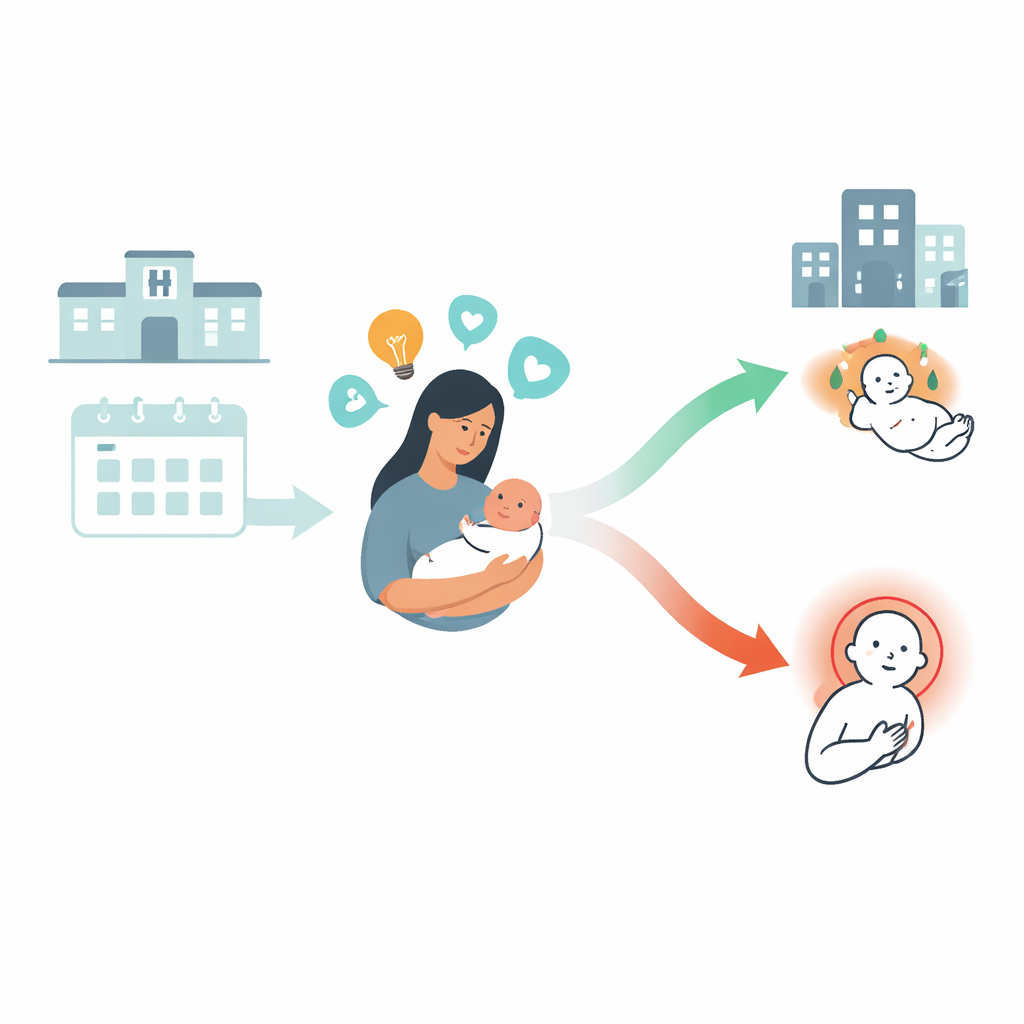
Knowledge was not evenly spread across the country. Mothers living in Beheira and Fayoum achieved some of the highest scores, while those in the sparsely populated New Valley governorate scored lowest. Surprisingly, rural mothers tended to have slightly better knowledge than urban mothers, perhaps reflecting stronger ties to local health workers or community programs in some rural areas. Family finances also played a role: households that described their income as sufficient, or sufficient with savings, had better-informed mothers than those struggling to make ends meet. One of the strongest influences was contact with health services during pregnancy. Mothers who attended at least four antenatal checkups scored higher than those with fewer or no visits, underlining how regular contact with care providers can translate into lifesaving information at home.
Where Mothers Get Their Information
The study also explored how different sources of health information relate to what mothers know. Nearly three-quarters of women said they had never attended a formal educational session on newborn health, and only a minority reported receiving such talks at primary health centers or public hospitals. Yet mothers who did attend sessions at private clinics showed particularly high knowledge scores, likely reflecting both better-resourced services and higher socioeconomic status. When asked where they preferred to seek information about newborn health, many mothers pointed to doctors and nurses. Those who favored healthcare providers, the internet, or advice from family and friends tended to understand danger signs better than mothers who mainly relied on social media or television and radio. This suggests that strengthening trusted, interactive sources of information may be more effective than passive media campaigns alone.
What This Means for Newborn Survival
In simple terms, this study shows that most Egyptian mothers already know a great deal about when a newborn might be in trouble, but important gaps remain—and these gaps are not random. Where a mother lives, how stable her household income is, how often she can attend antenatal visits, and whom she turns to for advice all influence her ability to spot danger early. The authors argue that health authorities should focus on regions with lower scores, such as New Valley, and on families with fewer resources, offering targeted education during pregnancy and after birth. By investing in strong antenatal and postnatal services, encouraging fathers to be involved, and making healthcare providers and reliable digital tools central sources of information, Egypt can help more parents act quickly when their newborn falls ill. Ultimately, closing these knowledge gaps could translate into fewer preventable newborn deaths and a healthier start to life for thousands of children.
Citation: Hammouda, E.A., Hassan, M.A., Hassan, N.A. et al. Assessing maternal knowledge of neonatal danger signs in Egypt: a cross-sectional study. Sci Rep 16, 14677 (2026). https://doi.org/10.1038/s41598-026-50756-z
Keywords: newborn health, maternal knowledge, danger signs, Egypt, antenatal care