Clear Sky Science · en
Exploring the relationship between inhibitory control and coping behaviour in horses
Why horse self-control matters for everyday care
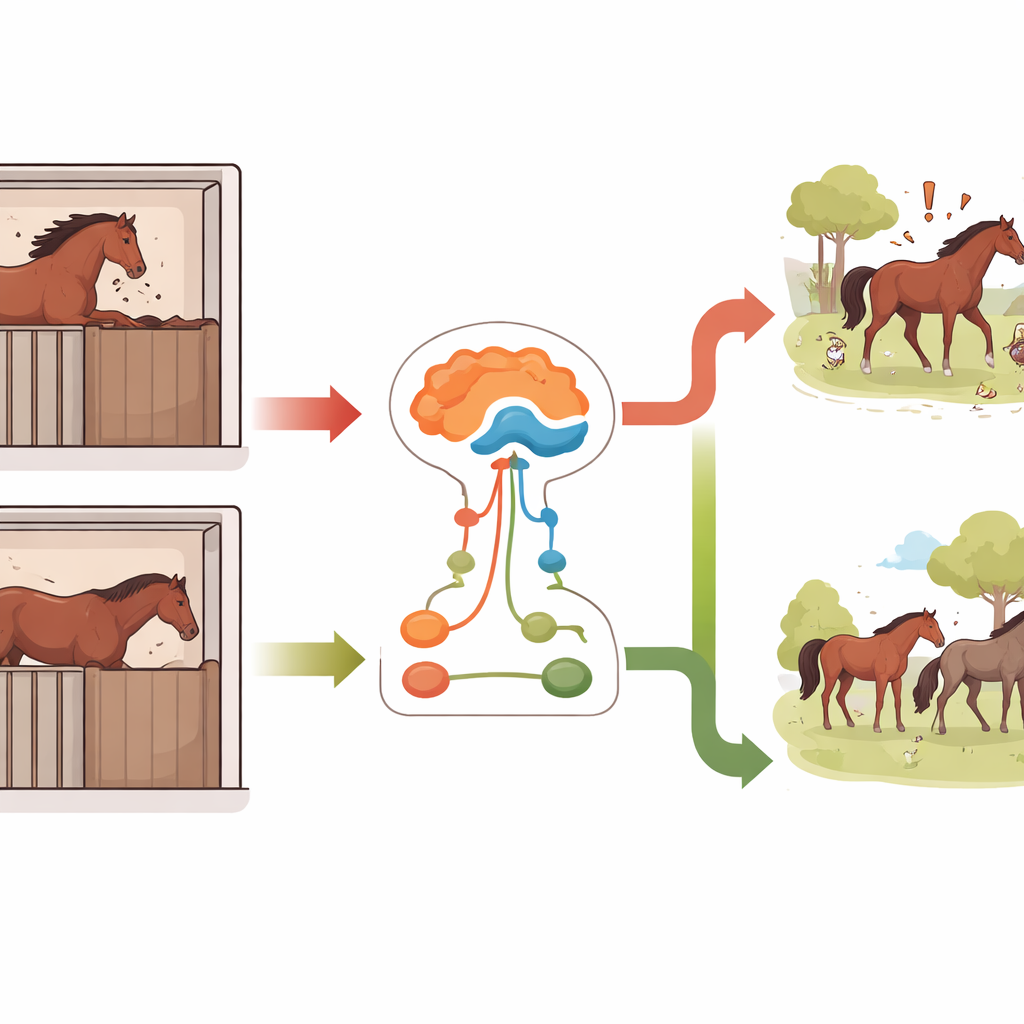
Many horses live in human-made settings that bear little resemblance to open fields and free-moving herds. Stables, strict feeding times, and limited turnout can be stressful, and not all horses cope equally well. This study asks a simple but powerful question: do horses that can better "hold themselves back" in tempting or confusing situations also cope better with common husbandry stressors like delayed feeding or temporary social isolation? The answer could help owners, trainers, and breeders understand which horses struggle most in modern management and how to support them.
How the researchers tested horse self-control
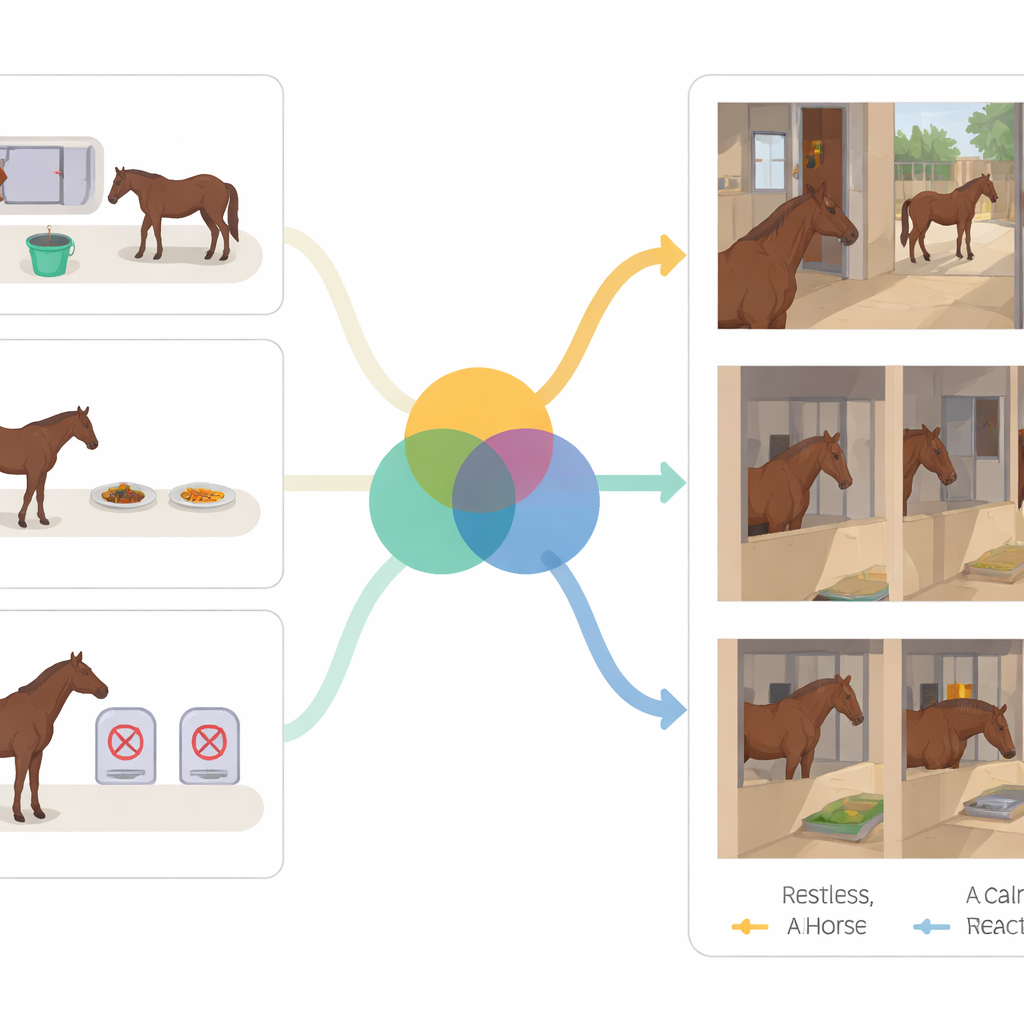
To explore this, the researchers worked with 31 broodmares kept in individual box stalls with regular but limited outdoor access. They measured different kinds of inhibitory control—the ability to pause or change an instinctive response—using three behavioural tests. In a detour task, horses first learned to walk around a set of barriers through a gap on one side to reach a food bucket. After they mastered this route, the gap was moved to the other side, forcing them to abandon the old habit and search for a new path. In a food test, horses chose between a small snack they could eat right away and a larger reward that became available only if they waited. Finally, in a symbol-learning task, horses learned to touch one of two shapes to get food, and then had to adapt when the rewarded shape was switched.
Putting horses in everyday stressful situations
The same mares then faced two mild but realistic challenges. On some mornings, all other horses in their building were turned out to the paddocks first, while the focal horses stayed behind, watching their companions leave. On other test days, all neighbours received their usual hay and concentrate, while the focal horses temporarily got nothing. Each test lasted 15 minutes and was repeated three times in each context. The team filmed the horses to record behaviours such as pacing, pawing, neighing, bar biting, and attentive scanning, and they collected saliva samples before and after each test to track changes in cortisol, a hormone associated with stress.
From dozens of measures to a few key patterns
Because both the self-control tests and the coping tests produced many separate measurements, the researchers used statistical tools to group related behaviours into broader components. For inhibitory control, four patterns emerged. One captured the ability to wait for better rewards and to switch to the new detour route, labelled here as "inhibition." A second pattern, "indecisiveness," combined slow decision-making with relatively poor success. A third, "learning capacity," reflected how well horses picked up new rules, and a fourth, "flexibility," described how quickly they adapted when rules changed. For responses to the stressful husbandry tests, six components appeared, including "nervousness" (high activity and agitation), "stress" (aggression, bar biting, and higher baseline cortisol), "anticipation" of food, "reactivity" (how strongly cortisol and behaviour rose during the challenge), "oral motivation" (feeding and mouth-based behaviours), and "vigilance" (alert postures and checking the surroundings).
Links between self-control, stress sensitivity, and attention
When the scientists compared these components, they found modest but meaningful relationships. Horses that showed stronger physiological reactivity to the tests—low baseline cortisol but a clear increase when challenged—tended to have better inhibitory control and to be quicker and more accurate in learning tasks. In other words, individuals that were sensitive yet well-regulated under stress also adapted more flexibly and decided faster in the self-control tests. Vigilant horses that paid close attention during feeding periods likewise scored higher on the inhibition component. By contrast, general food-related mouth behaviours did not clearly relate to self-control, suggesting that simple hunger or food obsession was not driving the cognitive results.
What this means for horses and their caretakers
Overall, the study shows that how a horse reacts to routine stressors in the stable is partly connected to its underlying self-control and learning style. Horses that can hold back impulsive responses, stay attentive, and adjust quickly when situations change may cope better with delayed feeding or momentary separation from the herd. For owners and managers, this suggests that cognitive traits like inhibitory control and flexibility are not just laboratory curiosities; they may influence welfare, trainability, and how well horses adapt to the artificial environments we create. In the long run, understanding and possibly training these abilities, alongside improving housing and management, could help more horses stay healthy and mentally resilient.
Citation: von der Tann, M., Palme, R., König von Borstel, U. et al. Exploring the relationship between inhibitory control and coping behaviour in horses. Sci Rep 16, 12738 (2026). https://doi.org/10.1038/s41598-026-48050-z
Keywords: horse behaviour, stress coping, inhibitory control, animal welfare, equine cognition