Clear Sky Science · en
Psychometric properties of the sense of coherence scale: a cross-sectional study in Spain and Latin America
Why this study matters for everyday health
Feeling that life makes sense, is manageable, and is worth the effort can help us stay healthy even in hard times. Psychologists call this inner orientation the “sense of coherence,” and they often measure it with a short questionnaire. This study asked a simple but important question: does that questionnaire really work the same way for adults across many Spanish-speaking countries, especially when some questions are phrased in a negative way? The answer matters because health services and public health programs increasingly use this tool to identify people who may be more vulnerable to stress and poor well-being.
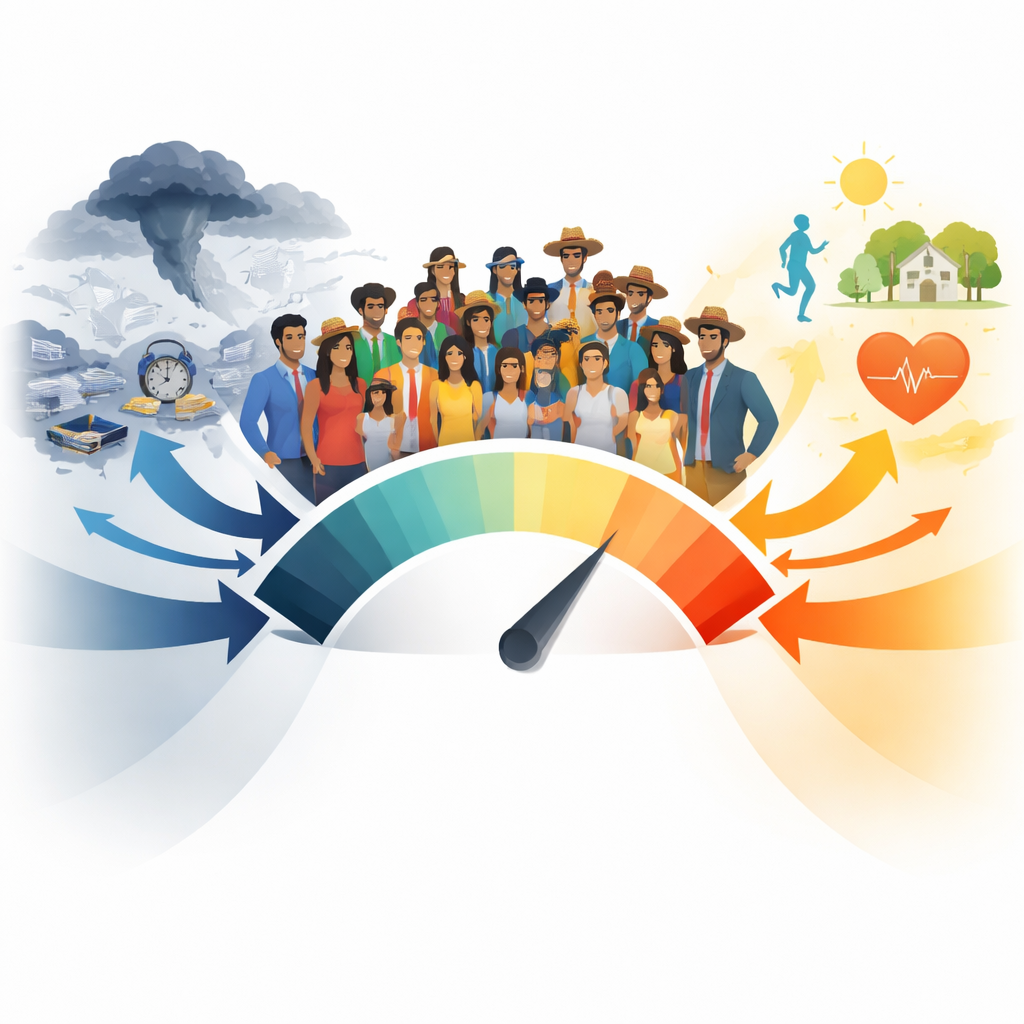
A simple idea about staying well under stress
The starting point of the research is a health theory called the salutogenic model, which focuses on what keeps people well rather than on what makes them sick. At its heart is the “sense of coherence,” the feeling that life events are understandable, that we have resources to cope with them, and that our efforts are meaningful. People with a strong sense of coherence tend to handle stress better, report better physical and mental health, and adopt healthier lifestyles, such as exercising more and avoiding harmful substances. Because of this, the sense of coherence has become a key concept for prevention and health promotion around the world.
Testing a popular questionnaire across countries
To measure this inner orientation, researchers often use a 13‑item questionnaire known as the SOC‑13 scale. It has been translated into many languages and used in numerous studies, but previous research has disagreed on how its questions group together and whether they measure one overall trait or several related dimensions. This new study brought together data from 22,844 adults in 11 Spanish‑speaking countries in Europe and Latin America, collected online during 2020. Participants answered the SOC‑13, a brief mental health survey about psychological distress, and a single question about how they rated their own health. The team paid special attention to items on the SOC‑13 that are phrased in a negative way, such as describing confusion or lack of control, to see whether these might distort how the scale behaves.
What the numbers revealed about the scale
When the researchers analyzed the answers assuming the questionnaire was either a single block or three simple parts, the statistical fit was not good in any country. However, once they added an extra factor that captured the shared impact of the negatively worded items, the picture changed markedly. Under this refined approach, a model with three closely related components—roughly matching meaningfulness, comprehensibility, and manageability—fit well in all 11 countries, and a single overall score also performed robustly. Across the entire sample, people with higher sense‑of‑coherence scores consistently reported fewer symptoms of emotional distress and slightly better self‑rated health. Reliability analyses showed that the total score was stable and precise, while the three smaller parts were somewhat less consistent, especially the subscales based on fewer items.

What this means for health and research
The findings suggest that, when the influence of negatively phrased questions is properly handled, the SOC‑13 works well for adults across a wide range of Spanish‑speaking settings. Differences in average scores between countries were statistically detectable but small, indicating broadly similar levels of sense of coherence. This supports the use of the questionnaire to identify groups who may have fewer coping resources and greater vulnerability to stress‑related problems, for example in community programs, workplaces, or universities. At the same time, the study highlights the need for researchers to be cautious when interpreting the separate subscales and to recognize that wording effects can mislead analyses if left uncorrected.
Take‑home message for non‑specialists
For people outside the research world, the main message is straightforward: there is a short, scientifically supported questionnaire that can help gauge how strongly someone feels that life is understandable, manageable, and meaningful, and this inner stance is linked to better mental health and self‑perceived well‑being. In Spanish‑speaking populations, the SOC‑13 can be a useful tool for designing and evaluating health programs that try to strengthen people’s coping skills and resilience. The study also shows that the fine details of how questions are worded matter, reminding us that good measurement is essential if we want to build effective, evidence‑based strategies to promote health.
Citation: Domínguez-Salas, S., Rodríguez-Domínguez, C., Escobar-Segovia, K. et al. Psychometric properties of the sense of coherence scale: a cross-sectional study in Spain and Latin America. Sci Rep 16, 11727 (2026). https://doi.org/10.1038/s41598-026-47503-9
Keywords: sense of coherence, mental health, stress coping, Spanish-speaking populations, psychological assessment