Clear Sky Science · en
Effects of different inflatable heater temperature settings on early postoperative recovery after hysteroscopic surgery: a randomized clinical trial
Why staying warm in the operating room matters
For most people, surgery is stressful enough without worrying about things like operating room temperature. Yet even during short, minimally invasive procedures, patients can lose body heat, leading to drops in blood pressure, shivering, discomfort, and slower recovery. This study asked a practical question with real-world impact: when doctors use a common inflatable warming blanket during hysteroscopic surgery to remove uterine fibroids, does setting it a bit warmer help women feel and recover better right after surgery—without adding risk?
A closer look at a common women’s procedure
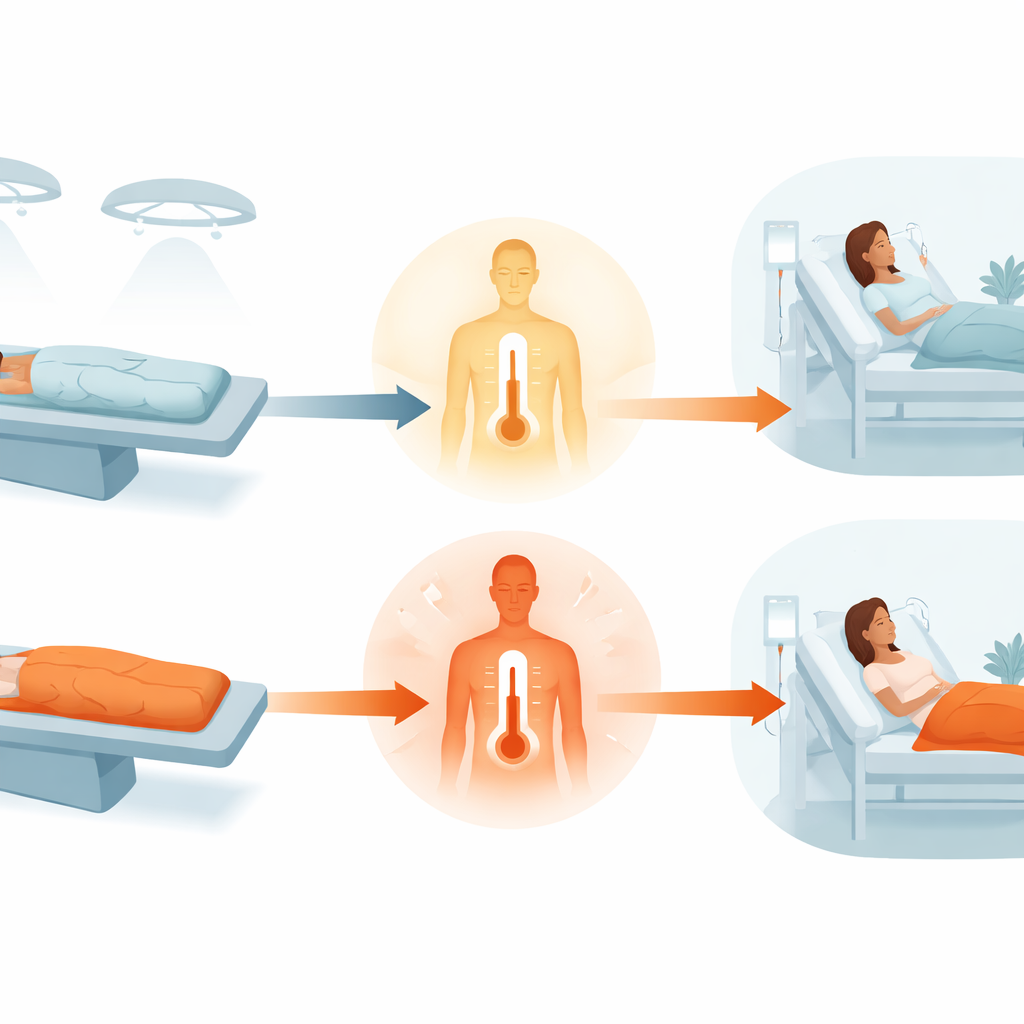
Hysteroscopic myomectomy is a minimally invasive operation in which surgeons remove fibroids from inside the uterus using a thin scope passed through the cervix. It typically involves general anesthesia, a cool operating room, and the use of fluid to gently stretch the uterus so the surgeon can see clearly. All of these factors can cause a patient’s core temperature to fall. To reduce this heat loss, many hospitals use forced-air inflatable warming blankets set to either 38 °C or 43 °C, but it has been unclear which temperature offers the best balance between comfort, safety, and recovery.
How the study was carried out
Researchers at Xuzhou Central Hospital in China conducted a randomized clinical trial involving 258 women scheduled for hysteroscopic myomectomy under general anesthesia. After excluding some patients who had very short or long surgeries or were lost to follow-up, 211 women remained in the final analysis. All patients received the same anesthetic drugs, surgical techniques, room temperature, and warmed irrigation fluids; the only planned difference was the setting of the inflatable warming blanket. One group had the blanket set to 38 °C, a commonly used “mild warmth,” while the other group received warming at 43 °C, a somewhat higher but still routinely used setting.
What the researchers measured
The main yardstick for recovery was a validated questionnaire called the QoR-40, which captures how patients feel about their physical comfort, emotions, independence, support, and pain after surgery. Scores were recorded 24 and 48 hours after the operation. The team also continuously tracked core body temperature, blood pressure, and heart rate at several key moments from entering the operating room to returning to the ward. In addition, they noted common short-term problems such as postoperative shivering, restlessness, and signs of infection.
Warmer blankets, steadier bodies, and better early recovery
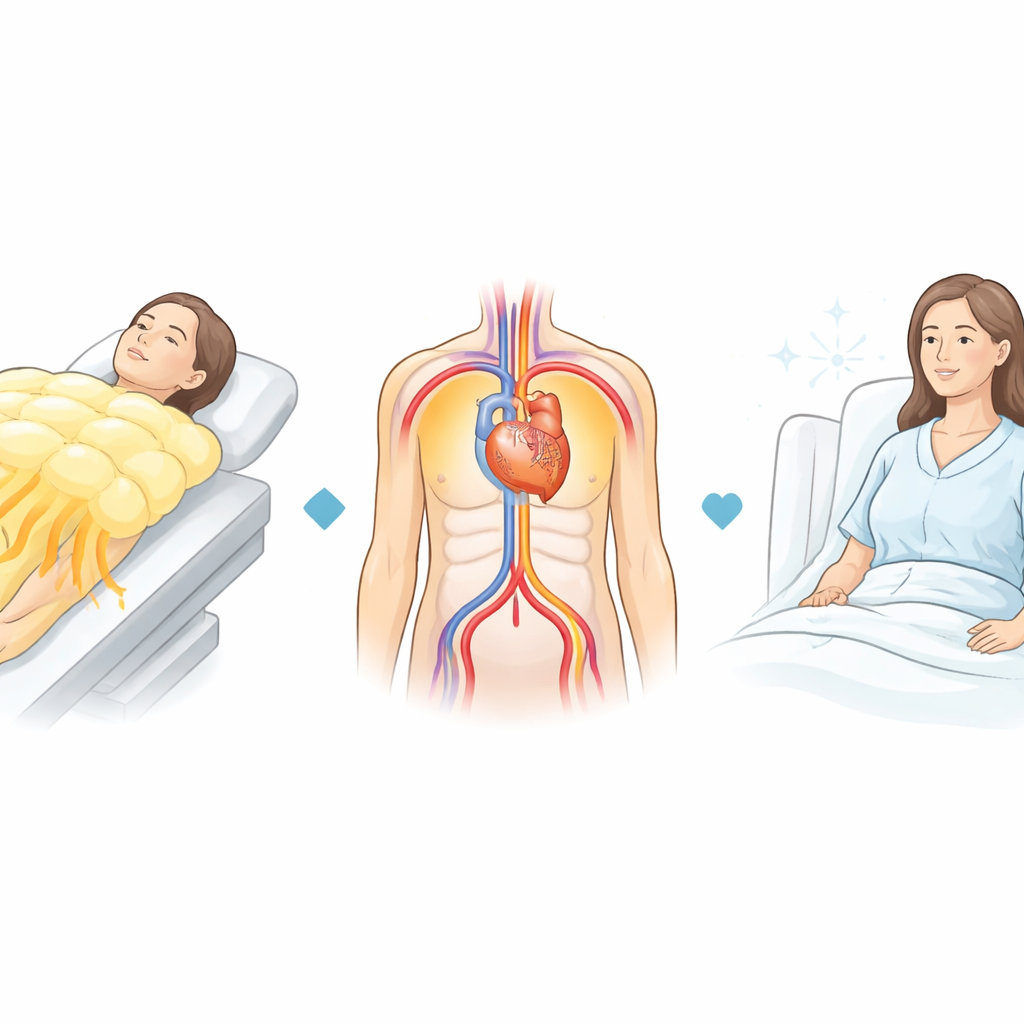
Women warmed at 43 °C reported clearly better overall recovery at 24 hours than those warmed at 38 °C, with an average QoR-40 score about 9.5 points higher—very close to what experts consider a meaningful improvement. The biggest gains were in physical comfort and feelings of support. By 48 hours, however, both groups had nearly identical scores, suggesting that the advantage of higher-temperature warming is most important in the immediate period after surgery. Physiological measurements backed this up: during and just after the operation, the higher-temperature group maintained a higher and more stable core body temperature, as well as steadier blood pressure and heart rate, while the lower-temperature group cooled more and showed greater swings in circulation.
Safety and what it means for patients
Importantly, using the warmer 43 °C setting did not lead to more complications. Rates of postoperative shivering and infection were low and similar in both groups, and no burns or other heater-related injuries occurred. The study was limited to relatively healthy women with average body weight at a single hospital, so broader studies are still needed, but the message is straightforward: keeping patients slightly warmer with an inflatable blanket during hysteroscopic surgery can make them feel better and recover more smoothly in the first day after the procedure, without clear added risk. For patients and clinicians alike, a small change in operating room practice may translate into a noticeably more comfortable start to recovery.
Citation: Song, X., Qi, Y., Ren, Y. et al. Effects of different inflatable heater temperature settings on early postoperative recovery after hysteroscopic surgery: a randomized clinical trial. Sci Rep 16, 11687 (2026). https://doi.org/10.1038/s41598-026-47337-5
Keywords: hysteroscopic surgery, forced-air warming, postoperative recovery, perioperative hypothermia, inflatable heater temperature