Clear Sky Science · en
Trend and change-point dynamics of urban water supply in Gondar City, Ethiopia: a sequential mixed-methods analysis
Why This City’s Water Story Matters
Clean, reliable tap water is something many city residents take for granted. In Gondar, a fast-growing highland city in Ethiopia, that reliability is far from guaranteed. This study traces how Gondar’s water system has changed over more than a decade, as an aging reservoir, drilling of new wells, and shifting rainfall patterns reshape how people get water. The findings reveal a city that appears to be producing more water on paper, yet many households still face dry taps and tough daily choices.
A City Caught Between Growth and Old Pipes
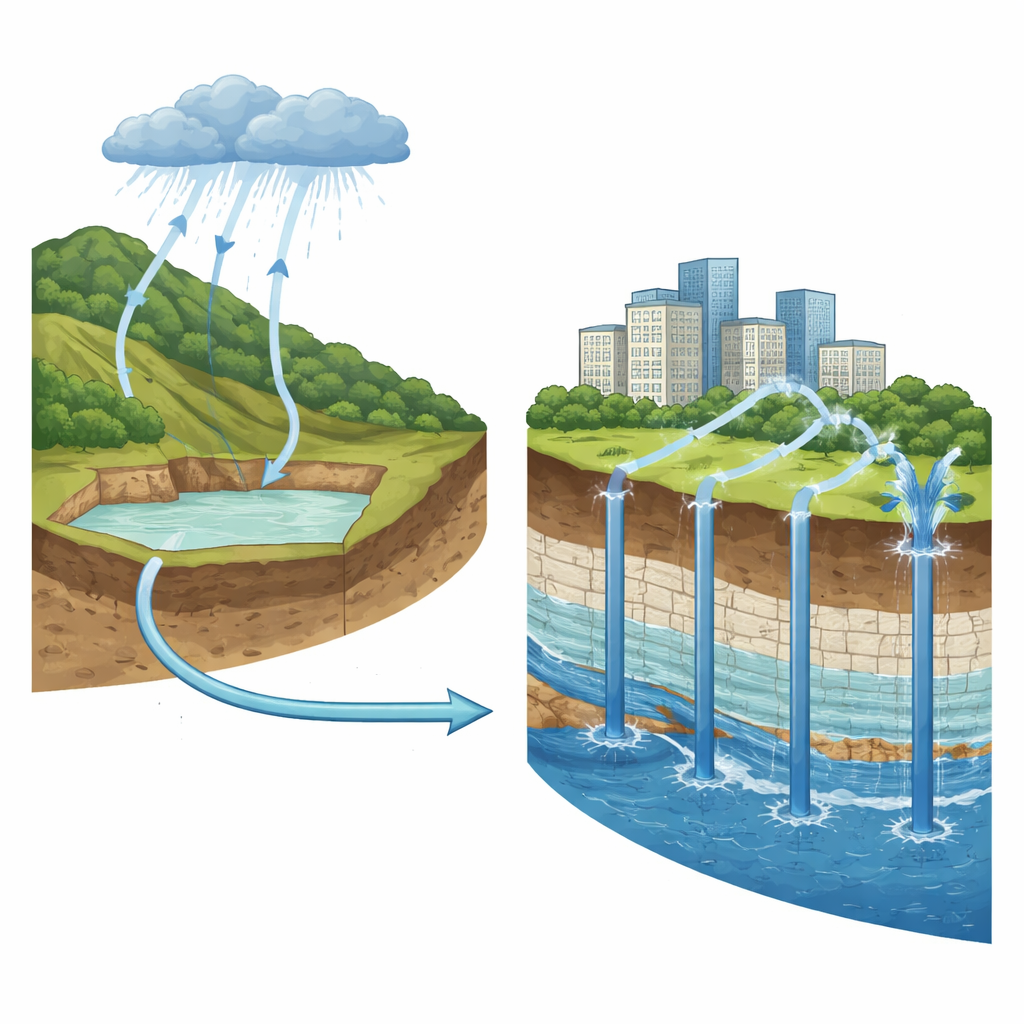
Gondar’s population has grown from about 300,000 to more than 430,000 residents in just over a decade. At the same time, its original main source of water—the Angereb Reservoir, built in 2002—has been slowly filling with sediment. This means it holds far less water than planned, especially in the long dry months that stretch across much of the year. Earlier studies of Ethiopian towns often took a snapshot view, reporting low coverage, aging infrastructure, and large losses from leaking pipes, but they rarely asked how these problems evolve over time or how cities adapt when a cornerstone source like a reservoir begins to fail.
Following the Water Month by Month
The researchers assembled 14 years of monthly records (2011–2024) for water drawn from the reservoir, deep wells, and springs, along with total volumes sent into the distribution network. They combined this with rainfall and temperature data, and then interviewed utility staff and residents in focus groups. Using time-series tools normally reserved for climate and financial data, they tracked long-term trends, seasonal patterns, and sudden “change points” in how much each source contributed. This allowed them to pinpoint when the system shifted away from relying mainly on surface water and toward a more complicated mix dominated by groundwater.
From Reservoir Reliance to Groundwater Dependence
The numbers tell a clear story. Water supplied from the reservoir stayed essentially flat over the study period, consistent with its shrinking useful volume. In contrast, production from wells more than doubled, especially after a new wellfield came online in 2017, and spring water increased following rehabilitation work in 2019. Overall, total water sent into the network rose steadily. Yet, when the researchers adjusted for population growth, the amount of water available per person did not improve. Residents confirmed this gap: many reported that their taps still ran dry for days, forcing them to store water in containers or buy it from vendors. Utility staff estimated that more than a third of the water produced was lost through leaks or illegal connections before reaching households.
Seasons, Droughts, and Hidden Delays
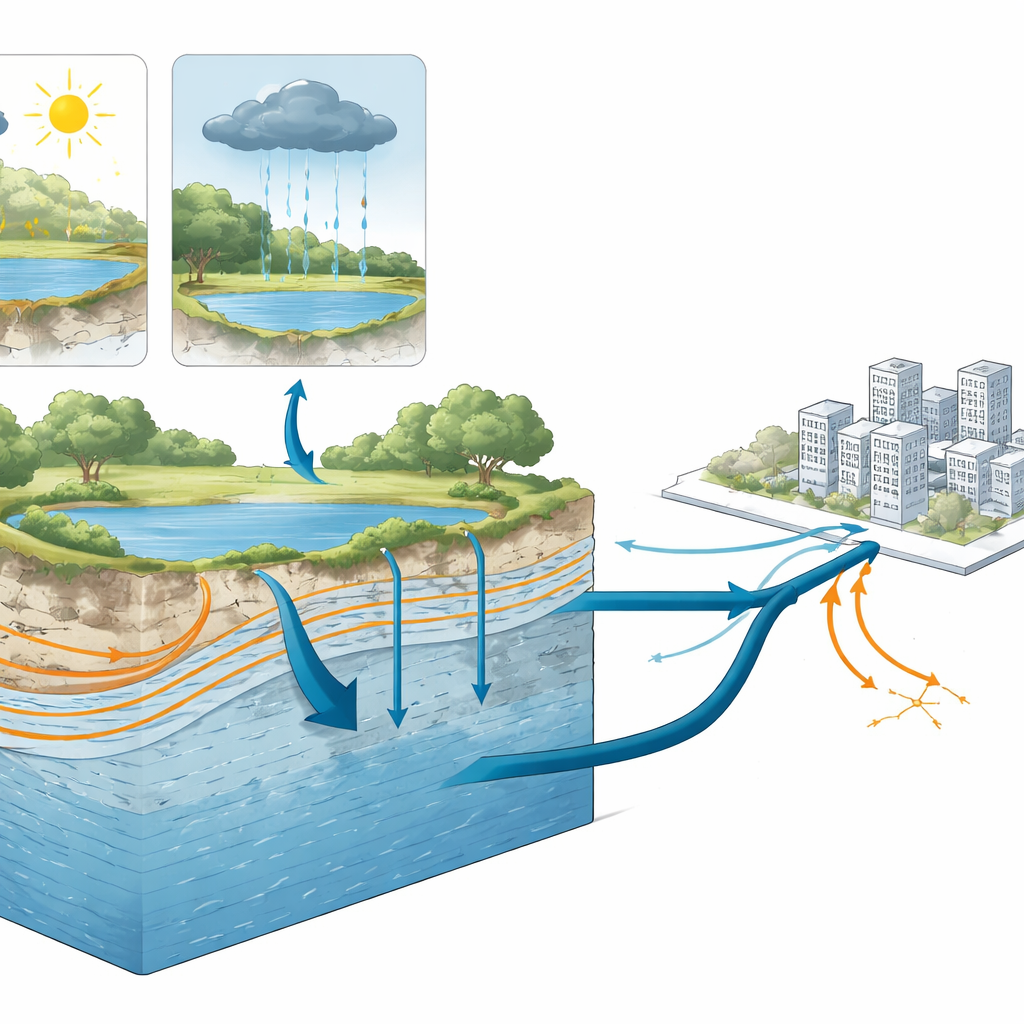
Because Gondar’s climate swings between very wet and very dry seasons, the team examined how each source responds to rainfall over different time scales. Springs reacted quickly, with flows rising only a few months after good rains, while deep groundwater responded much more slowly, reflecting the time it takes water to seep down into the aquifer. The reservoir showed an unusual pattern: when rainfall was high, withdrawals from it decreased nearly a year later, as managers held back stored water for future dry spells and leaned more on wells and springs. Seasonal analysis revealed a recurring cycle of stress. In the dry winter and pre-rain spring months, wells are pumped hardest to compensate for weak reservoir and spring flows, while summer and autumn bring brief recovery but also operational problems like muddy, hard-to-treat reservoir water during heavy storms.
Living in a Constant State of Catch-Up
Interviews painted a picture of a system stuck in “survival mode.” As the reservoir faltered, officials scrambled to drill more wells and revive springs. These stopgap measures kept overall production from collapsing but shifted risk underground, where little is known about how much water can be safely withdrawn. Residents described springs as unreliable “bonus” sources and worried that some wells already show signs of decline. At the same time, weak coordination and limited planning mean decisions are often reactive—responding to each new shortage—rather than guided by long-term strategies that balance different sources and reduce losses in the pipe network.
What This Means for People and Policy
For a layperson, the key takeaway is that Gondar’s water problem is not just about having enough water in total, but about where it comes from, how it is managed, and whether it actually reaches homes. The city has managed to replace stagnant reservoir supplies with more groundwater and spring water, keeping overall volumes rising even during droughts. But because population has grown quickly and a large share of water is lost before it reaches taps, everyday access for households has not improved. The authors argue that real progress will depend on monitoring wells carefully, planning operations around known seasonal delays, rehabilitating the reservoir, protecting springs, and—crucially—fixing leaks and strengthening institutions so the system can move from constant firefighting to proactive, resilient management.
Citation: Gessie, G.S., Mengistu, D.A. & Waktola, D.K. Trend and change-point dynamics of urban water supply in Gondar City, Ethiopia: a sequential mixed-methods analysis. Sci Rep 16, 14399 (2026). https://doi.org/10.1038/s41598-026-47100-w
Keywords: urban water supply, groundwater, Ethiopia, climate variability, water infrastructure