Clear Sky Science · en
Advanced statistical models to handle response styles and uncertainty when modelling emotional intelligence of elite swimmers
Why feelings matter in the pool
Elite swimming is not only about strong muscles and perfect technique; it also hinges on how well athletes handle pressure, doubt, and nerves. This study looks at how to measure swimmers’ emotional self-control more accurately, by paying attention not just to what they answer on questionnaires but also to how they tend to use rating scales. The goal is to give coaches and sport psychologists clearer information about an athlete’s inner strengths and needs.
Swimmers, stress, and self-control
Emotional intelligence describes how people notice, understand, and manage emotions in themselves and others. For individual sports like swimming, one key part of emotional intelligence is self-control: keeping anxiety in check, staying focused under stress, and resisting impulsive reactions before and during races. The researchers focused on this self-control dimension in 205 elite swimmers from the Italian Swimming Federation. Swimmers completed a standard questionnaire that asks how strongly they agree or disagree with statements about their typical feelings and behavior, using a multi-point response scale.
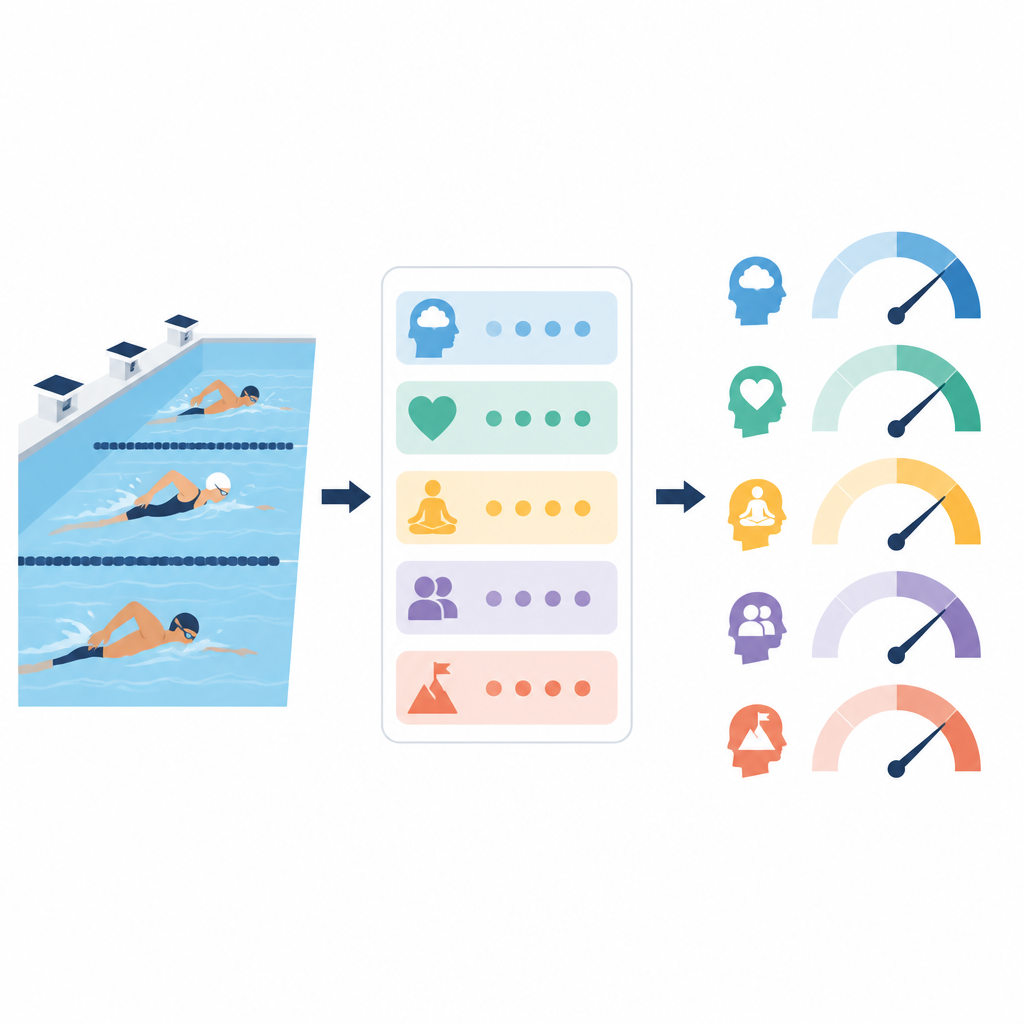
When answer habits hide the real picture
Self-report questionnaires are convenient, but they come with hidden traps. Some people tend to pick only the extreme options on a scale, while others gravitate toward the middle choices, regardless of the actual question. Still others answer almost at random when they feel unsure or inattentive. These answer habits can distort the results: two swimmers with the same true level of self-control might end up with very different scores simply because one likes strong statements and the other prefers safer, middle ground responses. The study’s central idea is that such response patterns should be modelled explicitly, rather than ignored.
Smarter models to read between the lines
To tackle this, the authors used advanced statistical models that separate a swimmer’s true self-control from their response style or uncertainty. They built on a widely used framework for analyzing questionnaire data and extended it in two ways. One extension captures a consistent tendency toward extreme or middle categories, treating that tendency as its own personal characteristic. The other extension focuses on how decisive or uncertain a person is when choosing between scale options, distinguishing clear preferences from more random answers. By comparing these extended models to the traditional approach, they showed that accounting for response behavior leads to a noticeably better fit to the swimmers’ data.
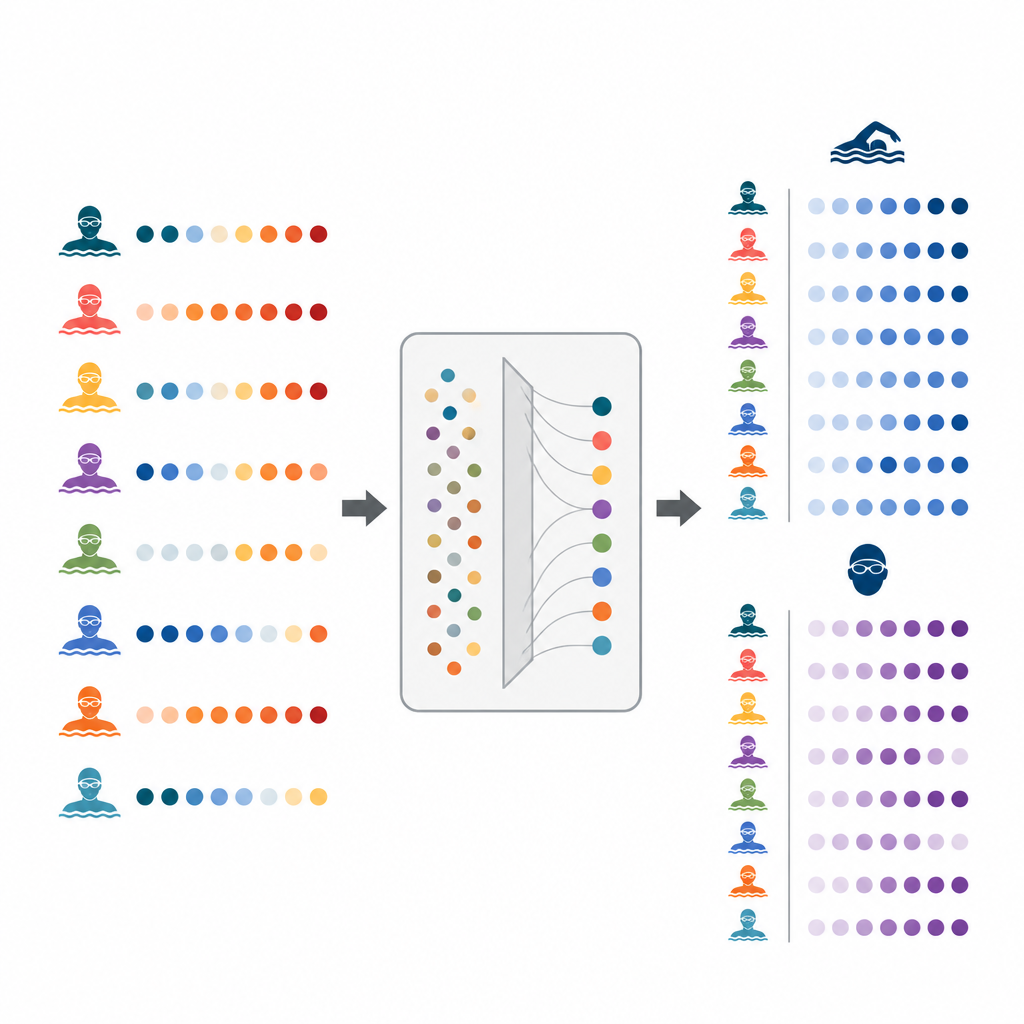
Personality links and what they reveal
The researchers also examined how basic personality traits, such as emotional stability and conscientiousness, relate both to true self-control and to response behavior. Emotional stability, which reflects calmness and low anxiety, was strongly linked to higher self-control scores among swimmers, echoing earlier work in psychology. Conscientious swimmers, known for being organized and disciplined, were more likely to use the extreme ends of the rating scale, suggesting that some very high or very low scores may partly reflect a style of answering rather than only the underlying trait. In contrast, age and sex did not show clear effects, perhaps because all participants shared similar high-level training environments.
What this means for athletes and support staff
The study concludes that to understand how well swimmers manage their emotions, it is not enough to read raw questionnaire scores at face value. By using models that recognize and adjust for response styles and uncertainty, researchers and practitioners can better isolate the true level of self-control from the way athletes happen to use rating scales. This sharper view can support more targeted mental training, reduce the risk of misclassifying athletes, and ultimately help coaches and psychologists design support that matches each swimmer’s real psychological profile rather than their answer habits.
Citation: Berger, M., Fabbricatore, R., Iannario, M. et al. Advanced statistical models to handle response styles and uncertainty when modelling emotional intelligence of elite swimmers. Sci Rep 16, 16008 (2026). https://doi.org/10.1038/s41598-026-46938-4
Keywords: emotional intelligence, elite swimmers, response style, self-control, Likert scales