Clear Sky Science · en
Predicting factors associated with aggression behavior among university students: a cross sectional study
Why student aggression matters
University should be a place for learning and friendship, yet many students struggle with anger, conflict, and feelings of threat. This study looks at aggression among Palestinian university students living under political tension and economic hardship. Understanding who is most at risk, and why, can help campuses create safer, more supportive environments for young adults as they move into independence.
A closer look at student anger
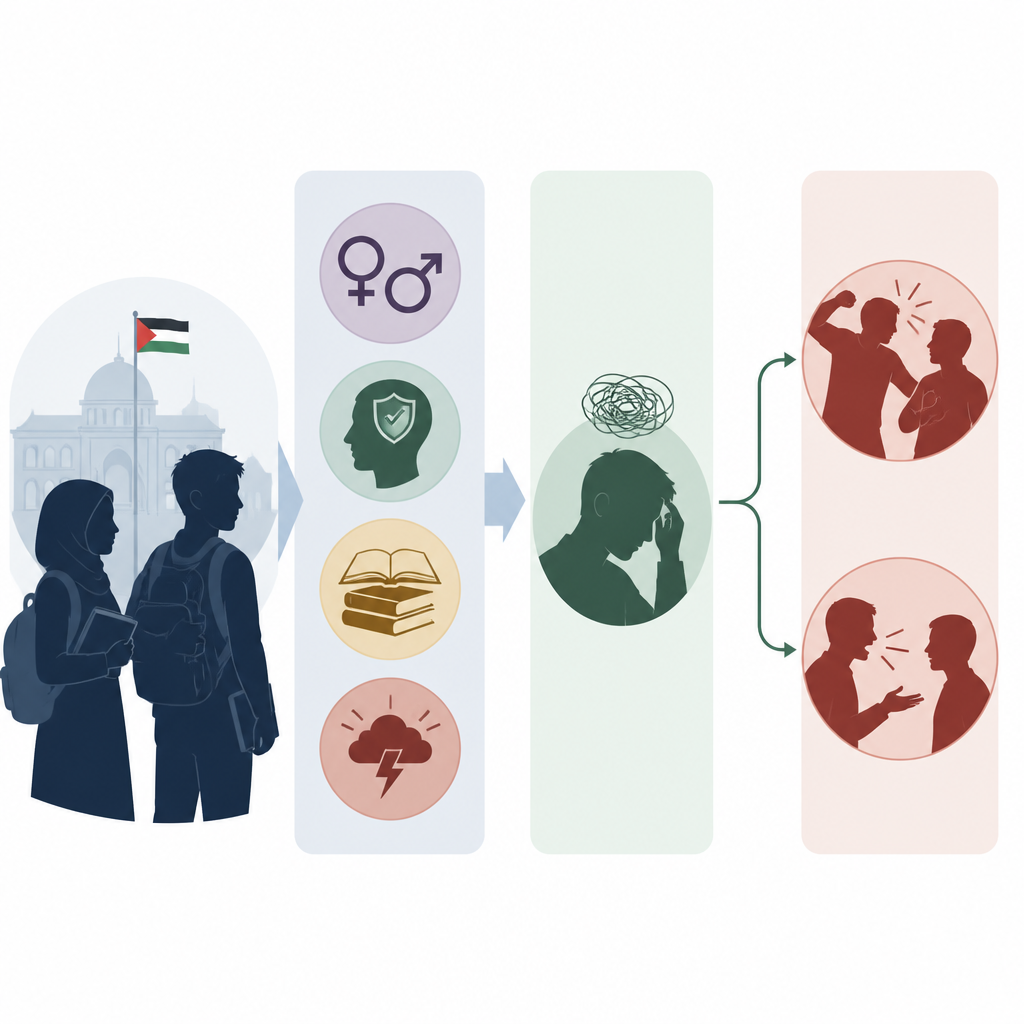
Researchers surveyed 1,338 undergraduates from 14 universities across the West Bank using an online questionnaire. Students answered questions about how often they felt or showed physical and verbal aggression, anger, and hostility. They also reported where they lived, what they studied, their year in school, and whether they felt they could control their own behavior. In addition, standard scales measured anxiety, depression, and overall psychological distress. This design allowed the team to look for patterns linking personal background, emotional strain, and aggressive behavior.
How common is aggressive behavior
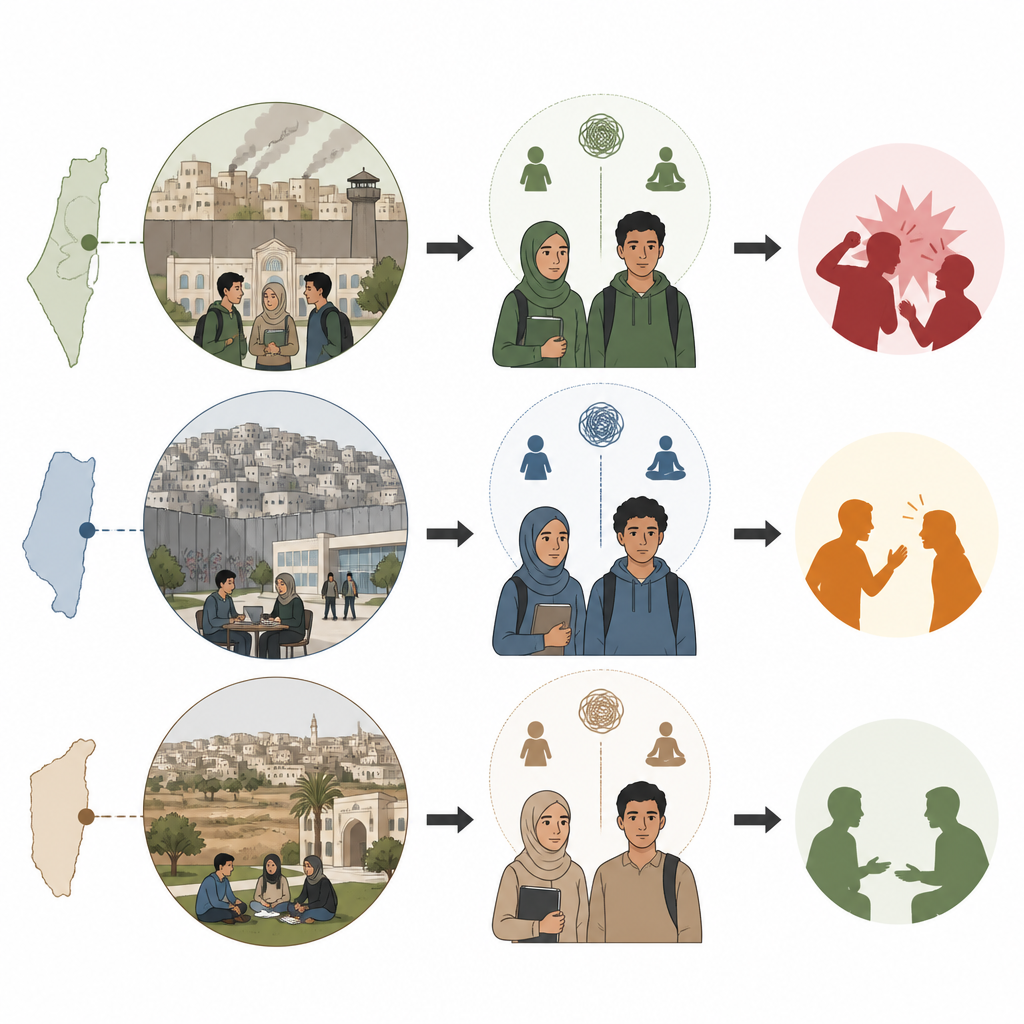
The results were striking: about three out of every four students showed moderate to high levels of aggression. Physical aggression was the most common pattern, followed by anger and hostility, while verbal aggression was lowest. Contrary to many earlier studies, women reported higher aggression scores than men across all forms, especially in verbal and hostile behavior. Students living in the northern West Bank showed the lowest aggression, while those in the middle and southern regions reported higher levels. Faculty choice also mattered slightly, with science students tending to score lower on physical and verbal aggression than their peers in other fields.
Stress, self-control, and the surprising role of distress
Several everyday factors were tied to how aggressive students felt or acted. Those with weaker academic performance, poorer self-control, or signs of serious mental illness on a distress scale had higher aggression scores. Yet a counterintuitive pattern emerged: higher psychological distress overall was linked to lower aggression, especially anger. In other words, the most distressed students were not necessarily the most aggressive. At the same time, aggression climbed with each year of study, hinting that ongoing academic pressure and long exposure to a stressful environment may build frustration over time. Students who felt better able to manage their impulses showed the lowest aggression, underscoring the protective power of self-control skills.
Life in a conflict zone
The findings need to be understood against the backdrop of long running political conflict. Palestinian students may face checkpoints, economic strain, and frequent news of violence affecting their families and communities. The authors suggest that repeated exposure to danger could reshape how emotions like anger, sadness, and anxiety show up, making them less tightly linked than in more peaceful settings. Students in the north, who have endured years of hardship, may have developed greater resilience, which could help dampen aggressive responses despite ongoing stress. Cultural norms that expect women to be quiet and compliant may also make rising female aggression especially notable in this context.
What this means for students and campuses
To a lay reader, the key message is clear: aggression among Palestinian university students is widespread and closely tied to gender, place of residence, advancing years of study, and difficulties with self-control, but not directly to depression or anxiety. The authors argue that universities and health authorities should not wait for serious violence before acting. Instead, they recommend stress management training, counseling services, and programs that build problem solving and emotional skills, with special attention to female students and those in the middle and southern regions. By helping students handle pressure and channel anger in constructive ways, campuses may protect mental health and create safer spaces for learning, even in the midst of political turmoil.
Citation: Ahmead, M., Sharif, N.E. Predicting factors associated with aggression behavior among university students: a cross sectional study. Sci Rep 16, 15252 (2026). https://doi.org/10.1038/s41598-026-46675-8
Keywords: student aggression, Palestinian universities, psychological stress, self-control, political conflict