Clear Sky Science · en
Efficacy and safety of ranibizumab, aflibercept, and conbercept in the treatment of diabetic macular edema: a retrospective comparative study
Why this eye study matters
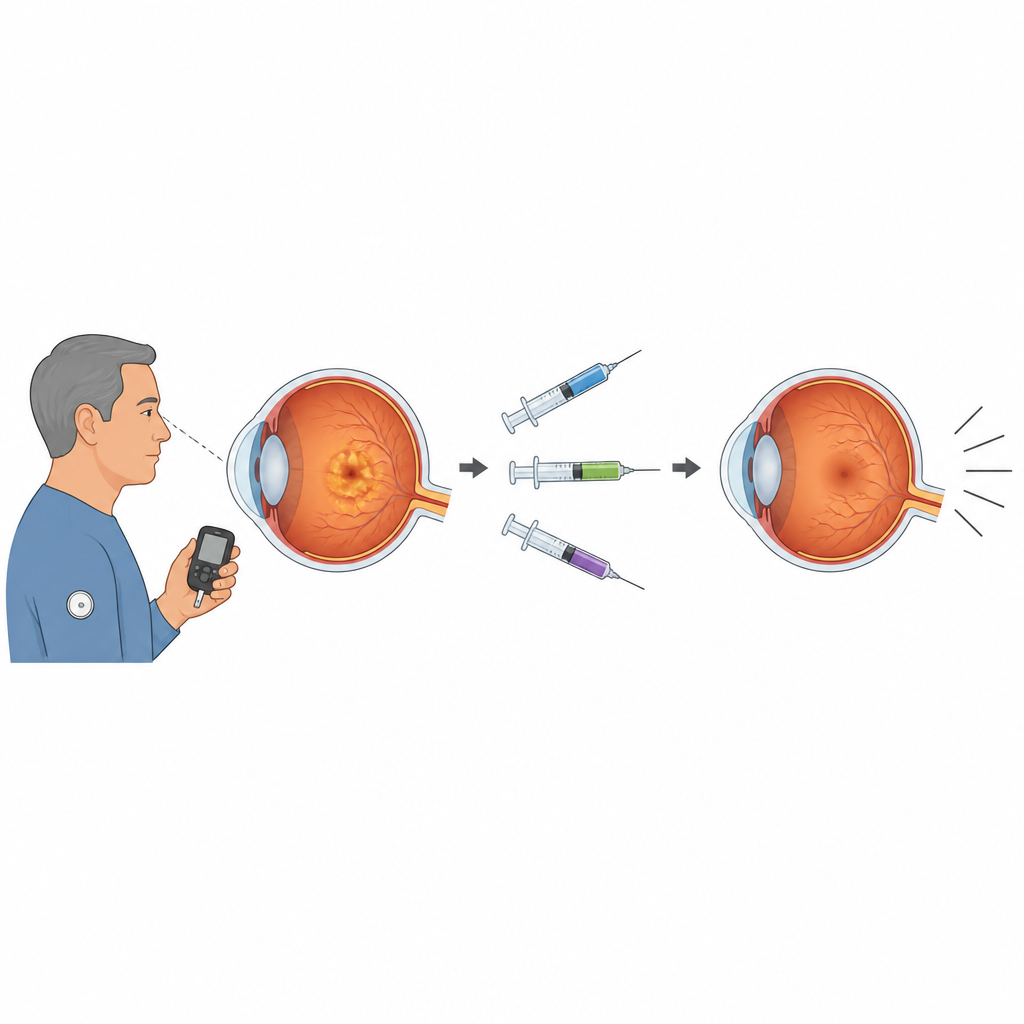
For many people with diabetes, slowly losing sharp central vision can be one of the most frightening complications of their disease. This loss is often caused by diabetic macular edema, a buildup of fluid in the part of the eye that is responsible for fine detail. Doctors now commonly treat this problem with tiny injections of medicines into the eye, but several different drugs are available. This study looks at three leading options and asks a simple, practical question: which ones help people see better, and how quickly, in everyday clinical practice?
Swelling in the eye and blurred sight
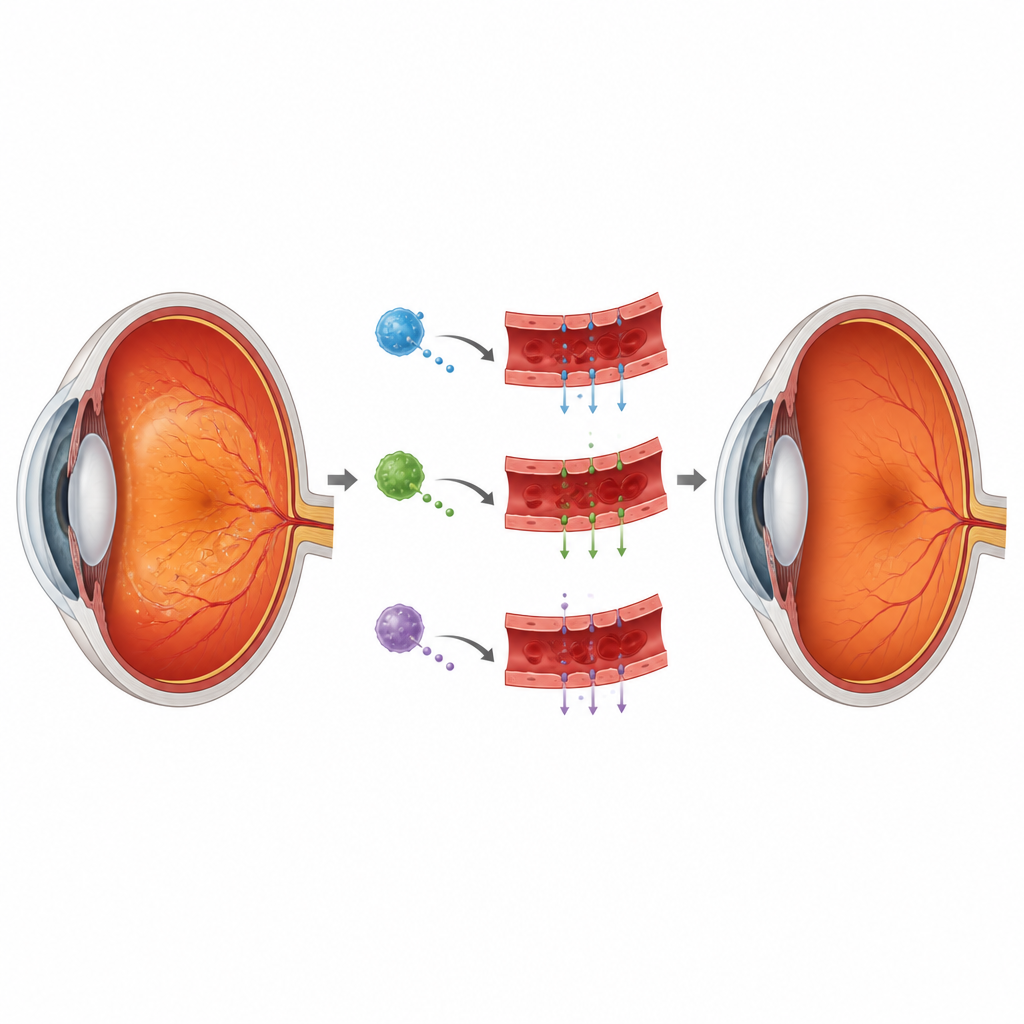
Diabetic macular edema develops when years of high blood sugar damage the small blood vessels in the retina, the light sensing layer at the back of the eye. As these vessels weaken, fluid and proteins leak into the macula, the central zone that lets us read, drive, and recognize faces. The macula thickens and its delicate cells are squeezed, leading to blurred or distorted vision that may become permanent if left untreated. A key driver of this leakage is a signal protein called VEGF that encourages new, fragile vessels to grow and existing ones to become more leaky. Blocking VEGF inside the eye has therefore become the main strategy for controlling this sight threatening swelling.
Three drugs, one clinic
In this retrospective study, the researchers reviewed the records of patients with diabetic macular edema treated at a single eye hospital in China between late 2019 and 2024. All patients received a series of three monthly injections of one of three anti VEGF drugs: ranibizumab, aflibercept, or conbercept. After the first three doses, injections were given only when the eye showed signs of worsening thickness or vision. The team tracked two main measures over one year: how clearly patients could see with their best glasses or contact lenses, and how thick the central macula was on a detailed scan. They also counted how often the swelling came back and whether any serious safety problems occurred.
Who saw better and how fast
All three medicines improved vision within the first month, and by three months every group showed clearer sight compared to the start of treatment. However, differences emerged as time went on. At six months, people treated with aflibercept or conbercept, on average, could see more lines on the eye chart than those who received ranibizumab. All groups kept most of their visual gains over the full year, but aflibercept stood out for giving the largest improvement in sharpness at the six month mark. When the researchers looked at macular thickness, all drugs reduced swelling, but conbercept produced a noticeable thinning earlier, around the one month visit, compared with ranibizumab.
Changes inside the eye
The scans of the retina told a similar story. At the beginning, the central thickness of the macula was comparable across all three groups. After treatment started, each drug reduced this thickness at one week, one month, three months, six months, and twelve months. Conbercept led to a faster early drop in thickness, while both conbercept and aflibercept showed greater thinning than ranibizumab at six months. By the end of the year, the average thickness in all three groups had improved to a similar level, suggesting that over longer periods the structural benefits may converge, even if they differ early on.
Safety and what this means for patients
No serious injection related complications were reported in any group, such as severe infection inside the eye or retinal detachment, reinforcing the overall safety of this treatment approach in routine care. The authors caution that their study has limits: it was not randomized, involved a single center, and some health factors like blood sugar control and blood pressure differed between groups. Even so, their findings point toward useful patterns. For a patient who needs rapid reduction of macular swelling, conbercept may be attractive. For those focused on maximizing vision at six months, aflibercept may offer an advantage. Ranibizumab still helped, but with somewhat smaller average gains in this setting. Overall, the study supports tailoring anti VEGF therapy to the needs and circumstances of each person with diabetic macular edema.
Citation: Liu, B., Qiao, Q. & Dang, Y. Efficacy and safety of ranibizumab, aflibercept, and conbercept in the treatment of diabetic macular edema: a retrospective comparative study. Sci Rep 16, 15666 (2026). https://doi.org/10.1038/s41598-026-46546-2
Keywords: diabetic macular edema, anti-VEGF injections, aflibercept, conbercept, ranibizumab