Clear Sky Science · en
Endophytic Trichoderma and Bacillus isolates suppress Lasiodiplodia theobromae-associated dieback in blueberry under arid coastal conditions
Why this matters for blueberry lovers
Blueberries are praised as a healthy superfruit and have become a key export crop for Peru. Yet in the country’s arid coastal valleys, many bushes are slowly dying back from a hidden problem inside their wood. This study looks at which fungi are attacking blueberry stems in northern Peru and tests whether friendly microbes living inside the plants can help defend them, pointing toward safer ways to protect production without relying only on chemical sprays. 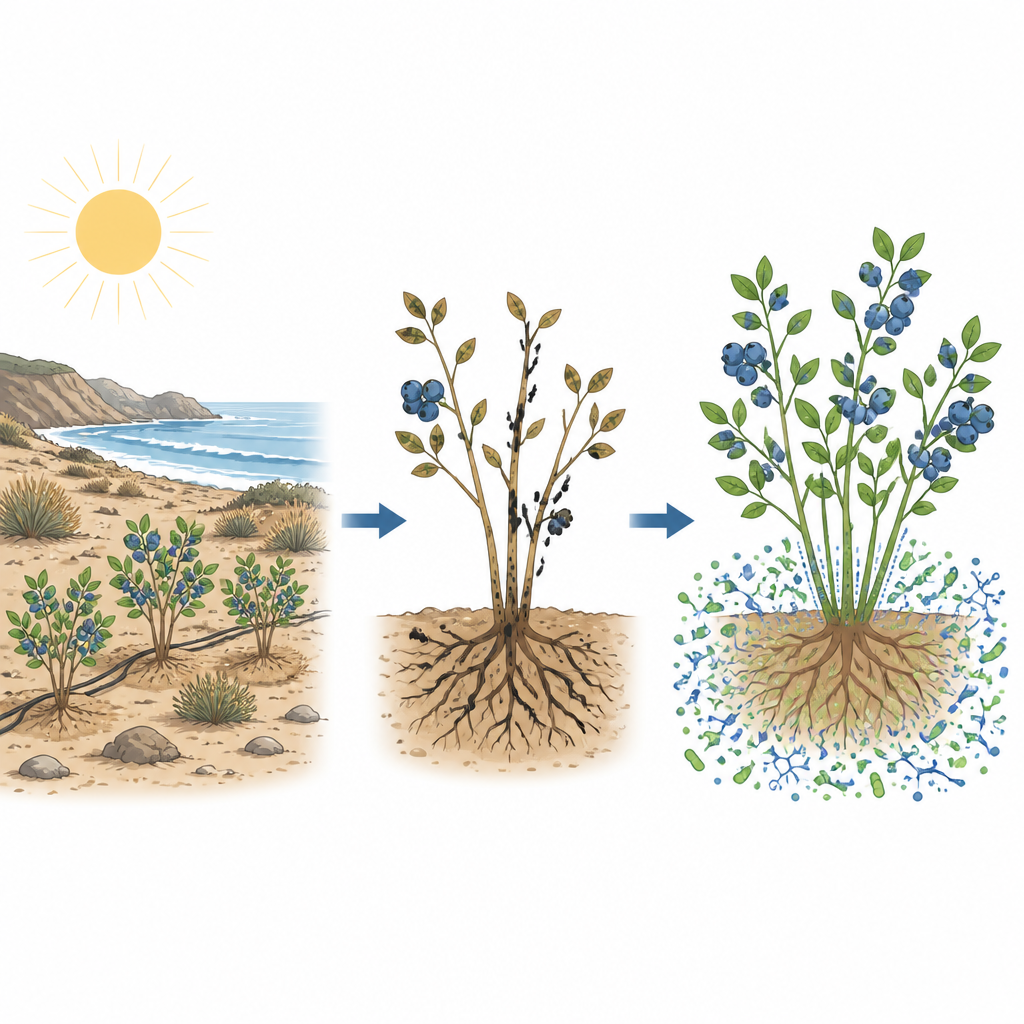
A hidden disease inside blueberry wood
The researchers worked in three large commercial blueberry farms in the Nuevo Proyecto–Olmos area, covering 176 hectares. They walked the fields in zigzag patterns, checking plants for dead shoots, brown stems, and leaf loss, the classic signs of a disease called dieback or stem blight. On average, 7 percent of plants were affected, equivalent to more than 61,000 bushes, with some varieties such as Emerald and Snowchaser showing higher levels of damage. Because wood diseases tend to build up over years, even these moderate figures are an early warning for long term productivity.
Tracking down the main culprits
To find out which organisms were responsible, the team collected 54 stem samples from sick plants and brought them to the laboratory. After surface cleaning the wood pieces, they grew any fungi present on culture plates, examined their shape under the microscope, and confirmed identities by analyzing DNA. Fungi were found in every diseased sample. A group called Lasiodiplodia dominated, appearing in two thirds of the cases, while Neopestalotiopsis, Fusarium, and Diaporthe were less common. When healthy young plants were deliberately wounded and inoculated with these fungi, the Lasiodiplodia species, especially Lasiodiplodia theobromae, caused the longest brown lesions and most severe dieback, proving they are the primary drivers of the problem in this region.
How heat and food shape fungal growth
The scientists also explored how the environment and food supply affect these fungi. They grew seven Lasiodiplodia isolates on two standard lab media at temperatures from 20 to 35 degrees Celsius. On a basic potato based medium, growth was slow and uneven at 20 degrees and strongly reduced at 35 degrees, while 25 to 30 degrees favored fast and uniform spread, matching the warm semi arid farm conditions where the disease thrives. On a richer corn based medium, the fungi grew faster and more evenly at all temperatures, showing how nutrient rich wood can speed their colonization. Some strains even changed color under heat stress, a sign of altered metabolism, but still managed to cover the plates, underlining their adaptability.
Recruiting helpful microbes from inside the plant
Instead of turning first to fungicides, the team asked whether microbes that naturally live inside healthy blueberry tissues could fight back. They isolated several strains of Trichoderma, a beneficial fungus, and Bacillus, a beneficial bacterium, from symptom free stems in the same fields. In paired plate tests, pieces of Lasiodiplodia and these friendly microbes were placed in the same dish and allowed to grow toward each other. Many Trichoderma and Bacillus isolates slowed the pathogen’s expansion by more than 60 percent. Some Trichoderma strains even overgrew the harmful fungus, while a commercial Bacillus subtilis product and two Trichoderma based treatments nearly stopped Lasiodiplodia growth altogether in a medium laced with their spores. 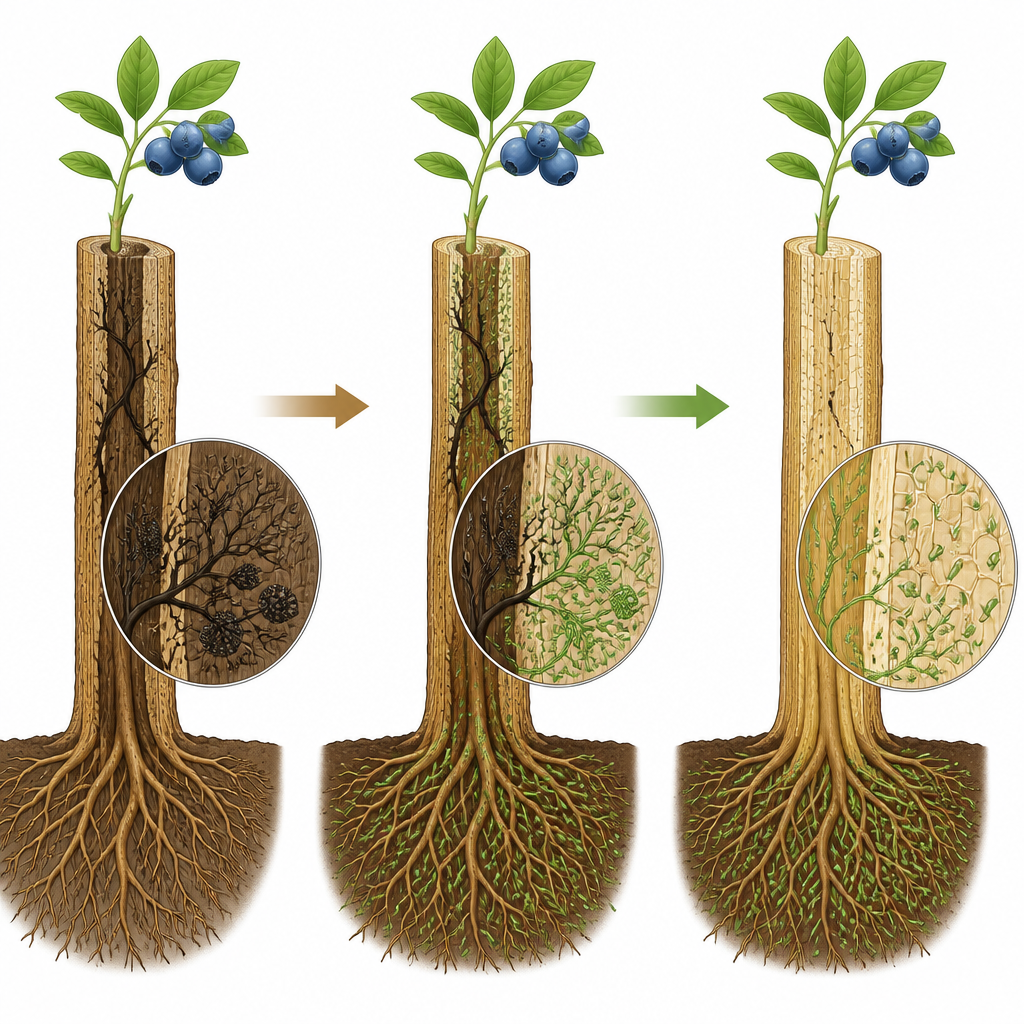
What this means for future blueberry fields
Taken together, the work shows that blueberry dieback in northern coastal Peru is driven mainly by Lasiodiplodia fungi that thrive in warm, dry conditions and colonize the plant’s woody tissues. At the same time, it reveals that friendly endophytic microbes, particularly certain Trichoderma and Bacillus strains, can strongly limit these fungi under controlled conditions. While these are early stage lab tests rather than field trials, they provide a short list of promising biological allies that could, after further testing, become part of integrated disease management programs. For growers and consumers alike, this points toward the possibility of healthier blueberry plants protected by nature’s own microscopic partners, with reduced dependence on chemical control.
Citation: Villanueva-Olivera, W., Valladolid-Suyón, E., Palomino, M. et al. Endophytic Trichoderma and Bacillus isolates suppress Lasiodiplodia theobromae-associated dieback in blueberry under arid coastal conditions. Sci Rep 16, 15250 (2026). https://doi.org/10.1038/s41598-026-46484-z
Keywords: blueberry dieback, Lasiodiplodia, Trichoderma, Bacillus biocontrol, wood-infecting fungi