Clear Sky Science · en
Gender differences in the influence of app-based mindfulness meditation on emotion regulation: a randomised controlled trial
Why this study matters for everyday stress
Many people turn to mindfulness apps to cope with work stress, but it is not clear whether they work equally well for everyone. This study asked a simple, real-world question: when busy workers try a short, app-based meditation program, do women and men benefit in the same way, particularly in how they handle emotions and anger? The answer has implications for how future digital mental health tools might be tailored to different users rather than assuming one size fits all.
Stress at work and the promise of phone-based calm
Modern working life can be a steady drip of emails, deadlines, and pressure. Such stress is not just unpleasant; it is linked to depression, anxiety, and wider social and economic costs. Online programs, including smartphone apps, offer a convenient way to bring brief moments of calm into a busy day. Mindfulness practices—such as focusing on the breath, scanning sensations in the body, or cultivating kindness toward oneself—are thought to help people notice their thoughts and feelings without being swept away by them. However, earlier studies have found that these online programs often show only small benefits for generally healthy people, and researchers have wondered whether personal factors like gender might explain who gains the most.

How the study was set up
The researchers ran a randomized controlled trial with 300 Japanese adults who worked at least 20 hours per week and did not have a current mental health diagnosis. Participants were assigned either to begin a four-week app-based meditation course right away or to wait and continue their usual routines for the same period. The app guided users through brief daily practices: breathing exercises, a short body scan, and either a loving-kindness practice (focusing on warmth and goodwill) or an open-awareness practice (noticing sounds and body sensations). Before and after the four weeks, everyone completed questionnaires about their stress, anger, ways of handling difficult thoughts and feelings, flexibility in thinking, and self-esteem. The researchers then compared changes between the meditation and waitlist groups and looked carefully at whether these changes differed for women and men.
What changed, and for whom
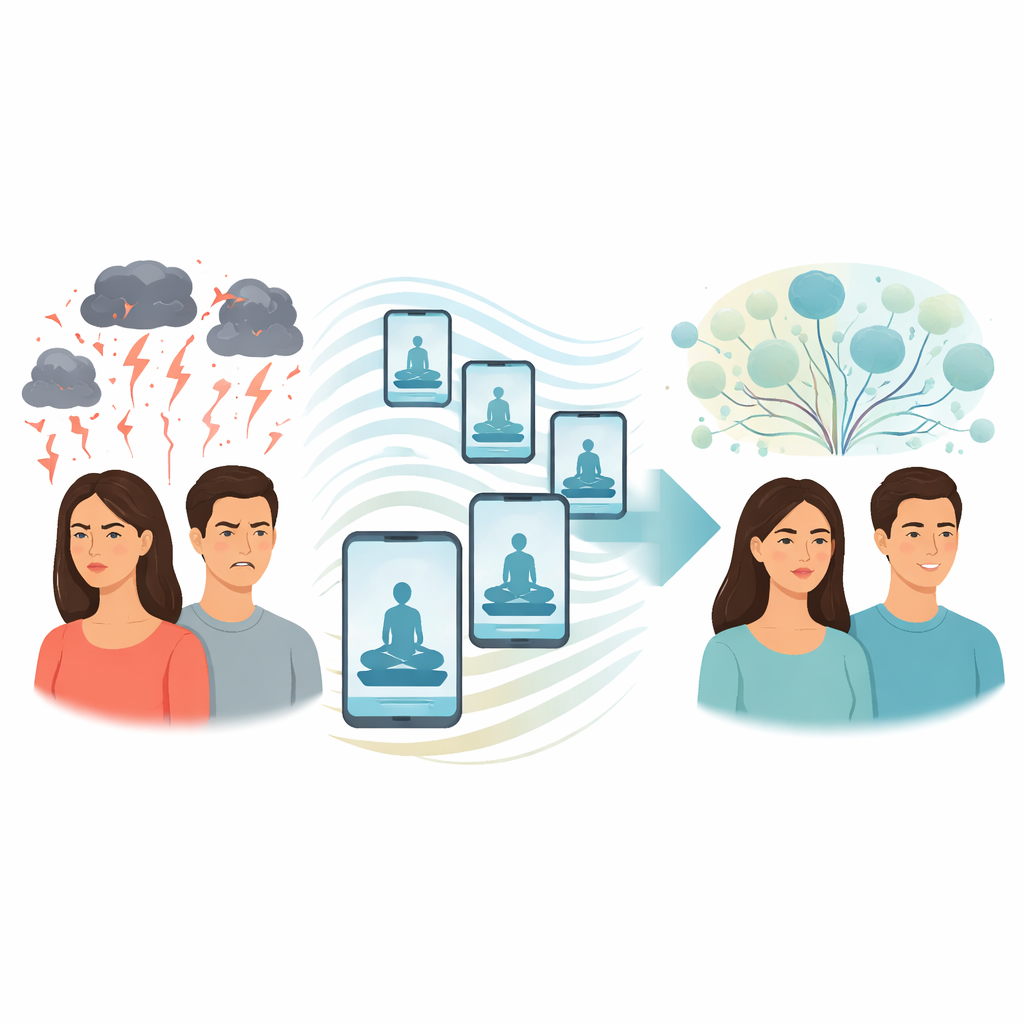
Overall, the app-based program produced only modest shifts. Across all participants, anger levels and feelings of stress dropped slightly, and there were small hints of improvement in helpful thinking strategies such as reinterpreting problems or planning constructive steps. These average changes were in the right direction but were small and did not remain statistically strong once the authors corrected for the large number of tests run. When the team examined gender more closely, they found exploratory patterns suggesting that women, but not men, might have gained more in certain areas. Women who used the app tended to show greater improvements in flexible thinking—being able to see choices and adapt—and larger reductions in anger triggered by frustrating situations compared with women who were waiting. Men, in contrast, did not show clear differences between the meditation and waitlist conditions on these measures.
Why gender and individual style might matter
The researchers discuss several reasons why women and men might appear to respond differently to the same program. Earlier work suggests that women are more likely to use a wide range of strategies to manage feelings—such as reflecting on events, seeking support, or reframing situations—while men may rely more on action-oriented or less consciously recognized methods. Women are also more likely to download and stick with wellness apps. A brief mindfulness course that trains noticing and rethinking reactions may therefore slot more readily into women’s existing habits. Men may in fact also benefit, but their ways of regulating emotion might not be fully captured by standard questionnaires, which ask directly about inner strategies they may not label or report in the same way.
What this means for app users and designers
The study’s central message is cautious but practical. A four-week mindfulness app can offer small, short-term benefits for working adults, especially in easing anger and stress, but it is not a miracle cure—and the gains may be somewhat stronger or more visible for women. Because the gender-related findings were small and did not meet the strictest statistical standards, they should be viewed as early clues rather than firm conclusions. Still, they point toward a future where digital mental health tools are personalized: different mixes of practices, designs, or companion features—such as more action-focused content or AI-guided support—might suit different users. For now, the takeaway for a lay reader is that trying a brief mindfulness app is low-risk and may help you pause before reacting in anger or feeling stuck, but developers and researchers still have work to do to make these tools equally effective for everyone.
Citation: Adachi, K., Kurosawa, T. & Takizawa, R. Gender differences in the influence of app-based mindfulness meditation on emotion regulation: a randomised controlled trial. Sci Rep 16, 11746 (2026). https://doi.org/10.1038/s41598-026-46317-z
Keywords: mindfulness apps, work stress, emotion regulation, gender differences, digital mental health