Clear Sky Science · en
Preoperative frontal EEG power spectral features associated with psychomotor subtypes of postoperative delirium in cardiovascular surgery: a prospective study
Why the mind matters after heart surgery
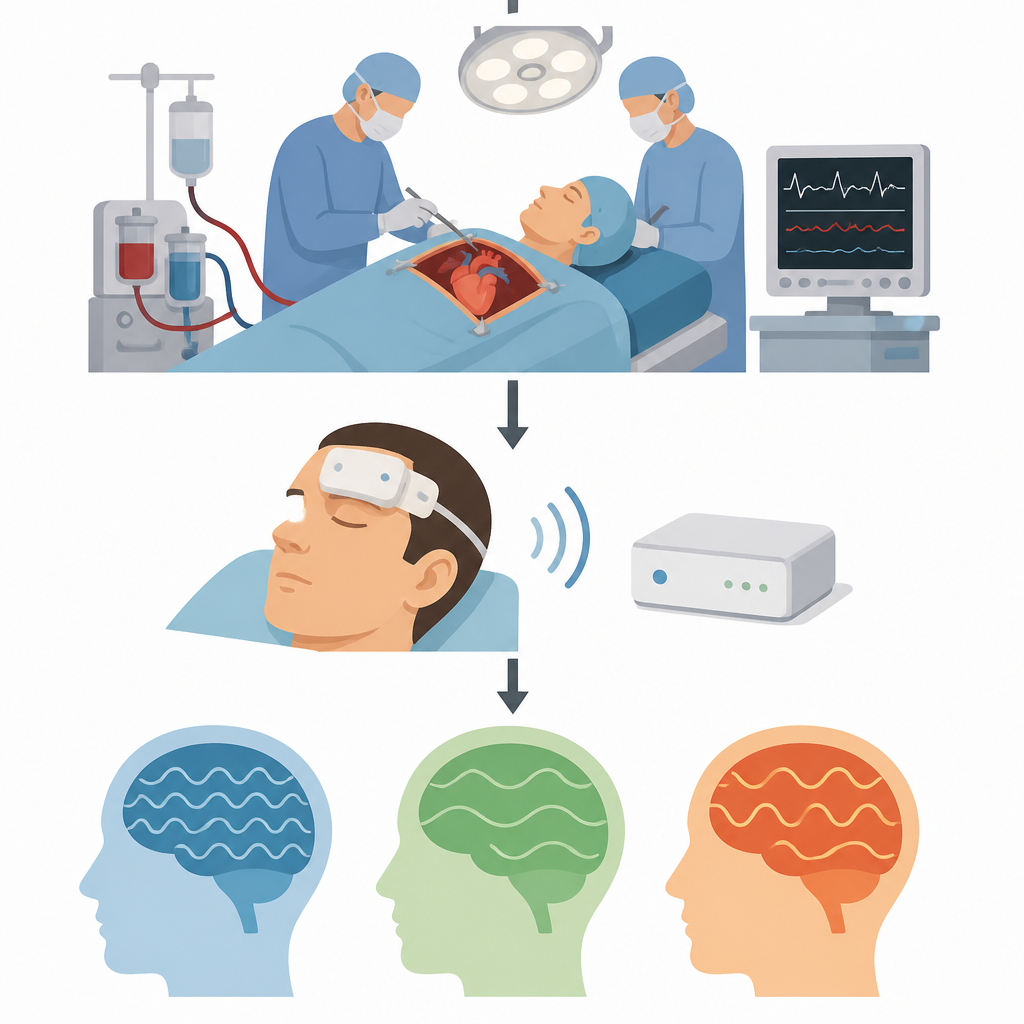
Many people who undergo heart surgery wake up feeling confused, agitated, or unusually withdrawn in the days that follow. This state, called delirium, can slow recovery and affect daily life long after leaving the hospital. The study behind this article asked a simple but important question: can a quick, painless brain wave test before surgery reveal who is at risk for particular types of delirium, and help doctors tailor care in advance?
A closer look at confusion after surgery
Delirium is a sudden disturbance in attention and awareness that often appears after major operations such as cardiovascular surgery. It comes in different forms: some patients become restless and agitated, others grow quiet and sluggish, and some show a mix of both. These patterns matter because they follow different courses and may respond differently to treatments. Hospitals already use checklists and non-drug programs to reduce delirium, but applying them to every patient is demanding. A simple way to spot high-risk patients ahead of time could make prevention more targeted and practical.
Listening to the brain before the operation
The researchers followed 209 adults scheduled for heart or major blood vessel surgery at a university hospital. Before the operation, nurses visited each patient at the bedside to test basic thinking skills and to record a short, two-minute brain wave reading using a small patch with three sensors placed across the forehead. This device captured electrical activity from the front of the brain while the patients sat quietly with eyes closed. The team then broke these brain waves into several speed ranges, often called bands, and calculated how strong each band was at each sensor.
Who developed delirium and in what form
About one in three patients developed delirium within a week after surgery. Trained nurses and psychiatrists met the patients daily, reviewed their charts, and assigned each delirium case to one of three movement patterns: no clear change in movement, a slowed-down pattern called hypoactive, or a hyperactive-or-mixed pattern marked by restlessness, agitation, or swings between active and quiet phases. People who developed delirium tended to be older, performed slightly worse on the simple thinking test, and used certain sedative medicines more often than those who stayed clearheaded. These familiar clinical factors, rather than pre-surgery brain waves, best predicted whether delirium would occur at all.
Brain wave hints of an agitated recovery
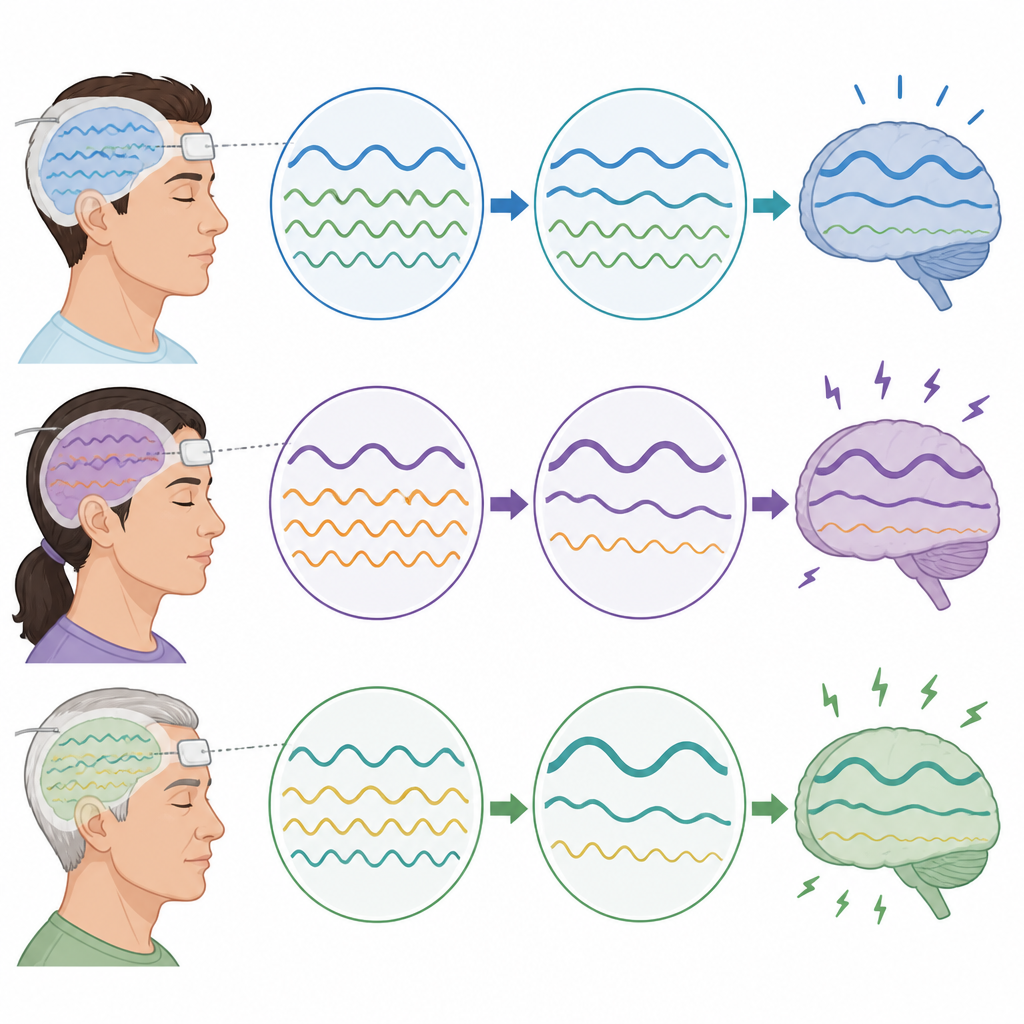
The story changed when the team compared only the patients who did develop delirium. Among these individuals, those who went on to show hyperactive-or-mixed symptoms had a distinctive brain wave pattern even before surgery. Their frontal recordings contained more slow activity and less of the faster, calmer rhythm than patients who later became mostly quiet or showed no major movement changes. This pattern appeared consistently across all three forehead sensors and remained visible even when the researchers repeated the analysis after removing patients who had taken sedative drugs before surgery. The results suggest that the brains of patients prone to restless delirium may already be wired or primed differently on the eve of surgery.
What this could mean for patients and care teams
For now, a short forehead brain wave test before cardiovascular surgery does not seem useful for deciding who will or will not become delirious at all. However, it may help flag which patients are more likely to develop the restless, hyperactive form. If larger and more diverse studies confirm these findings, simple pre-surgery brain monitoring could support more personalized plans, such as closer observation or tailored use of medicines, aimed at specific patterns of delirium rather than a one-size-fits-all approach.
Citation: Nagata, C., Hata, M., Miyazaki, Y. et al. Preoperative frontal EEG power spectral features associated with psychomotor subtypes of postoperative delirium in cardiovascular surgery: a prospective study. Sci Rep 16, 15111 (2026). https://doi.org/10.1038/s41598-026-46109-5
Keywords: postoperative delirium, cardiac surgery, EEG, psychomotor subtypes, brain monitoring