Clear Sky Science · en
Predictive value of the reverse shock index multiplied by glasgow coma scale score for mortality in ICU heatstroke patients: a multicenter study
Why heatstroke risk in the ICU matters to everyone
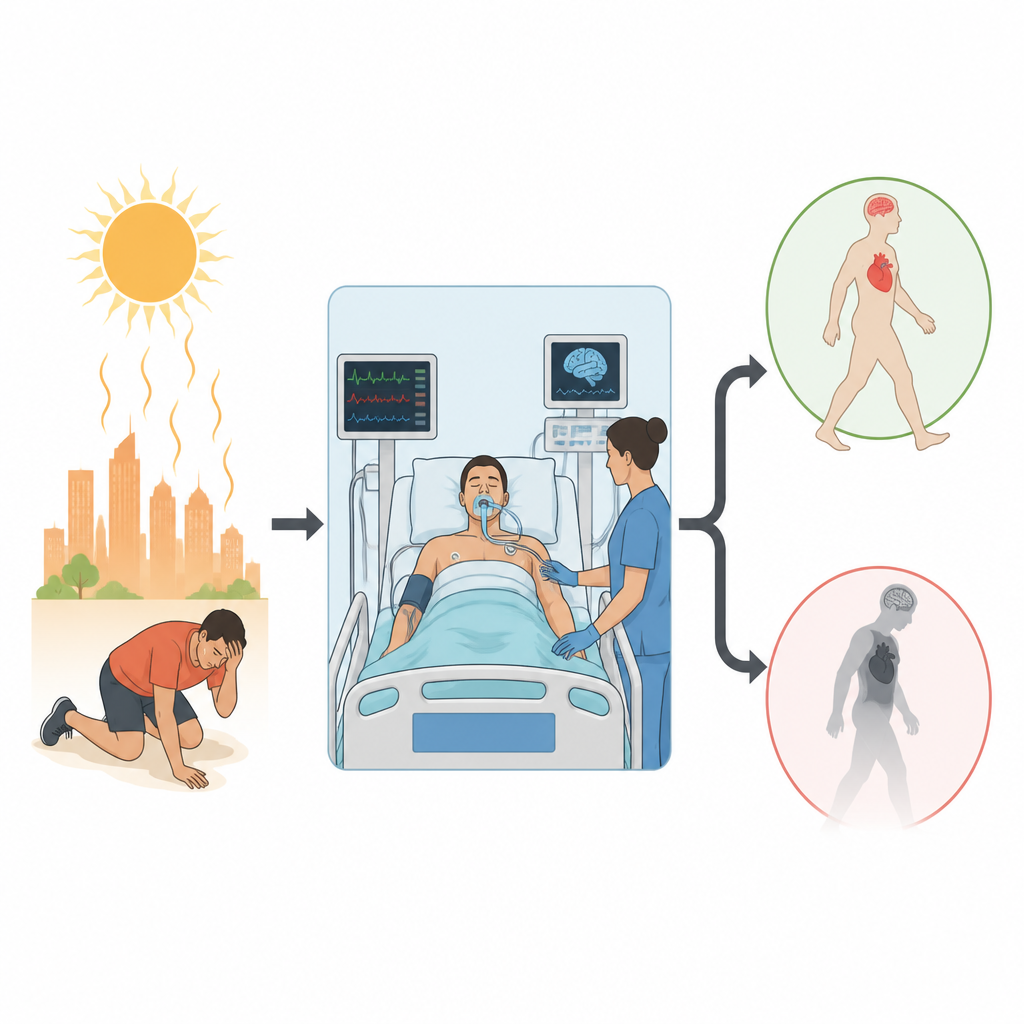
As heatwaves grow more frequent and intense, more people are landing in intensive care units with life-threatening heatstroke. Doctors must quickly decide who is at greatest risk of dying so they can focus lifesaving care where it is needed most. This study explores a simple bedside score that blends blood pressure, heart rate, and brain responsiveness to help clinicians sort high-risk heatstroke patients within minutes of arrival in the ICU.
A closer look at dangerous heat illness
Heatstroke occurs when the body’s core temperature soars above about 40 degrees Celsius and the brain begins to malfunction, causing confusion, seizures, or coma. Even with modern cooling methods and organ support, many patients, especially older adults, do not survive. In this large study from 83 hospitals in southwestern China, researchers examined 671 adults treated in ICUs for heatstroke. Nearly one in five patients died during their ICU stay, highlighting how serious this condition can be despite rapid medical attention.
A simple bedside score that blends heart and brain signals
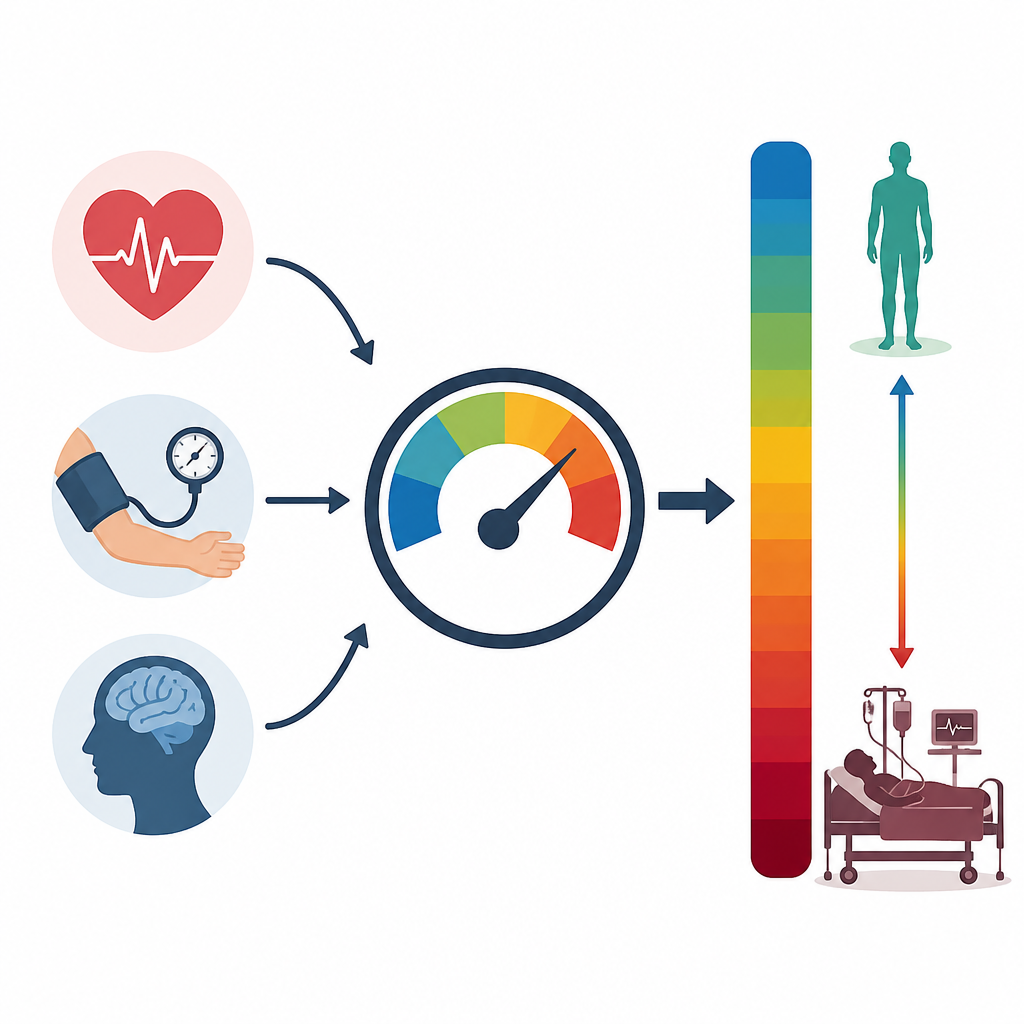
Doctors already use quick scores that track either circulation or brain function, such as the shock index, the Glasgow Coma Scale, and the qSOFA score. Each captures only one slice of the body’s response to severe illness. The team focused on a newer measure called rSIG, which combines blood pressure, heart rate, and level of consciousness into a single number. Using the first readings taken when patients reached the ICU, they calculated rSIG and compared how well it predicted who would survive, stacking it against the older scores using statistical tools that measure accuracy.
What the study discovered about risk
The results showed that rSIG was better at predicting death than any of the other three quick scores. Patients who died tended to have lower rSIG values, reflecting weaker circulation and more severe brain dysfunction. At an identified cutoff value, rSIG was particularly good at ruling out death for patients with higher scores, giving clinicians greater confidence that some individuals were at lower immediate risk. The score also performed consistently across many different subgroups, including people with and without infections, diabetes, or different types of heatstroke, although there were hints that sex and high blood pressure might slightly alter the strength of the association.
Building a personalized risk picture
The researchers went a step further by asking which routine lab tests added the most useful information beyond rSIG. They found that prolonged blood clotting time, higher creatinine (a marker of kidney function), and higher blood lactate (a sign of poor tissue oxygen delivery) were each linked to a greater chance of death. Using these four measures together – rSIG, clotting time, creatinine, and lactate – they created a visual scoring tool called a nomogram. This chart allows a doctor to trace each patient’s values, add up points, and read off an estimated chance of dying in the ICU. In tests within the same group of patients, this combined model predicted outcomes more accurately than any single measure alone.
How this could help during future heatwaves
For people facing rising temperatures and more frequent heat emergencies, this work offers a practical way to improve care for the sickest patients. The rSIG score gives ICU teams a quick snapshot of how badly heatstroke has damaged both heart and brain, while the expanded model that includes a few common lab tests helps refine that picture. Although the study was retrospective and limited to one region, and still needs to be confirmed elsewhere, it suggests that simple information gathered at the bedside can guide earlier, more targeted treatment for heatstroke when every minute counts.
Citation: Shi, L., Liu, Q., Wang, R. et al. Predictive value of the reverse shock index multiplied by glasgow coma scale score for mortality in ICU heatstroke patients: a multicenter study. Sci Rep 16, 15676 (2026). https://doi.org/10.1038/s41598-026-46072-1
Keywords: heatstroke, intensive care, risk prediction, mortality, bedside scoring