Clear Sky Science · en
Subpubic arch angle and occult obstetric anal spincter injury in primiparous women: a prospective observational study
Why birth injuries you cannot see still matter
Many new mothers assume that if a vaginal birth looks uncomplicated, their bodies will fully recover. Yet small, hidden injuries to the muscles that control the back passage can appear after childbirth and may lead to trouble holding gas or stool years later. This study looked at whether the shape of a woman’s pelvis, in particular the angle under the pubic bone, is linked to these hidden injuries during a first birth.
The hidden problem after vaginal birth
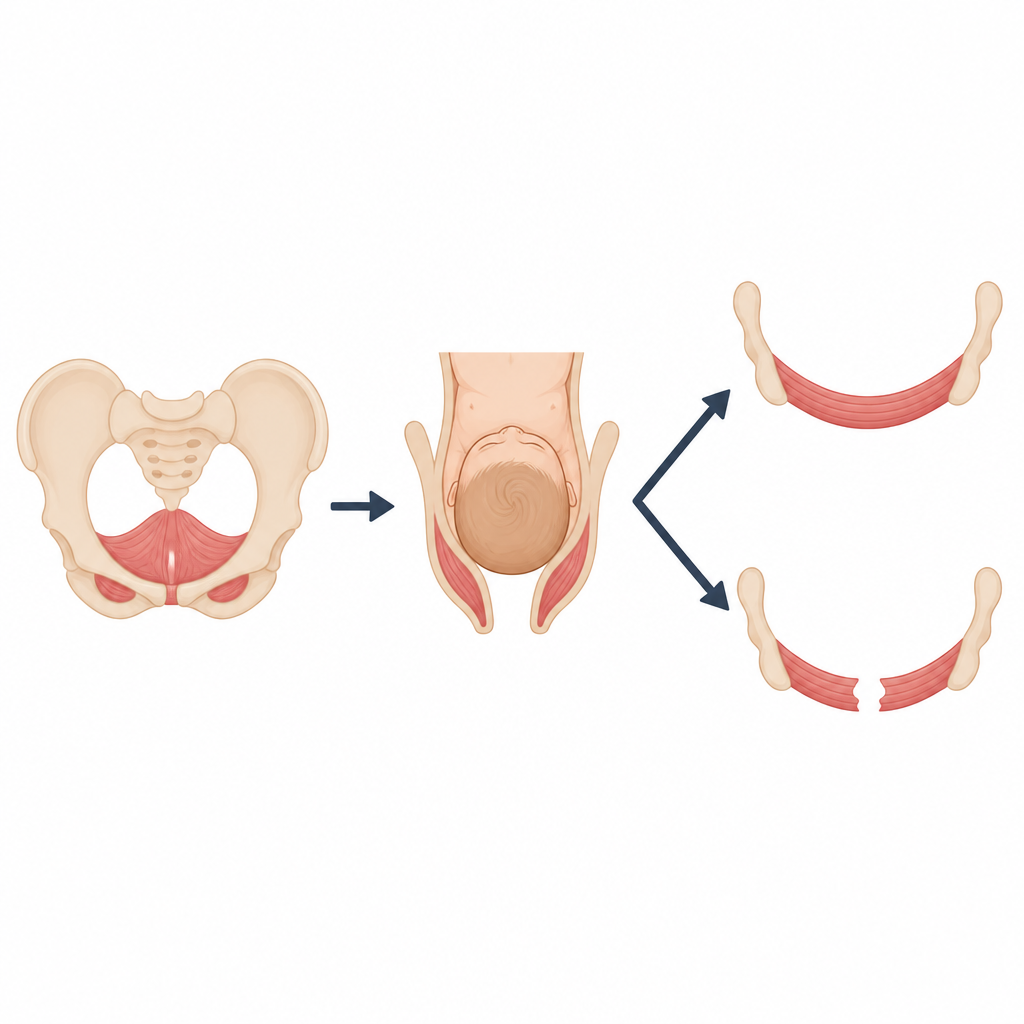
Injuries to the anal sphincter, the ring of muscle that keeps the bowel closed, are a serious complication of vaginal birth. Doctors can see and stitch severe tears, but many smaller injuries are missed on routine examination and only show up on ultrasound scans. These “occult” injuries may not cause symptoms right away, yet they are tied to later problems with leakage, discomfort, and emotional distress. Because of this, researchers want to understand which mothers are at higher risk so that care during birth can be tailored and follow up can be more careful.
Pelvic shape and how it was measured
The study focused on the subpubic arch angle, which describes how wide the lower front opening of the pelvis is. A wider angle means a more open outlet, while a narrower angle suggests a tighter space through which the baby’s head must pass. Three hundred women having their first baby by vaginal birth in a single hospital in Turkey were enrolled. All had the same type of angled cut to the vaginal opening, meant to reduce severe tearing. Before birth, doctors used an ultrasound probe placed on the skin between the vagina and anus to measure this pelvic angle. They also scanned the anal sphincter to be sure there was no pre‑existing damage.
What happened during and after birth
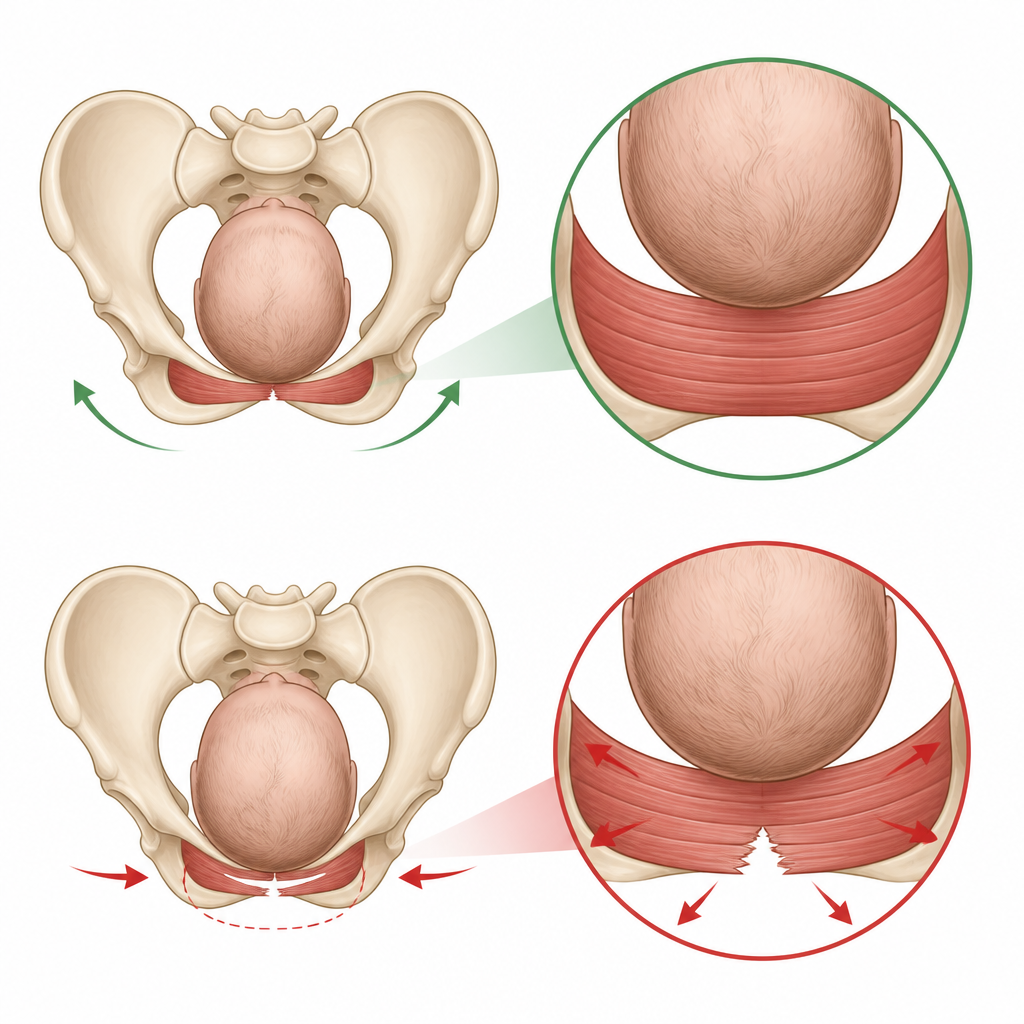
After delivery, each woman was scanned again about 24 hours later to look for new damage to the outer anal sphincter muscle. Nearly one in three women showed an occult injury even though no severe tear had been diagnosed at the time of birth. When the researchers compared women with and without these injuries, they found that those with damage tended to be slightly shorter and had a narrower mean pelvic angle. In contrast, baby size, including birth weight and head size, and aspects of labor such as inducing contractions or how long the pushing stage lasted, did not differ meaningfully between the groups.
How strong was the link with pelvic angle
The team then tested whether the pelvic angle measurement alone could reliably sort women into higher and lower risk groups. They used a statistical tool to choose a cut‑off angle that best separated those with and without injury. Women below this threshold had more sphincter injuries than those above it. However, the overall ability of the angle by itself to tell who would be injured was modest, falling into a range that is considered weak for screening tests. The angle also showed only a weak but real tendency to be larger in taller women, hinting that overall body size and pelvic shape are related.
What this means for mothers and clinicians
This research suggests that, among first‑time mothers, subtle birth injuries to the bowel control muscle are more closely linked to the mother’s body and pelvic shape than to the baby’s size or the length of labor. Women with a narrower pelvic opening under the pubic bone faced a higher chance of such hidden damage, but the angle alone was far from a perfect predictor. For everyday care, this means that measuring the subpubic arch angle may give doctors one more piece of information when thinking about a woman’s overall risk, rather than serving as a stand‑alone test. Larger studies in different hospitals are needed before this measurement could guide routine decisions during childbirth.
Citation: Aktaş, Ç., Kulhan, N.G., Aktaş, G. et al. Subpubic arch angle and occult obstetric anal spincter injury in primiparous women: a prospective observational study. Sci Rep 16, 15149 (2026). https://doi.org/10.1038/s41598-026-45977-1
Keywords: childbirth injury, pelvic anatomy, anal sphincter, vaginal delivery, perineal trauma