Clear Sky Science · en
A clinical machine learning model for 1-year functional outcome prediction in acute ischemic stroke: temporal validation across evolving guidelines
Why long-term stroke recovery matters
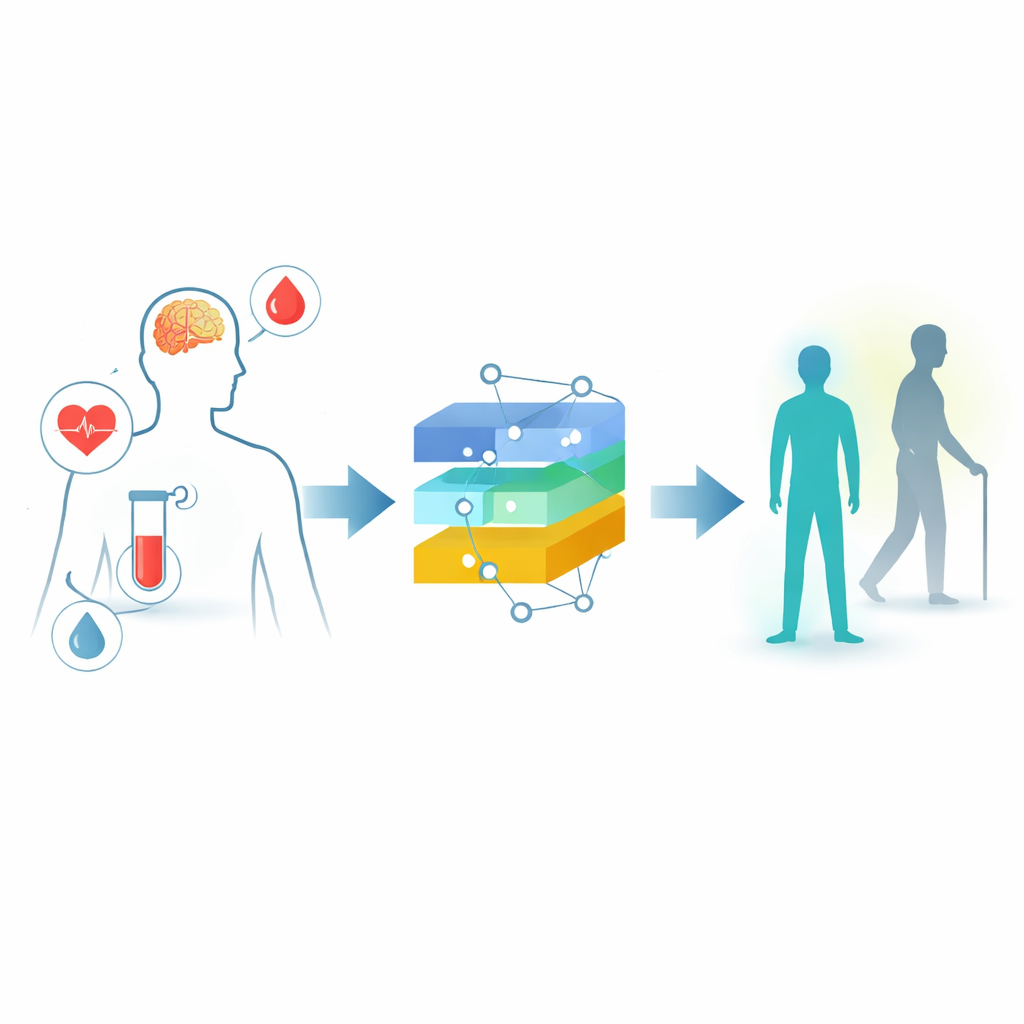
For many people who survive a stroke, the biggest question is not just “Will I live?” but “Will I get my life back?” Doctors can usually estimate how a patient will be doing after three months, yet that early snapshot often misses the full story. This study asks a more personal question: can we predict, within the first day of hospitalization, who is likely to return to an almost symptom-free life one year after an ischemic stroke, and who may still struggle with disability?
A closer look at stroke and recovery
Acute ischemic stroke happens when a blood vessel in the brain is blocked, depriving brain tissue of oxygen. Thanks to clot-dissolving drugs and catheter-based procedures, more people now survive the initial event. Still, up to half of survivors live with lasting difficulties in walking, using their hands, or caring for themselves. Most research and scoring tools focus on the first three months after stroke and lump together people who are entirely back to normal with those who have mild but noticeable problems. The authors of this paper instead focus on a stricter goal: a return to normal or near-normal function one year later, a standard that better reflects what patients and families hope for.
Building a prediction tool from hospital data
The research team followed 1,109 adults treated for ischemic stroke at a major hospital in northeast China between late 2020 and late 2024. They split these patients into two groups based strictly on time: 965 people treated from 2020 to 2023 were used to build prediction models, and 144 people treated in 2024 were set aside to test whether the models still worked under newer treatment guidelines. From 76 pieces of routinely collected information—such as age, stroke severity on arrival, blood pressure, and laboratory tests—they applied a stepwise filtering process to find the most informative yet practical combination of factors.
Eight key clues that shape the forecast
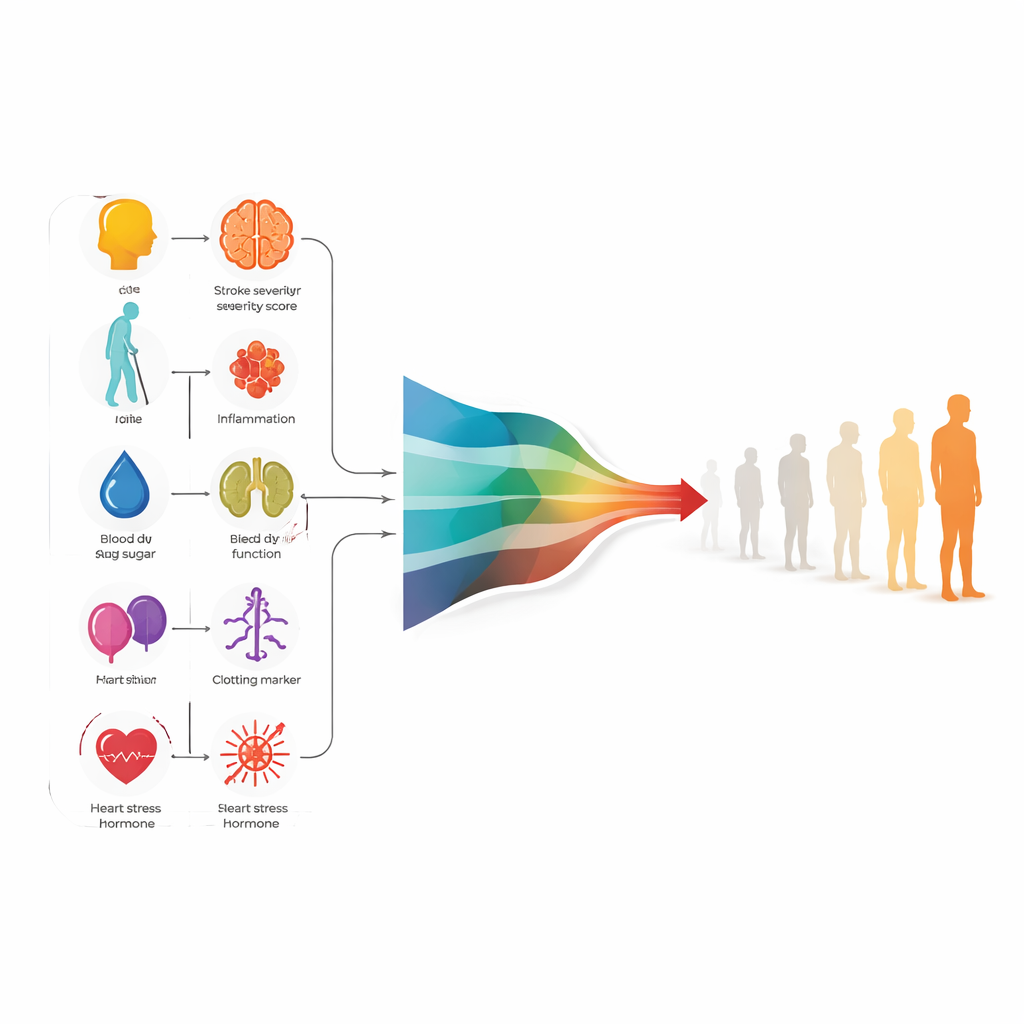
The analysis showed that a relatively simple statistical model, called logistic regression, performed as well as more complex machine learning approaches while remaining easier for clinicians to understand. This final model relied on eight predictors available within 24 hours of admission: two bedside scores (overall stroke severity and pre-stroke disability), age, blood sugar, a marker of kidney function, and three blood-based indicators linked to inflammation, clotting, and heart strain. Together, these measures captured not only how damaged the brain appeared at first glance, but also how the body as a whole was reacting. In testing within the original group, the model correctly distinguished between patients who would reach an excellent one-year outcome and those who would not about four times out of five.
Putting the model to the test in changing times
The real challenge was whether this tool would still work as stroke care evolved. In 2024, national guidelines broadened who could receive clot-busting treatment. As a result, the newer group of patients tended to arrive with milder symptoms and received more aggressive early therapy. Despite these shifts, the model’s accuracy remained strong. It outperformed the commonly used stroke severity score alone and did a better job at re-sorting patients into realistic risk categories. Errors most often occurred in people whose later course was shaped by complications not visible during the first day in the hospital, such as severe infections or recurrent strokes.
From research model to bedside helper
To make the work usable in daily practice, the authors packaged their eight-factor model into a simple web-based calculator. A clinician can enter a patient’s age, early stroke scores, and routine blood test results and receive an immediate estimate of the chance of being essentially symptom-free one year later. This estimate can guide discharge planning, help match patients to the intensity of rehabilitation they may need, and support conversations with families about expectations and long-term planning.
What this means for people living after stroke
In plain terms, this study shows that information collected within the first day of a stroke—numbers that hospitals already measure—can be combined into a practical tool that reasonably forecasts who is likely to make a near-complete recovery over the following year. While not perfect and still needing confirmation in other regions and hospitals, the model moves beyond a single bedside score by weaving in signals from the immune system, blood sugar, kidney function, and heart stress. Used thoughtfully, it could help ensure that limited rehabilitation resources go where they are most needed and that patients and families are better prepared for the road ahead.
Citation: Liu, P., Cao, Y., Zou, X. et al. A clinical machine learning model for 1-year functional outcome prediction in acute ischemic stroke: temporal validation across evolving guidelines. Sci Rep 16, 10844 (2026). https://doi.org/10.1038/s41598-026-45800-x
Keywords: ischemic stroke, stroke recovery, prognostic model, machine learning, long-term outcome