Clear Sky Science · en
A behaviourally informed digital framework for safety culture transformation in the oil and gas industry
Why safety on screens matters at risky worksites
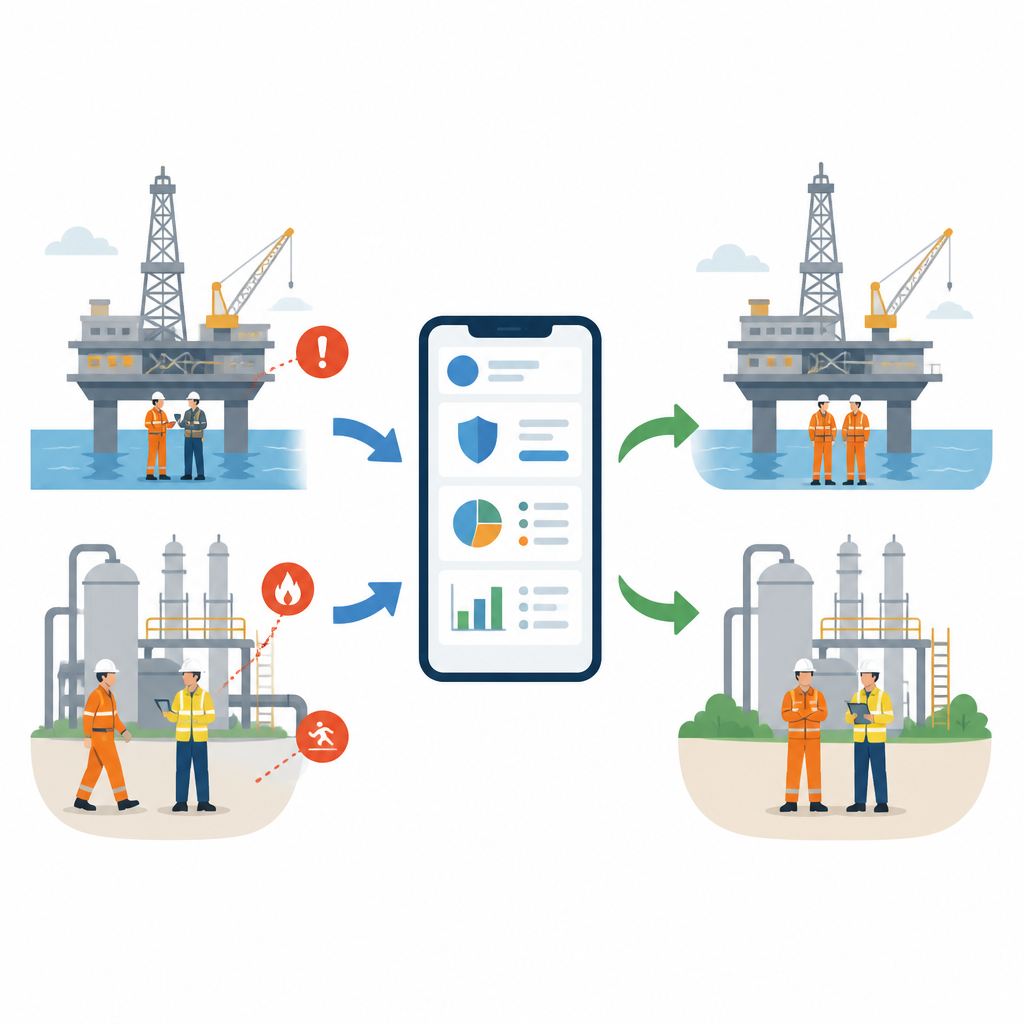
Oil and gas operations sit among the most hazardous workplaces on Earth, where a single mistake can trigger fires, spills, or explosions. Companies have spent decades building stronger equipment and stricter rules, yet accidents still often trace back to human habits and workplace culture. This article explores a new kind of digital tool that aims not just to log safety data, but to steadily reshape everyday behavior and attitudes toward safety using ideas borrowed from psychology and health apps.
From ticking boxes to changing behavior
Many current digital safety systems act like electronic filing cabinets. They collect incident reports, store audit checklists, and help meet legal requirements, but they do little to keep workers motivated or engaged. The authors argue that this compliance focus leaves a gap between knowing the rules and living them. Their solution is the Behavioural Occupational Safety Culture Application, or BOSCA, a mobile platform created for Malaysia’s oil and gas sector that blends safety management with behavior change strategies. Instead of treating the app as a simple reporting tool, the team designed it as an active intervention that nudges safer choices day after day.
Borrowing lessons from health apps
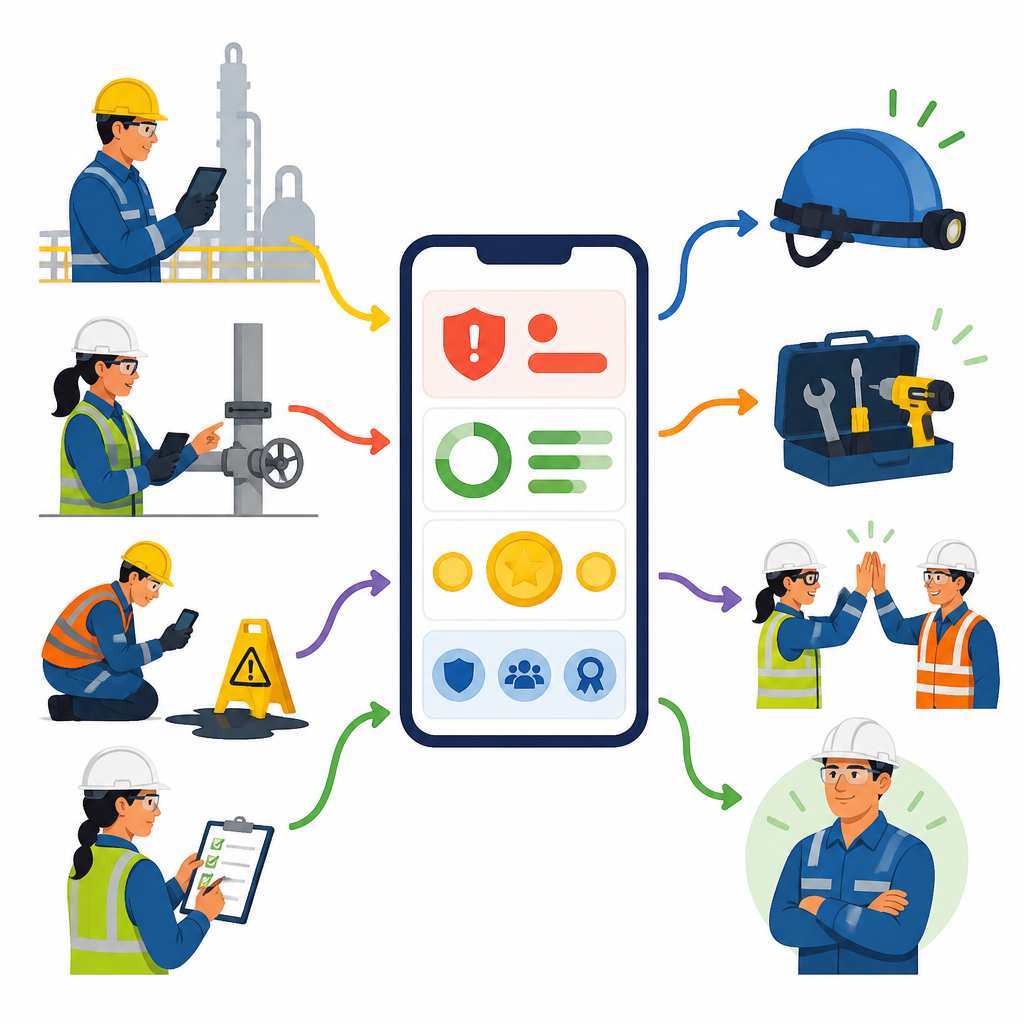
To build BOSCA, the researchers drew on the same thinking that powers successful mobile health apps, which help people stick with exercise plans or manage chronic conditions. These apps work because they do more than send reminders. They provide clear information, tap into motivation, and build practical skills over time. BOSCA follows this pattern using a well-known behavior model that links information, motivation, and skills. Within the app, training modules and safety alerts supply timely knowledge; reward points and recognition screens boost motivation; and digital audits and competency checks let workers practice and track their abilities. By weaving these parts together, the system aims to turn abstract safety values into everyday habits shared across the workforce.
How the app is built and what it does
Under the surface, BOSCA runs on a layered software structure similar to many modern cloud services. A front layer handles what users see on their phones: modules for audits, training, incident reporting, rewards, competency, and safety alerts. Behind that sits a control layer that checks data quality, triggers notifications, and schedules reminders for tasks such as refresher training or upcoming inspections. Further layers manage security, user permissions, and data storage so that reports and performance records move safely between workers, safety officers, and managers in real time. This design allows different user groups to see what they need, from a worker logging a near miss to a manager reviewing safety trends.
Turning actions into feedback loops
The heart of the system is a set of feedback loops that respond to what people actually do. When a worker completes an audit, reports a hazard, or finishes a training module, the app validates the entry, stores it, and then uses it to trigger tailored responses. These can include instant alerts to safety staff, progress updates on personal dashboards, or reward tokens that recognize active participation. Over time, such loops are intended to strengthen three key pathways: clearer understanding of risks, stronger motivation to act safely, and better practical skills on the job. The app also encodes broader culture elements such as leadership commitment and open communication by giving managers tools to respond quickly and visibly to frontline input.
What early tests show and what comes next
The prototype was tested under simulated conditions with ten experienced industry practitioners. Function checks showed stable performance, accurate processing of reports and assessments, and reliable notification delivery. Users reported that navigation felt clear, modules fit together logically, and the motivational features encouraged continued use rather than one-off logins. Still, the study stops short of claiming that the app reduces accidents. Proving changes in real-world incident rates and long-term behavior will require larger, longer trials in working facilities and possibly in other high-risk sectors beyond oil and gas.
A new path toward safer work habits
In plain terms, this research proposes turning a safety app into a coach rather than a clerk. BOSCA shows how ideas from behavioral science and health technology can be built into a mobile system that not only records what happens, but also responds in ways that support better choices, stronger skills, and more open dialogue about risk. While its full impact remains to be tested in the field, the framework points toward a future where digital safety tools help build a living safety culture, shifting workplaces from reacting to accidents toward steadily preventing them.
Citation: Rahim, H., Dapari, R., Osman, M.A. et al. A behaviourally informed digital framework for safety culture transformation in the oil and gas industry. Sci Rep 16, 15155 (2026). https://doi.org/10.1038/s41598-026-45794-6
Keywords: safety culture, oil and gas, behavioral intervention, mobile application, occupational safety