Clear Sky Science · en
Grammar error diagnosis using graph convolutional networks with knowledge graph integration
Why Smarter Grammar Tools Matter
Anyone who has watched a word processor underline their sentences knows that automatic grammar checkers are far from perfect. They often miss subtle errors, and when they do suggest a change, they rarely explain why. This paper introduces a new kind of grammar diagnosis system designed not just to fix mistakes in English writing, but also to show the reasoning behind those fixes—making it more useful for students, teachers, and anyone learning or using English as a second language.
Turning Sentences into Networks
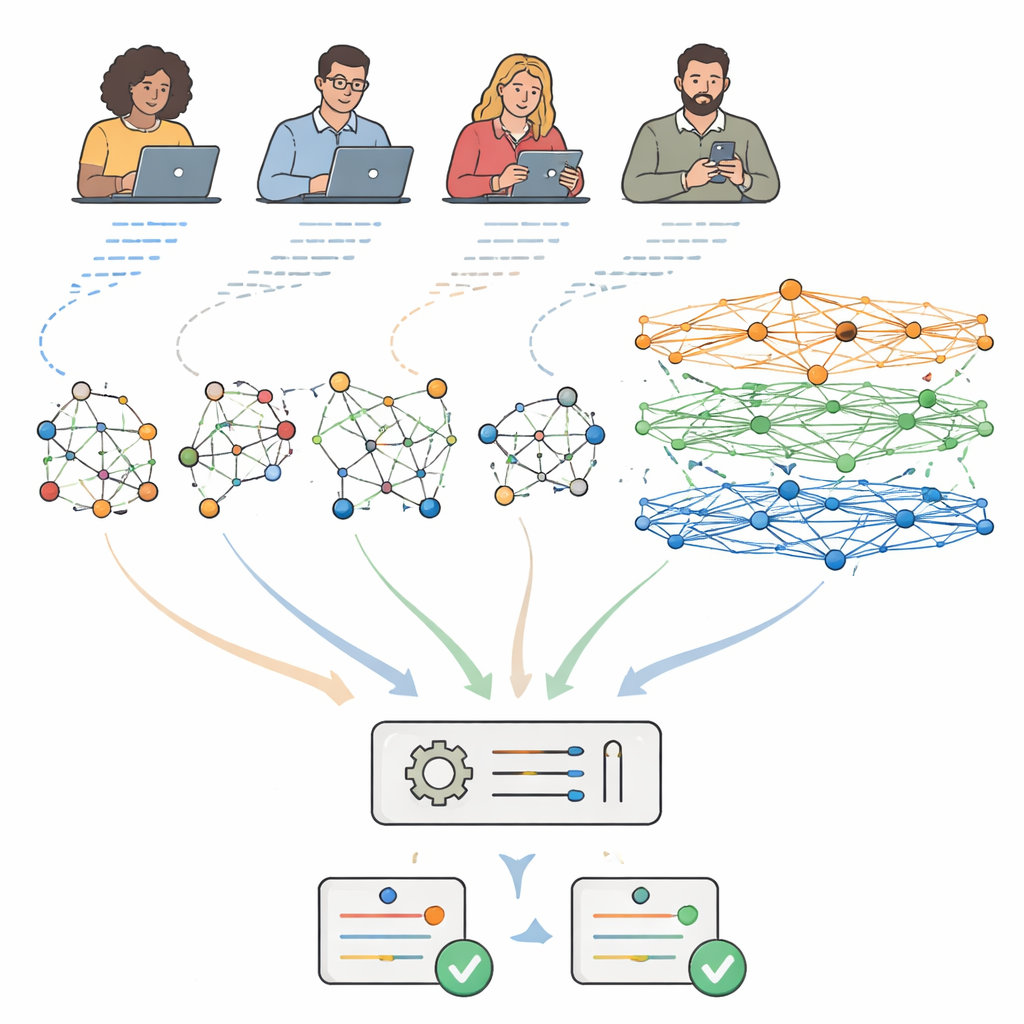
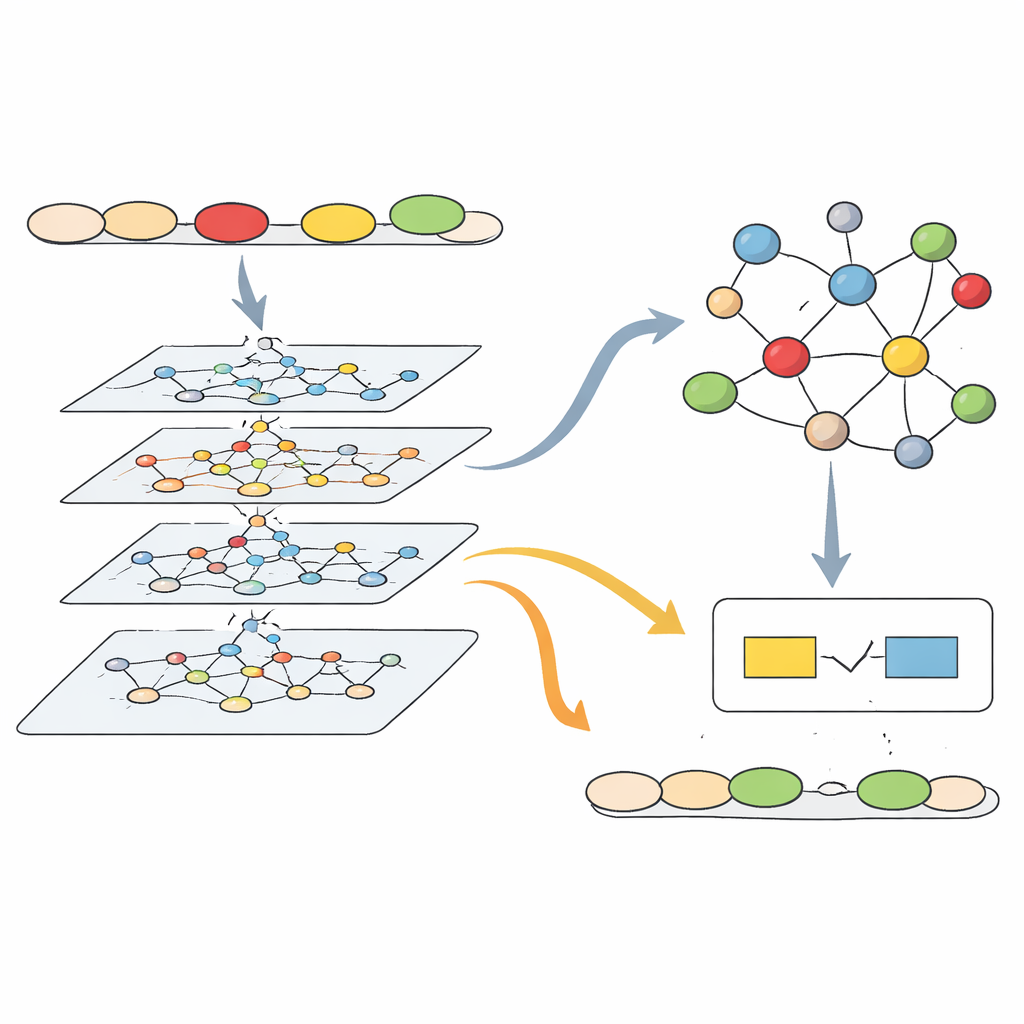
Most current grammar tools read text as a simple line of words. The authors argue that this is too shallow, because real sentences have structure: subjects connect to verbs, clauses hang together, and meaning depends on who relates to what. Their system uses a technique from modern artificial intelligence called a graph convolutional network. Instead of treating a sentence as a flat string, it turns each sentence into a little network where every word is a dot, and lines between dots capture grammatical relationships such as “subject of” or “object of.” The model then spreads information across this network layer by layer, so that each word’s representation is shaped not only by its neighbors, but also by the words it is grammatically tied to, even if they appear far away in the sentence.
Building a Map of Grammar Knowledge
On top of this sentence network, the researchers build a second structure: a large grammar knowledge graph. This is like a carefully organized map of English grammar, stitched together from classic reference books, exam guidelines, and educational resources. It contains thousands of “nodes” for ideas such as verb tense, article use, or subject–verb agreement, plus separate nodes for common error types, diagnostic rules, correction strategies, and links to practice materials. The links encode relationships like “this rule detects that error” or “this strategy fixes that problem.” Experts checked and refined these links so the graph reflects how teachers actually think about grammar problems in the classroom.
Letting Data and Rules Work Together
When the system analyzes a new sentence, it first builds the sentence network and runs the graph model to detect which words might be wrong and what kind of error they represent. At the same time, it looks up related entries in the grammar knowledge graph—for example, rules that connect a past-time word like “yesterday” with the need for a past-tense verb. The model blends what it “learns” from data with what is stored in this rule map. Arrows in the network highlight which connections and rules were most influential, allowing the system to trace a path from a concrete error back to the principle it violates. In tests, this combined approach was especially strong at catching structural problems like verb tense shifts and subject–verb mismatches, which depend on long-distance links within a sentence.
Putting the System to the Test
The authors evaluated their method on widely used collections of learner English, including CoNLL-2014, JFLEG, and BEA-2019. These datasets contain essays by people learning English, with human annotators marking where and how each sentence goes wrong. Compared with strong existing systems based on transformer models such as BERT and specialized taggers like GECToR, the new graph-based system achieved higher F1 scores—a standard measure that balances catching as many real errors as possible with avoiding false alarms. Importantly, it did so with far fewer model parameters, suggesting that explicit structure and grammar knowledge can substitute for raw size. A small classroom-style study with university learners further hinted that explanations grounded in the knowledge graph helped students improve their ability to spot and understand mistakes, though the authors stress that larger and longer studies are needed.
What This Means for Everyday Writers
In plain terms, the paper shows that grammar checkers become more accurate and more educational when they “see” sentences as networks of relationships and consult an organized map of grammar rules, instead of relying on pattern-matching alone. The proposed system not only flags that something is wrong, but can also point back to the underlying rule—such as “plural subjects need plural verbs”—and suggest a targeted fix. While the approach still struggles with nuanced word choice, idioms, and very noisy sentences, it marks a step toward language tools that behave more like a patient teacher than a blunt red pen. With further development, similar graph-based systems could support learners of many languages by combining the strengths of modern AI with explicit, human-readable grammatical knowledge.
Citation: Zhang, J., Ma, Y. Grammar error diagnosis using graph convolutional networks with knowledge graph integration. Sci Rep 16, 10867 (2026). https://doi.org/10.1038/s41598-026-45622-x
Keywords: grammar error correction, graph neural networks, knowledge graphs, language learning technology, natural language processing