Clear Sky Science · en
Health behaviours as a mediator between health locus of control and cardiovascular risk in young adults with congenital heart defects
Why beliefs about health matter
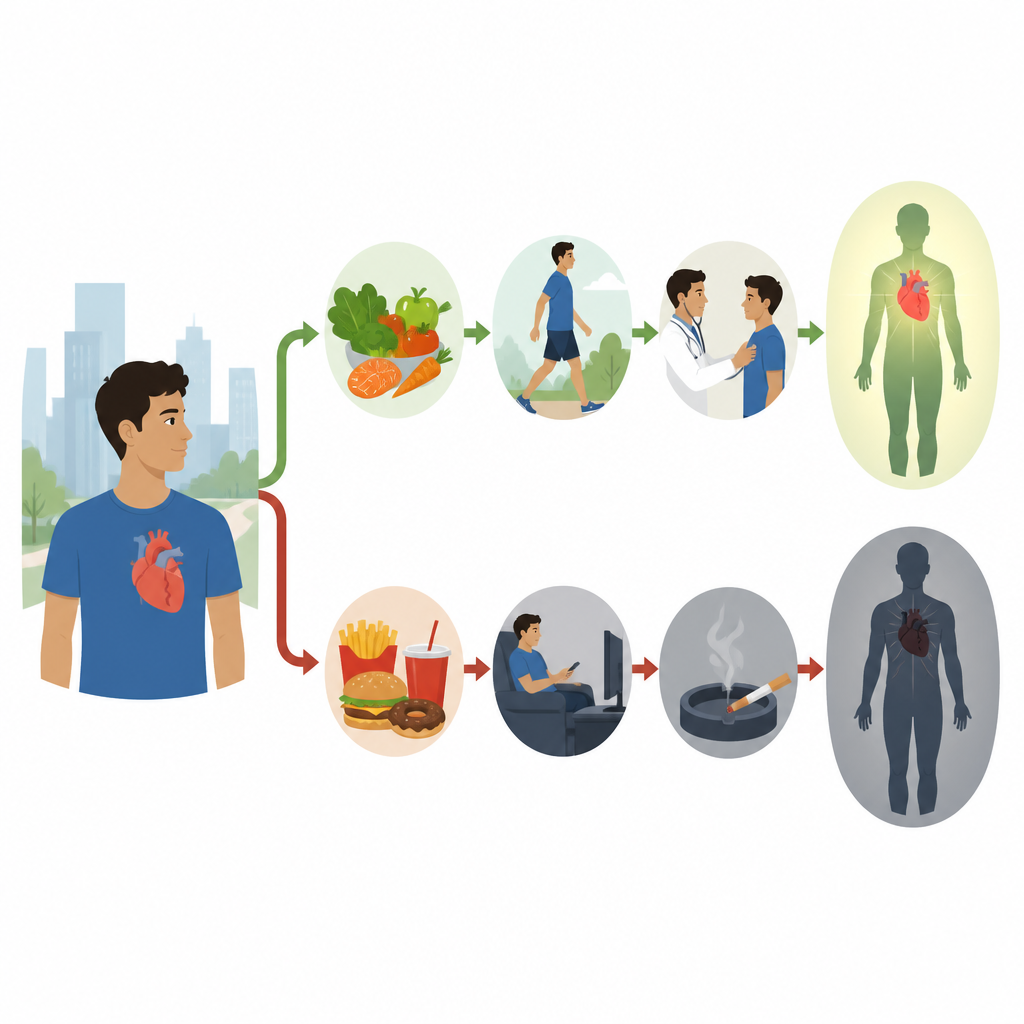
Young adults born with heart defects are living longer than ever, but many still face everyday risks like poor diet, low exercise, and extra stress. This study asks a simple but powerful question: do young people’s beliefs about who controls their health shape the choices they make, and in turn their chances of future heart trouble? Understanding this chain from beliefs to habits to risk could help doctors design advice and programs that truly fit what patients think and do in daily life.
Different ways of seeing control
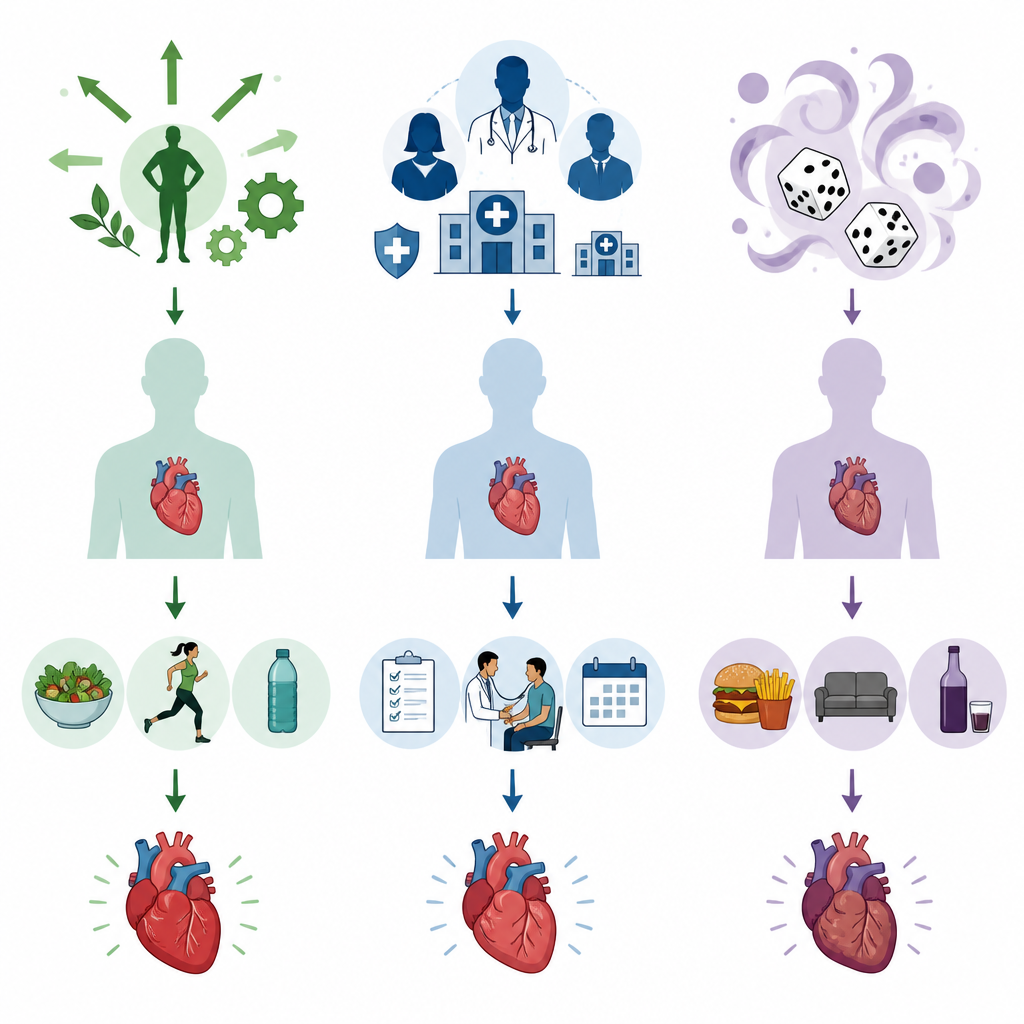
The researchers focused on “health locus of control,” which describes whether people feel their health is mostly in their own hands, in the hands of powerful others such as doctors, or due to pure chance. Those with a strong inner sense of control tend to believe that what they eat, how active they are, and how closely they follow medical advice can change their future. In contrast, people who see health as a matter of luck may feel there is little point in changing their habits. The team wondered how these beliefs play out in young adults with lifelong heart problems, who must juggle regular checkups, treatment histories, and the usual pressures of early adulthood.
Who took part and what was measured
The study followed 201 men and women aged 18 to 31 with congenital heart defects treated at a specialist heart center in Poland. Each person completed questionnaires about their beliefs about control over health and their everyday habits. These habits covered diet, routine preventive actions such as medical visits, general health practices like sleep and physical activity, and mental attitude. The researchers also built a simple score for heart risk by counting eight factors such as smoking, high blood pressure, high cholesterol, extra body weight, low activity, unhealthy diet, male sex, and early heart disease in the family. Higher scores meant a heavier load of heart risk.
How beliefs, habits, and risk connect
When the team compared beliefs and risk scores, clear patterns emerged. Young adults who felt that their own actions strongly influenced their health tended to have healthier lifestyles and fewer risk factors. Those who saw health as a matter of chance were more likely to report poorer habits and a higher risk load. Interestingly, simply believing that doctors and other authorities control one’s health did not show a straightforward link with overall risk, although it was tied to some specific habits. In this group, many patients already received structured specialist care, which may blur the effect of relying on professionals.
The key role of daily choices
To dig deeper, the researchers tested whether lifestyle choices sat in the middle of the chain between beliefs and risk. They found that healthy habits fully explained the link between an inner sense of control and lower heart risk: people who believed “my actions matter” were more likely to eat well, stay active, and follow preventive routines, which in turn went along with better risk profiles. For those who believed in chance, poorer habits partly explained their higher risk, but other factors may also be involved. Of all habits, diet stood out as the strongest pathway. Preventive actions and everyday health routines added smaller but consistent contributions, whereas simply having a positive attitude did not explain the belief–risk link.
What this means for young adults with heart defects
In plain terms, this study suggests that what young adults with congenital heart defects believe about health control shapes their day-to-day choices, and those choices are closely tied to their future heart risk. Feeling that one’s own efforts matter seems to support better diet and regular self care, which go along with fewer risk factors. Seeing health as a roll of the dice is linked to skipping healthy routines and building up more risk. Because the research was based on one clinic and a single point in time, it cannot prove cause and effect. Still, it points toward practical steps: programs that strengthen a sense of personal influence and provide clear, tailored support for healthy eating and routine preventive habits may help this vulnerable group protect their hearts over the long term.
Citation: Mroczkowska, R., Szwamel, K., Szlenk-Czyczerska, E. et al. Health behaviours as a mediator between health locus of control and cardiovascular risk in young adults with congenital heart defects. Sci Rep 16, 15692 (2026). https://doi.org/10.1038/s41598-026-45324-4
Keywords: congenital heart disease, health beliefs, lifestyle, cardiovascular risk, young adults