Clear Sky Science · en
pH profiling reveals progressive wound acidification during healing and higher pH in chronic non-healing wounds: a prospective, multicenter cohort study
Why the chemistry of wounds matters
For millions of people living with hard-to-heal ulcers on their legs, feet, or pressure points, a simple cut doesn’t just close and disappear. These chronic wounds can linger for months, resisting treatment and risking infection. Doctors usually judge progress by eye—looking at redness, size, and discharge. This study asks a more precise question: can the tiny chemical changes right at the wound surface, especially how acidic or alkaline it is and how warm it feels, reveal whether a wound is on the road to recovery or stuck in place?
A closer look at stubborn wounds
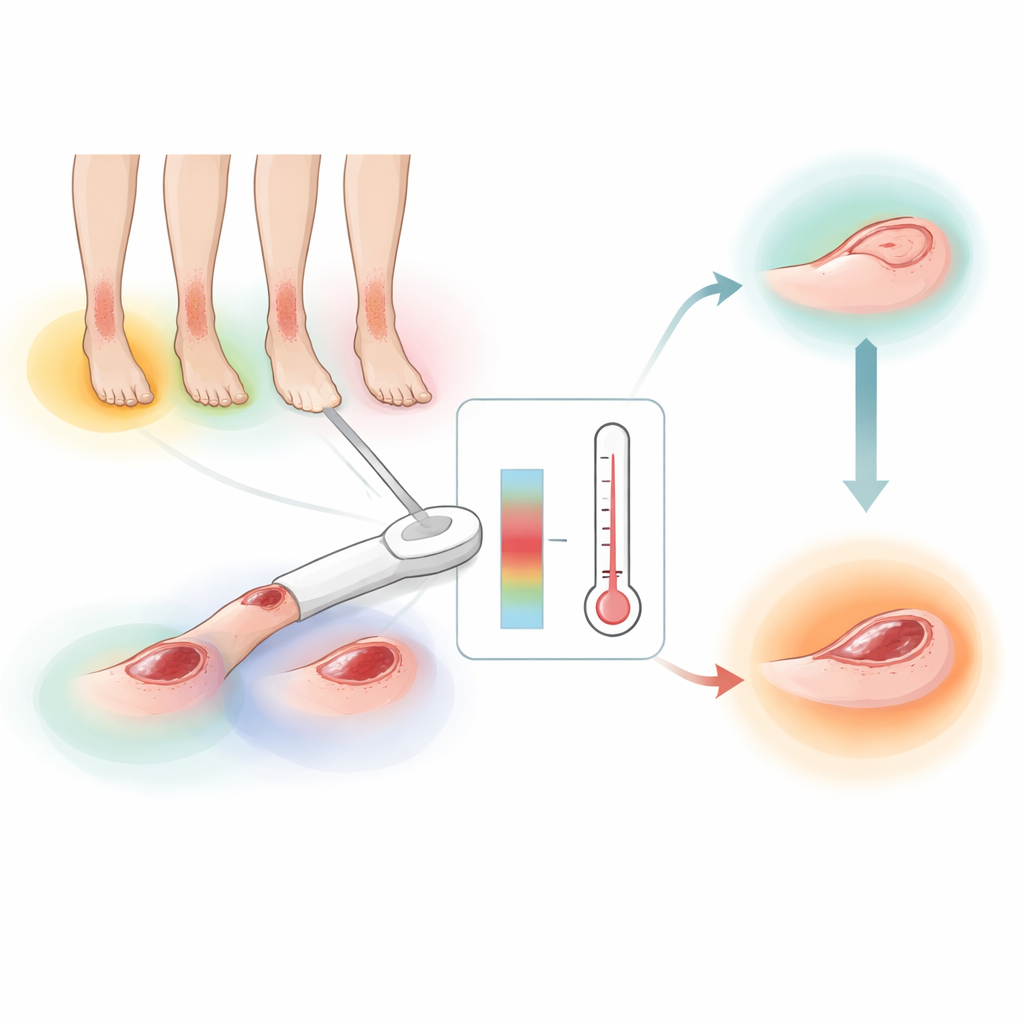
The researchers followed 117 adults treated at several German hospitals for a wide range of wounds, from fresh surgical openings to long-standing ulcers linked to poor blood flow, diabetes, or prolonged pressure. Over four years, they collected 226 measurements of acidity (pH) and 181 of temperature directly from the wound center, its edge, and the nearby skin. Instead of paper strips, they used a handheld electronic probe designed specifically for open wounds, giving more precise readings. At each visit, clinicians also judged whether the wound looked like it was healing, stalled, inflamed, or actively infected.
Healthy skin is sour, stubborn wounds are not
Intact human skin is naturally slightly acidic—more like a gentle citrus drink than pure water. That “acid mantle” helps block harmful microbes and supports the skin’s barrier. When the skin breaks, deeper tissue with a more neutral chemistry is exposed. In this study, all wound areas were less acidic (more alkaline) than healthy skin on the opposite limb. The center of the wound and its edge had the highest pH, while surrounding skin and distant intact skin were more acidic, forming a clear gradient from alkaline in the middle back toward acidity at the periphery. Chronic wounds and those judged not to be healing had noticeably higher pH values than fresh or clearly improving wounds, especially at the wound center.
Following wounds over time
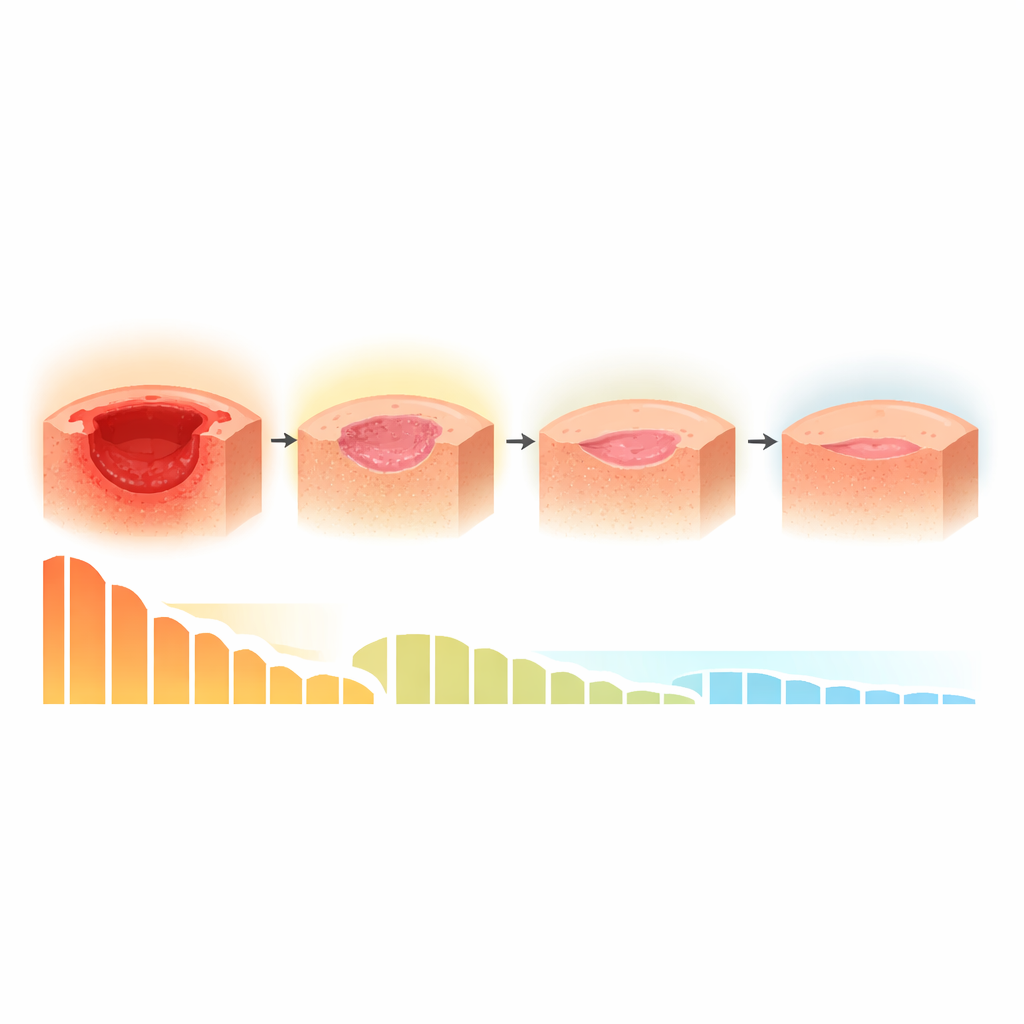
For patients with repeated measurements, the team watched how these values changed week by week. In wounds that were progressing, the pH in the center dropped slowly but steadily, about five hundredths of a unit per week on average, with an even faster decline in clearly healing ulcers. Temperature also drifted downward over time, though the shifts were smaller and less useful for separating healing from non-healing cases. Wounds that remained stalled showed little or no consistent drop in pH or temperature. Together, these patterns suggest that as the skin barrier is restored and inflammation calms, the wound gradually “re-acidifies” and cools.
Signals of infection and germs
When clinicians judged a wound to be infected, its chemistry looked different again. These wounds had the highest pH values of all, at both center and edge, compared with wounds further along in the repair process. Laboratory cultures, ordered only when doctors suspected trouble, most often grew familiar culprits such as Staphylococcus aureus and Pseudomonas aeruginosa, microbes known to thrive in more alkaline conditions. Although colonized (bacteria-present) wounds did not show statistically dramatic differences on their own, the overall picture supports the idea that a more alkaline microenvironment goes hand in hand with persistent inflammation and microbial overgrowth.
Toward smarter wound care
In simple terms, this study shows that healing wounds slowly become more acidic and slightly cooler, while chronic, non-healing or infected wounds stay more alkaline. Because these shifts can be tracked with a small, non-invasive probe, acidity—more than temperature—emerges as a promising real-time marker of whether treatment is working. The findings also strengthen a provocative idea: if an acidic environment favors repair, future dressings or rinses that gently “re-sour” stubborn wounds might help them close faster. Before that can become routine care, however, controlled trials will need to test which pH ranges are safest and most effective, and how best to tailor such therapies to each patient’s wound.
Citation: Rembe, JD., Witte, M., Ertas, N. et al. pH profiling reveals progressive wound acidification during healing and higher pH in chronic non-healing wounds: a prospective, multicenter cohort study. Sci Rep 16, 10522 (2026). https://doi.org/10.1038/s41598-026-45000-7
Keywords: wound healing, chronic ulcers, wound pH, wound infection, skin microenvironment