Clear Sky Science · en
Final adult height in Korean children with idiopathic growth hormone deficiency after growth hormone treatment
Why height and hormones matter for families
Many parents worry when their child is much shorter than classmates, wondering whether they will ever catch up. This study follows Korean children who were short because their bodies made too little growth hormone, and looks at how much their height improved after years of treatment. The work helps families and doctors understand what results they can realistically expect, and which children are likely to benefit most from growth hormone shots.
Who the children were and how they were treated
The researchers reviewed the medical records of 60 children with a diagnosis called idiopathic growth hormone deficiency, which means they were short without another known medical cause and had low growth hormone levels on testing. All were still before puberty when they started treatment. On average, they began therapy at about eight and a half years of age and continued for around six and a half years with daily injections of manufactured growth hormone. The team tracked detailed measures of height, weight, bone maturity, and blood levels of growth related proteins throughout childhood and into late adolescence.
How much height the children gained
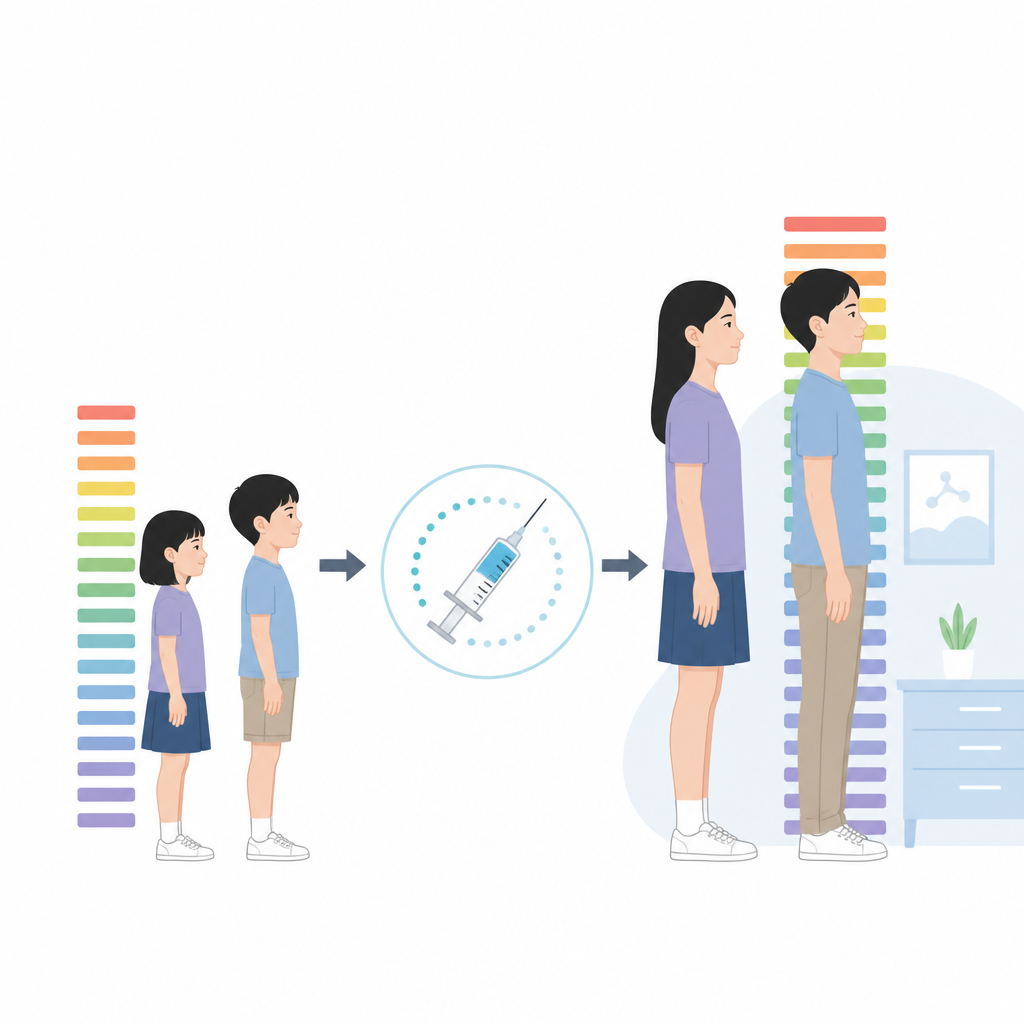
Before treatment, the children were roughly two and a half standard deviations below the average height for their age, meaning shorter than about 99 percent of their peers. After treatment, their final adult heights were much closer to the population average, at about one standard deviation below it. For boys, final height averaged 168.5 centimeters, and for girls, 156.0 centimeters. Importantly, the final heights they reached matched well with their target heights based on their parents, suggesting that treatment allowed most children to grow to the stature encoded in their family background rather than remaining markedly shorter.
What happened to growth speed over time
The first year of growth hormone therapy brought the fastest change. During that year, the children grew about 9.3 centimeters, a clear jump compared with their slow growth before treatment. Their standardized height scores also rose quickly in that first year, then continued to improve more gradually through the years leading up to puberty and beyond. As in normal growth, the speed of height gain slowed with time, but the early boost set them on a taller track that carried into their final adult measurements. The study did not detect serious side effects such as blood sugar problems, tumors, or thyroid issues during the follow up period.
Which starting features predicted better results
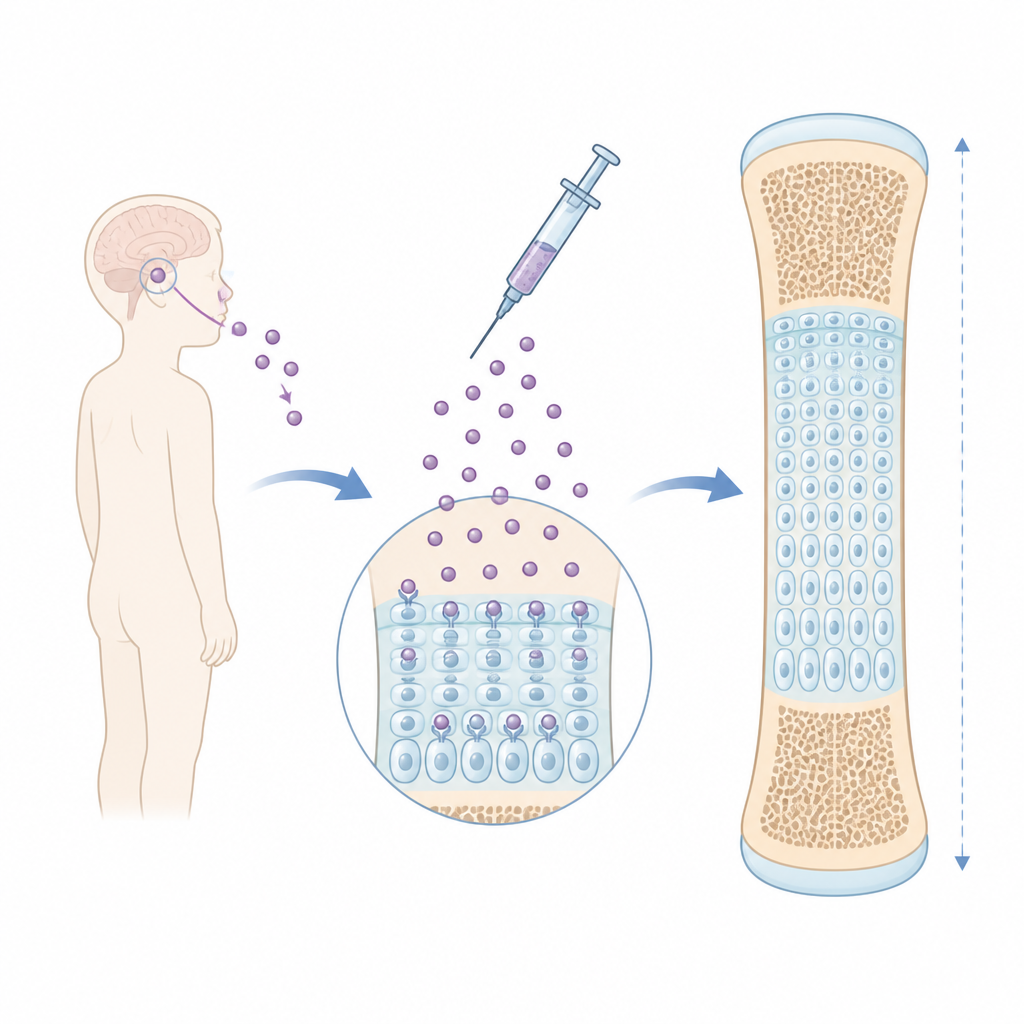
The investigators looked for traits that could forecast how tall a child would end up after years of therapy. Two simple starting measurements stood out. Children who were already a bit taller at the beginning of treatment tended to have better final height scores. At the same time, those with lower starting levels of a growth related blood protein called IGF 1 often gained more height. This pattern suggests that youngsters with more severe hormone lack, reflected in lower IGF 1, may respond especially well once they receive regular shots, while very short stature at the outset may limit how far treatment can close the gap.
What this means for families and doctors
For Korean children whose short stature is caused by low growth hormone, this study shows that long term treatment can help them reach heights close to what their genes would predict. Most did not become exceptionally tall, but they moved from the extreme low end of the height range into a zone much nearer the average for the general population and for their families. Knowing that starting height and IGF 1 levels influence outcome can guide doctors and parents when they discuss expectations and decide how to monitor treatment over the many years it takes for a child to grow into an adult.
Citation: Cho, M.H., An, S.J., Shim, Y.S. et al. Final adult height in Korean children with idiopathic growth hormone deficiency after growth hormone treatment. Sci Rep 16, 14988 (2026). https://doi.org/10.1038/s41598-026-44912-8
Keywords: growth hormone, short stature, final adult height, pediatric endocrinology, Korean children