Clear Sky Science · en
Association between triglyceride glucose-body mass index and metabolic dysfunction-associated steatotic liver disease in South Korean pregnant women
Why this matters for mothers-to-be
Many women hope for a smooth, healthy pregnancy, but some hidden changes in the body can quietly raise health risks for both mother and baby. One such problem is the build-up of fat in the liver, a condition now very common worldwide. This study asked a practical question: can a simple number, calculated from routine blood tests and body weight, help doctors spot pregnant women who may be developing this silent liver problem before it leads to trouble?
A quiet liver problem on the rise
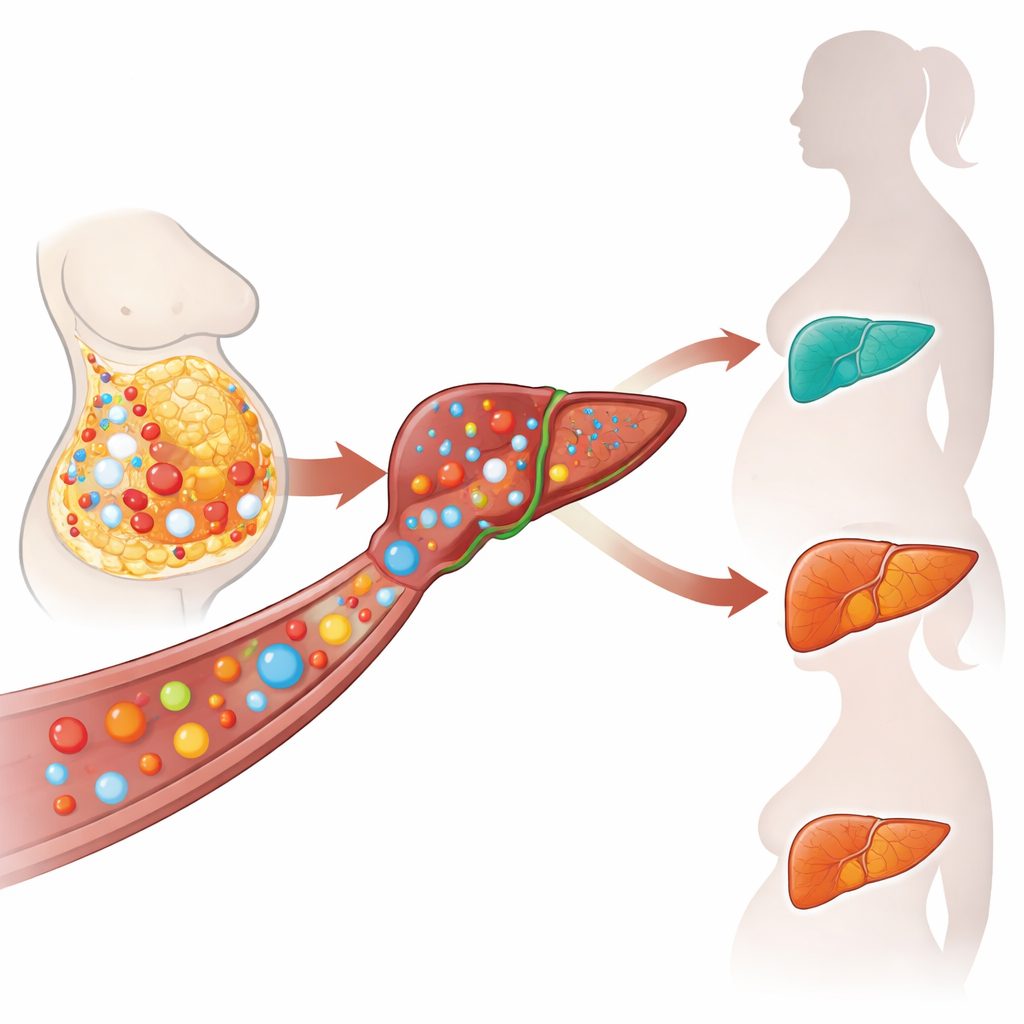
Metabolic dysfunction-associated steatotic liver disease (MASLD) occurs when too much fat accumulates in the liver in the setting of broader metabolic imbalance. It affects about a quarter of the global population and is more common in people who are sedentary or eat poorly. In pregnancy, MASLD has been linked to complications such as gestational diabetes, preterm birth, and overly large babies. Yet the best diagnostic tool, a liver biopsy, is invasive and clearly unsuitable for routine testing in pregnant women. Ultrasound is safer but still not ideal as a mass screening tool. Doctors therefore need an easy, non-invasive way to estimate liver fat risk using information they already collect.
A simple index built from everyday measures
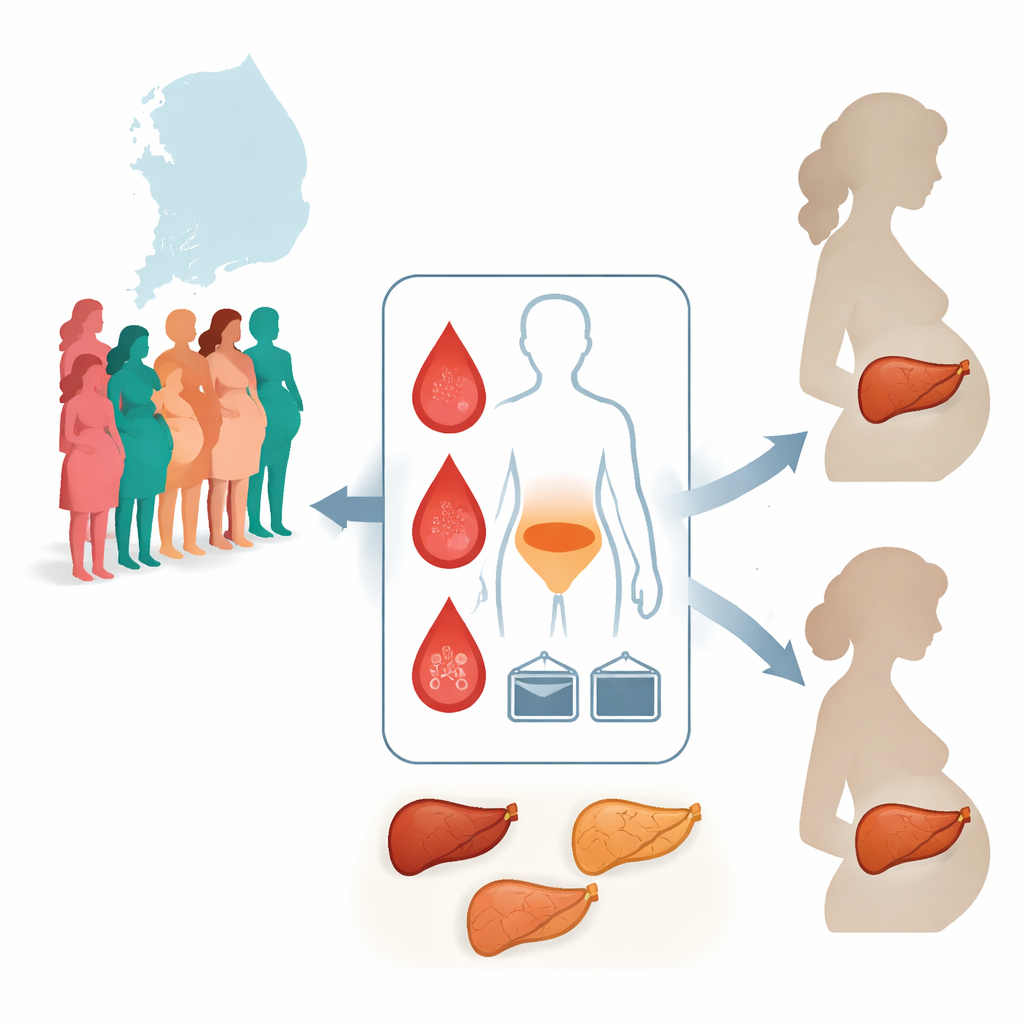
Researchers have developed a measure called the triglyceride glucose-body mass index (TyG-BMI). It combines blood triglyceride levels, fasting blood sugar, and body mass index into a single number that reflects how hard the body is working to handle fat and sugar. Earlier work suggested that TyG-BMI tracks well with insulin resistance and fatty liver in the general population. In this study, scientists used existing data from 585 South Korean women with single pregnancies to see whether higher TyG-BMI in early pregnancy was linked to a greater chance of having MASLD detected by ultrasound.
What the study found in pregnant women
The women, whose average age was just over 32 years, had their blood drawn after an overnight fast between 10 and 14 weeks of pregnancy, and they underwent a liver ultrasound. About one in five had MASLD. When the researchers divided the women into four groups based on TyG-BMI, liver fat was rare in the lowest group and much more common in the highest group: nearly four in ten women in the top group had MASLD. After accounting for age, number of previous births, liver enzymes, blood fats, insulin, and gestational diabetes, each moderate step up in TyG-BMI was tied to a clearly higher likelihood of liver fat. Statistical models showed this relationship was roughly linear: as TyG-BMI rose, MASLD risk climbed steadily.
How well the index signals risk
To test how well TyG-BMI could distinguish women with and without MASLD, the team used a standard accuracy curve. The result suggested that TyG-BMI performs reasonably well, better than several other commonly used scores based on liver enzymes or blood fats alone. They proposed a cut-off value that balanced the chances of missing true cases against falsely raising alarms. At that threshold, roughly two-thirds of women with MASLD would be flagged, while about three-quarters of those without it would correctly test as low risk. However, this still left more than a third of affected women who would go unnoticed if TyG-BMI were used by itself.
Implications and next steps for care
The findings suggest that TyG-BMI, calculated from routine tests already done in many prenatal clinics, could help identify pregnant women who deserve closer attention for potential liver fat and related complications. It is not accurate enough to stand alone as a screening tool, but it may become more powerful when combined with other markers or imaging. The study was cross-sectional and involved mainly lean Korean women without pre-existing diabetes, so it cannot prove cause and effect and may not apply to all populations. Still, it supports the idea that keeping TyG-BMI below a certain range in early pregnancy could be one piece of a broader strategy to reduce liver-related and metabolic risks for mothers and their babies.
Citation: Shen, Y., Yang, D., Zhang, L. et al. Association between triglyceride glucose-body mass index and metabolic dysfunction-associated steatotic liver disease in South Korean pregnant women. Sci Rep 16, 14105 (2026). https://doi.org/10.1038/s41598-026-44841-6
Keywords: fatty liver in pregnancy, metabolic health, insulin resistance, prenatal screening, liver disease