Clear Sky Science · en
Relationship of oxytocin and cortisol response to psychosocial stress in children and adolescents with anxiety disorders
Why teen stress hormones matter
Many anxious children and teenagers feel that their bodies are constantly on high alert, yet doctors still struggle to explain exactly what is happening inside. This study looks at two key stress-related substances in the body—cortisol, often called the main stress hormone, and oxytocin, sometimes linked with calming and bonding—to find out how they behave when anxious and non‑anxious adolescents face a stressful social situation. Understanding these patterns could eventually help design better treatments and support for young people who grapple with overwhelming worry.
A staged public talk to trigger real stress
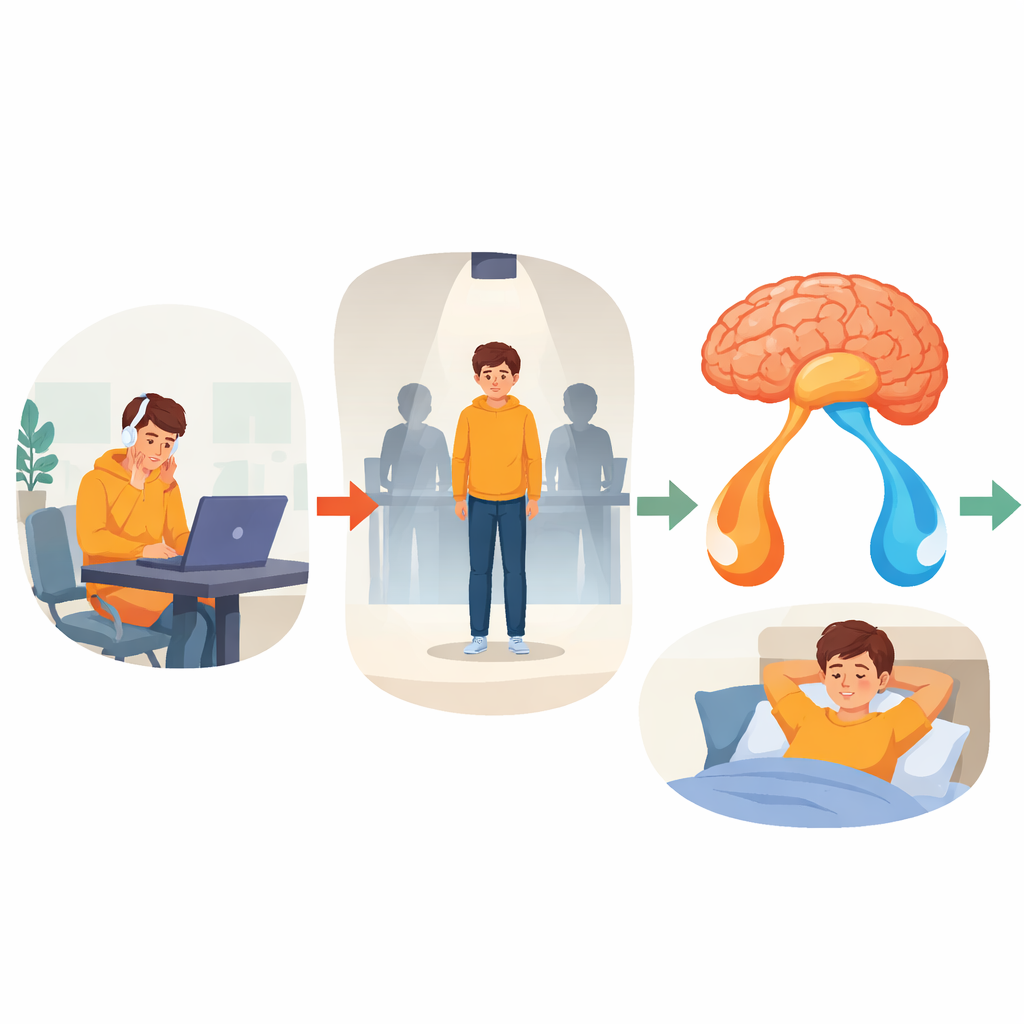
To study stress in a controlled way, the researchers used a standard laboratory task in which participants must give a short speech and do mental arithmetic in front of unfamiliar adults who appear to judge their performance. This situation reliably makes most people feel nervous and watched. Sixty‑four young people aged 11 to 18 took part: half had diagnosed anxiety disorders, mainly social anxiety, and half were healthy peers matched on age and schooling. The team collected saliva samples at home in a relaxed setting, just before the test, and repeatedly for an hour afterwards. They also monitored heart rate and asked the teens many times how stressed and anxious they felt.
Two hormones that rise together under pressure
Both groups showed clear physical signs that the stressful task worked. Heart rate climbed during the speech and math, then gradually fell. Levels of cortisol and oxytocin in saliva rose after the challenge and then slowly returned toward baseline. Surprisingly, anxious and non‑anxious adolescents showed very similar patterns in these hormone curves. Before the test, oxytocin levels were not lower in anxious youths, and the size of the hormone surge after stress did not differ between groups. This suggests that, at least in this kind of social stress, the basic oxytocin and cortisol systems are intact in anxious teenagers.
Feeling more stressed without a bigger hormone surge
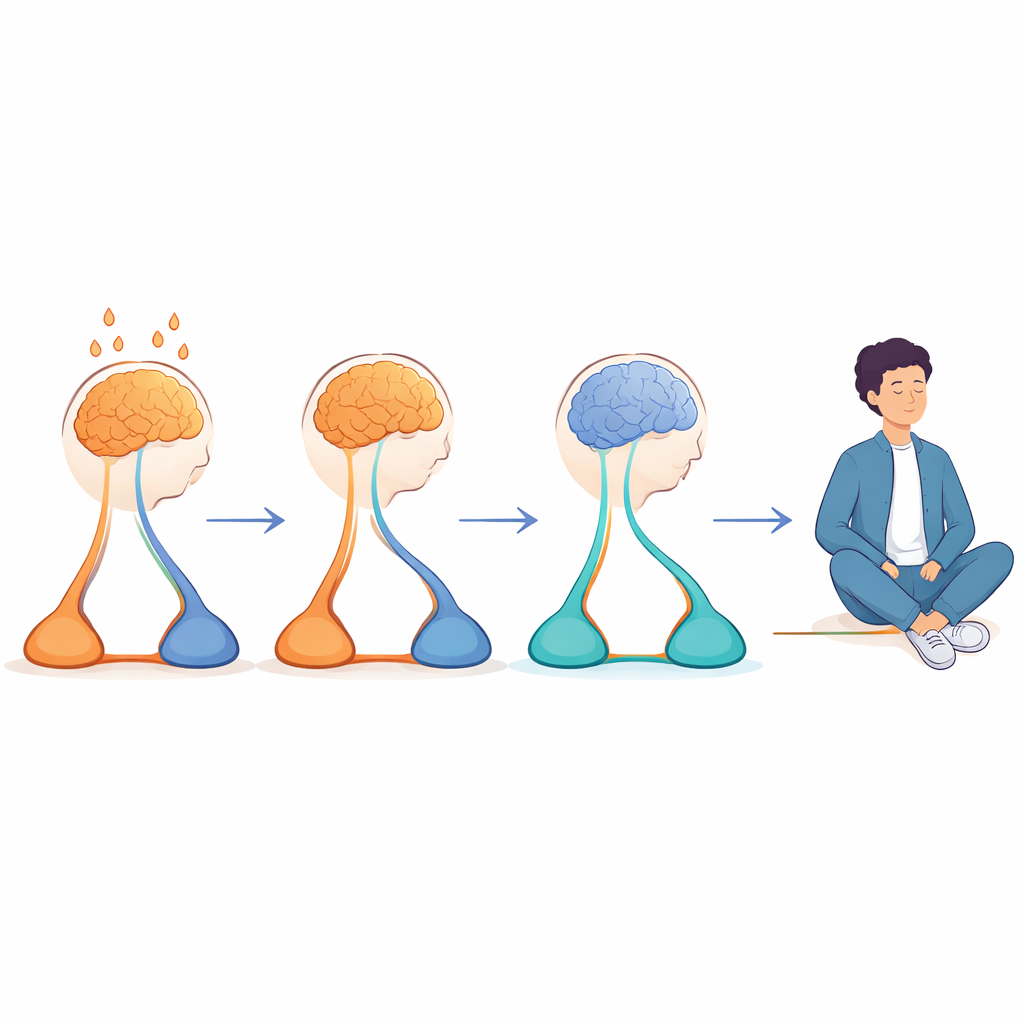
Even though their hormone responses looked similar, young people with anxiety disorders felt much worse. Across all time points, they reported higher stress and anxiety than the control group. In addition, anxious participants had more cortisol still circulating an hour after the test, indicating slower hormonal recovery. In contrast, healthy teens showed stronger “bounce‑back,” with cortisol falling more sharply after its peak. The study also found that higher oxytocin levels before the stress were linked to higher cortisol later on, and that oxytocin increases were tied to how efficiently cortisol dropped during recovery, rather than how high it spiked at the beginning.
Recovery, not reactivity, shapes how stress feels
When the researchers compared hormones with self‑reports, an important pattern appeared: teens whose cortisol and oxytocin levels recovered more strongly tended to feel less stressed during the recovery phase. The raw size of the cortisol or oxytocin surge right after the task did not predict how tense participants felt. Instead, what mattered was how quickly these systems returned toward baseline. Those with lingering cortisol, particularly youths with anxiety disorders, also tended to report more social anxiety, general anxiety, and depressive symptoms.
What this means for anxious young people
The findings suggest that oxytocin acts as a general marker of the body’s response to social stress in adolescents, regardless of whether they have an anxiety disorder. Anxious teens do not lack this hormone or show a blunted surge. Rather, the key difference lies in how well the body unwinds afterward: healthy youths show more efficient cortisol recovery, which is linked with both oxytocin changes and a quicker drop in perceived stress. For families and clinicians, this points to recovery—helping the body and mind settle down after stress—as a promising focus for prevention and treatment, alongside traditional approaches that target anxious thoughts and behaviors.
Citation: Goetz, L., Jarvers, I., Schleicher, D. et al. Relationship of oxytocin and cortisol response to psychosocial stress in children and adolescents with anxiety disorders. Sci Rep 16, 10496 (2026). https://doi.org/10.1038/s41598-026-44831-8
Keywords: adolescent anxiety, oxytocin, cortisol, psychosocial stress, stress recovery