Clear Sky Science · en
The efficacy of scalp cooling in patients receiving chemotherapy for primary gynecologic cancers: a randomized controlled trial
Why Hair Loss Matters During Cancer Treatment
Chemotherapy saves lives, but for many women, losing their hair is one of the most frightening parts of treatment. Hair is closely tied to identity, femininity, and social roles, and sudden baldness can feel like a public announcement of illness. This study asked a simple but important question: can cooling the scalp during chemotherapy help women with gynecologic cancers keep more of their hair, and in doing so ease some of the emotional burden of treatment?
Cooling the Scalp to Protect Hair
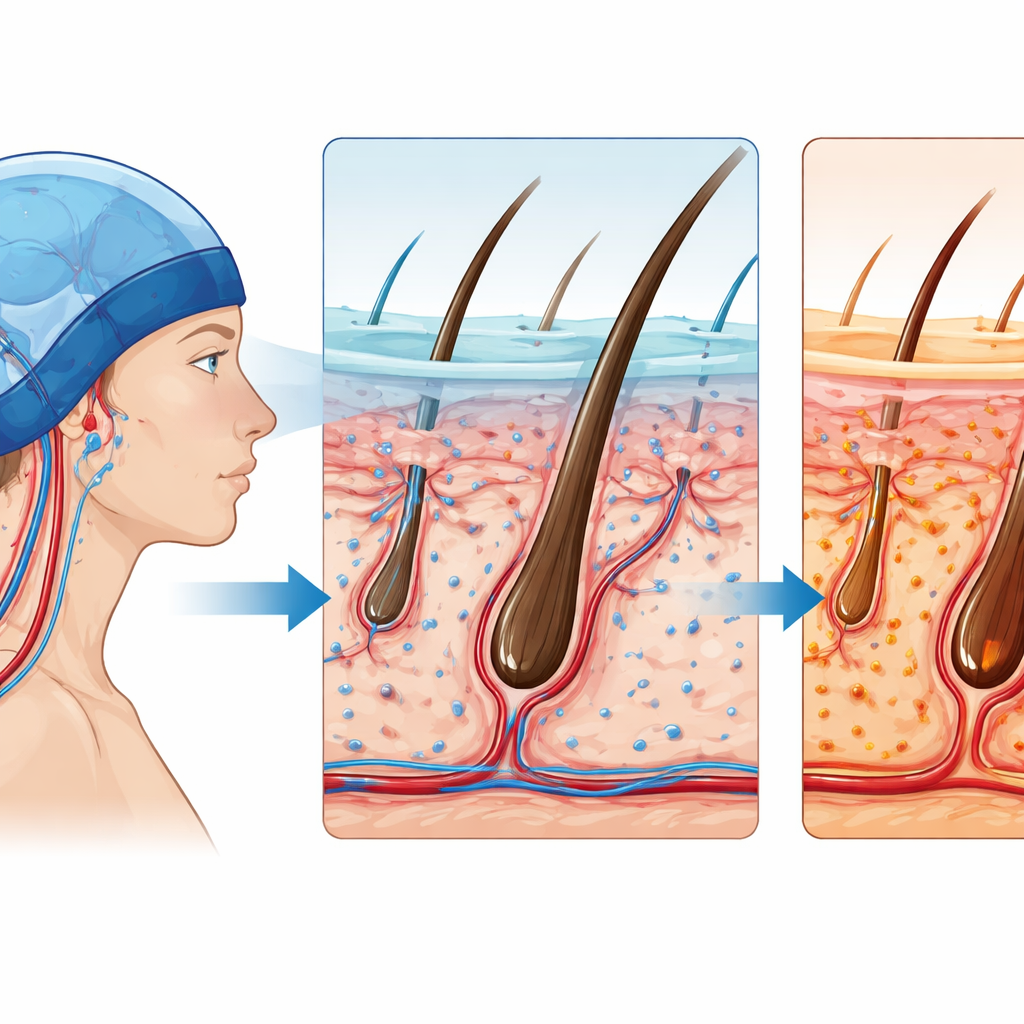
The research focused on women with cancers of the ovaries, uterus, cervix, and related organs who were scheduled to receive a common chemotherapy combination: carboplatin and paclitaxel every three weeks. These drugs are highly effective but are well known to cause near-universal hair loss. Scalp cooling, delivered by a snug cap connected to a cooling machine, lowers the temperature of the skin and underlying blood vessels. Cooler blood vessels constrict, so less of the chemotherapy drug reaches hair roots, and the hair-producing cells slow down, making them less vulnerable to damage.
How the Study Was Carried Out
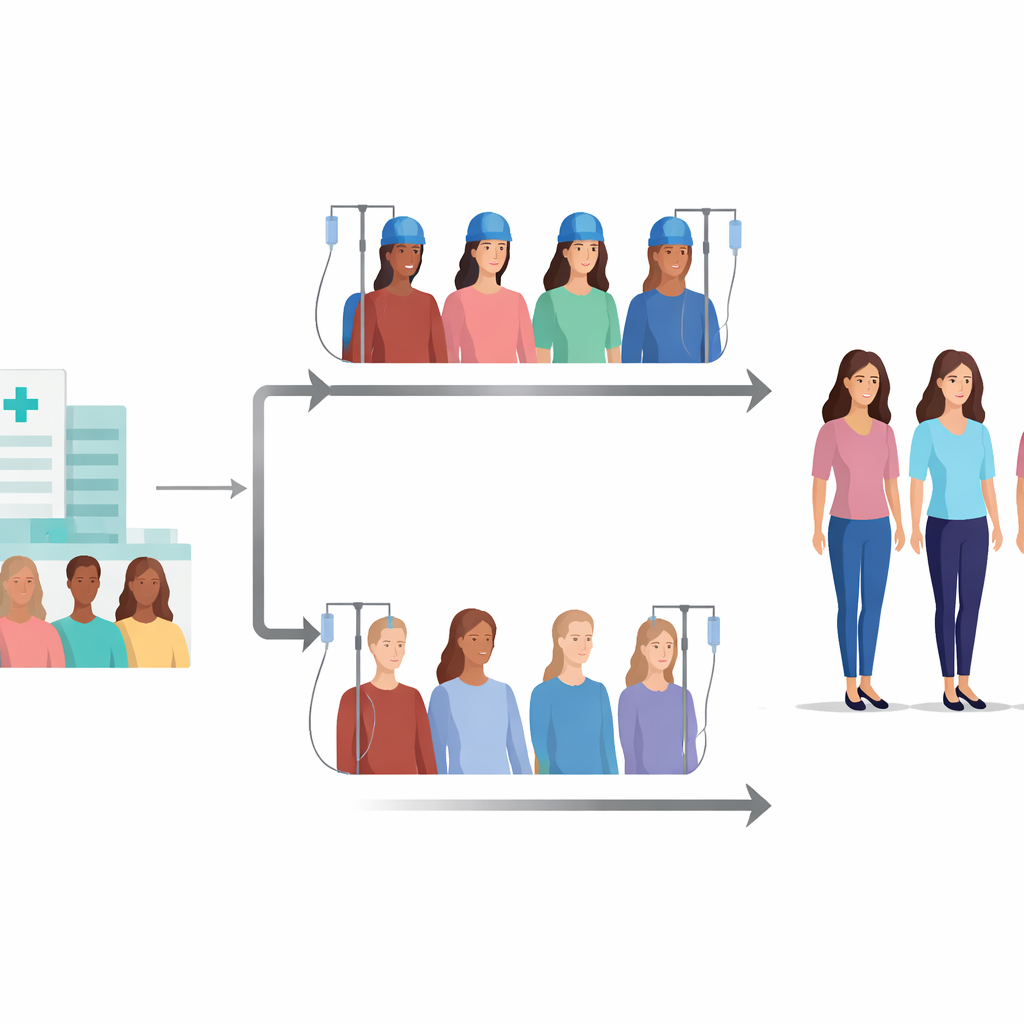
The CHARM trial randomly assigned 86 women at a single center in Hong Kong to receive chemotherapy either with scalp cooling or without it, so that the two groups could be fairly compared. Cooling began half an hour before the infusion, continued through the drug delivery, and lasted another 90 minutes afterward. Doctors who were trained to grade hair loss used a five-point “Dean score” to judge how much hair remained after each cycle, without being told which group each patient was in. The main goal was to see how many women finished chemotherapy with no more than about half of their hair lost; the researchers also tracked quality of life, mood, and any side effects.
What Happened to Hair and Daily Life
Scalp cooling did not prevent hair loss for everyone, but it made a meaningful difference. By the end of chemotherapy, nearly 30% of women who used the cooling cap kept a noticeable amount of hair, compared with none in the group without cooling. Among those who managed to use the cap at every cycle, almost half met the success threshold. The benefit showed up early, after just two cycles. Women in the cooling group were also more likely to report better day-to-day physical abilities and role functioning, and they tended to maintain social activities more than women who lost nearly all their hair. Many women in the control group chose to shave their heads, while those who kept more hair could more easily blend cancer treatment into their usual routines.
Emotional Strain and Cultural Beliefs
Because hair loss can signal illness to others and alter body image, the study also examined psychological distress using a standard questionnaire for anxiety and depression. At the start, more than half of all participants already had mild to severe distress. During treatment, distress rose in both groups, but it increased more clearly among women without scalp cooling. After the second chemotherapy cycle, only about one in four women in the cooling group had notable distress, compared with more than three in five in the control group. Differences in average distress scores remained in favor of the cooling group around the end of treatment. Yet acceptance of the technology was a major hurdle: nearly 40% of eligible women declined to join the trial, and about 30% of those who started cooling later dropped out, mainly because they found the cold uncomfortable or held traditional beliefs that “head cold” is harmful to health.
What This Means for Patients and Caregivers
This trial shows that scalp cooling can help a meaningful portion of women with gynecologic cancers keep more of their hair during a particularly harsh chemotherapy regimen, with no serious safety concerns. Keeping hair did not just change the mirror; it was linked to better physical functioning and less emotional strain during and soon after treatment. However, discomfort, fear of cold, and cultural ideas about how cold affects the body limited how many women chose or continued with this option. For patients and clinicians, the message is that scalp cooling is a promising tool to soften one of chemotherapy’s most visible side effects, but its full benefit will only be realized if programs also address comfort, education, and cultural concerns alongside the technology itself.
Citation: Kwok, S.T., Lau, L.S.K., Chan, T.O. et al. The efficacy of scalp cooling in patients receiving chemotherapy for primary gynecologic cancers: a randomized controlled trial. Sci Rep 16, 14109 (2026). https://doi.org/10.1038/s41598-026-44772-2
Keywords: scalp cooling, chemotherapy hair loss, gynecologic cancer, quality of life, psychological distress