Clear Sky Science · en
Impact of γ-aminobutyric acid and 1-methylcyclopropene on qualitative attributes of apples (Malus domestica Borkh. cv. Fuji) during cold storage
Why these apples matter to shoppers
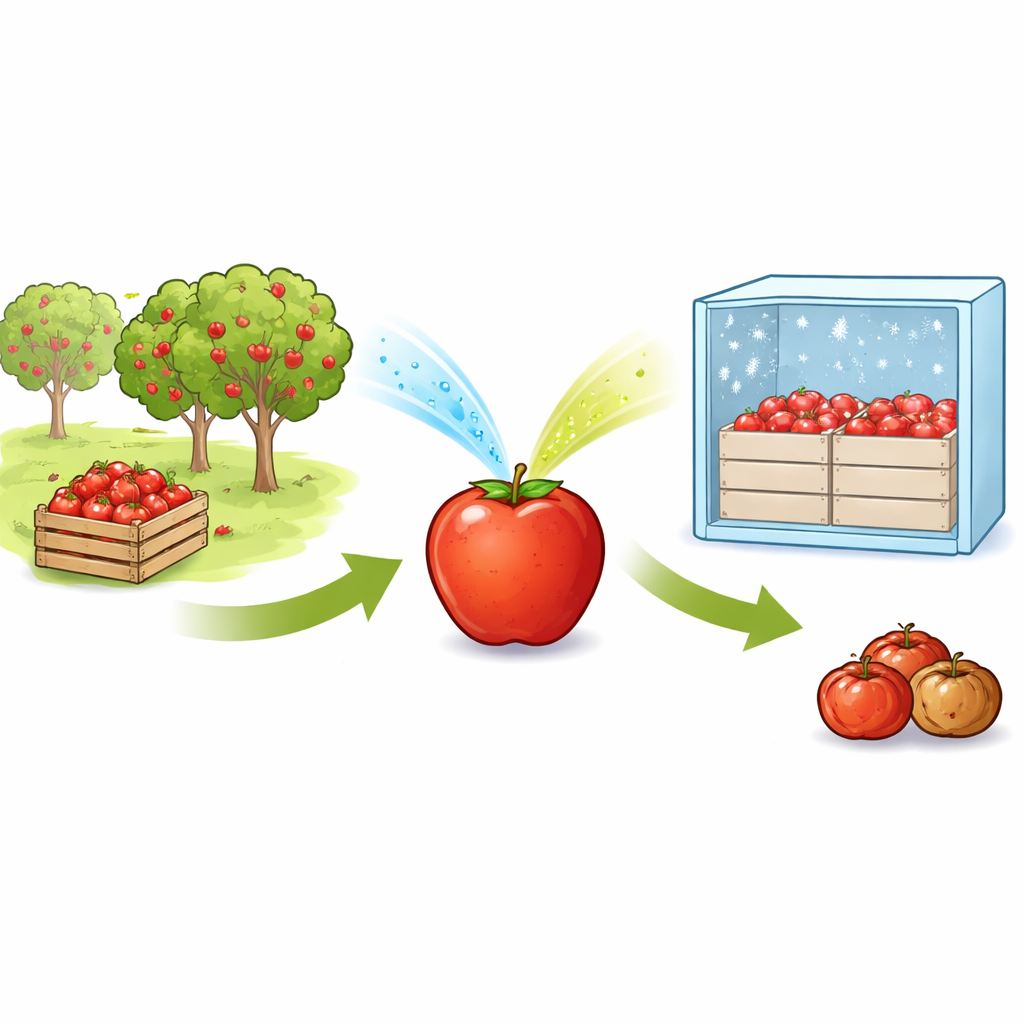
If you have ever bitten into a perfectly crisp Fuji apple and wished it would stay that way all winter, you have brushed up against the problem this study tackles. In parts of China’s Xinjiang region, growers produce a special type of Fuji with “watercore” — a naturally glassy, extra-sweet flesh that many consumers prize. Unfortunately, this appealing trait fades in storage, and the fruit can later turn brown inside. The researchers behind this paper tested whether two gentle treatments, already known in horticulture, could work together to keep these apples tasty, attractive, and marketable for up to six months in cold rooms.
Keeping a specialty fruit special
Watercore apples look ordinary from the outside, but when cut open their flesh can appear translucent and juicy, reflecting a buildup of certain sugars and sugar alcohols between cells. This unusual texture is safe to eat and even preferred in some markets, yet it tends to disappear during storage. At the same time, the fruit may suffer internal browning and softening that undermine quality. The team focused on two postharvest helpers: γ-aminobutyric acid (GABA), a naturally occurring amino acid that helps plants cope with stress, and 1-methylcyclopropene (1-MCP), a gas widely used in commercial storage to block ethylene, the hormone that drives ripening. They asked whether using them alone or together could better preserve watercore and slow quality loss in cold-stored Fuji apples.
Putting treatments to the test
The researchers harvested commercially ripe Fuji apples with strong watercore from an orchard in Xinjiang. They divided the fruit into four groups: a water-only control; apples dipped in a mild GABA solution; apples exposed to 1-MCP; and apples given both GABA then 1-MCP. All apples were then stored for up to 180 days at just above freezing. Every 30 days, the team measured how many fruits still showed watercore, how many had developed internal browning, and how their weight, firmness, acidity, and key sugars changed over time. They also tracked levels of natural antioxidant compounds such as phenolics and flavonoids, which can influence both nutrition and browning.
What happened inside the fruit
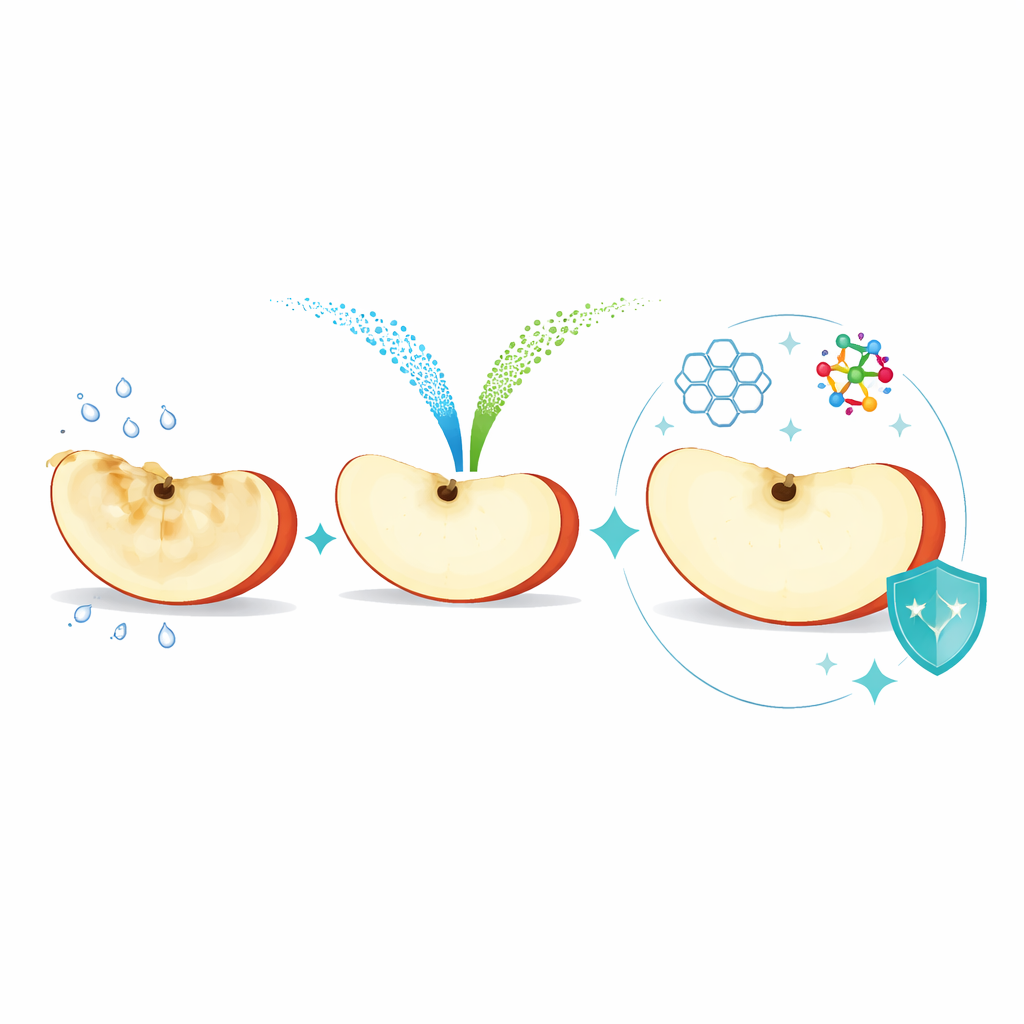
Across the board, treated apples kept their special traits longer than the untreated control fruit, and the combined GABA+1-MCP treatment performed best. Watercore gradually faded in all groups, but it lingered much longer in GABA-treated apples, especially when paired with 1-MCP. The authors link this to better preservation of sucrose and sorbitol — sugars associated with the glassy appearance — and a slower buildup of glucose and fructose, which signal more advanced ripening. At the same time, apples receiving GABA showed almost no internal browning during the entire storage period, in contrast to the control fruit, which browned severely by the end. The study suggests that GABA boosts the fruit’s antioxidant defenses and helps maintain cell membranes, so browning enzymes are less able to darken the flesh. 1-MCP, for its part, slowed softening, weight loss, and acid decline by damping down ethylene-driven ripening, with the duo providing a complementary, more durable effect.
Balancing taste, texture, and nutrients
Beyond appearance, the combined treatment helped apples stay firmer, juicier, and more flavorful. Fruit given both GABA and 1-MCP lost the least weight and retained the highest firmness after six months, meaning they felt crisper when bitten. They also held onto more titratable acidity, which underpins the tart-sweet balance consumers expect from Fuji apples. While total phenolic and flavonoid levels tended to rise as fruit aged and responded to stress, the dual treatment kept these changes more moderate and stable, hinting that the apples experienced less oxidative damage even during long storage. A statistical overview of all measurements confirmed that treated apples, particularly the GABA+1-MCP group, stayed closer to the profile of fresh fruit for longer.
What this means for apple lovers and growers
In plain terms, the study shows that combining a stress-buffering compound (GABA) with a ripening blocker (1-MCP) can help specialty Fuji apples keep their signature watercore look, resist internal browning, and maintain crispness and flavor during extended cold storage. For shoppers, this could translate into higher-quality apples on store shelves deep into the off-season. For producers, the approach offers a promising way to protect the value of a premium regional product, though the authors note that the exact molecular details of how these treatments interact still need to be worked out. With further refinement and testing under real-world conditions, this two-pronged strategy could become part of a toolkit for delivering better-tasting, longer-lasting fruit from orchard to table.
Citation: Dang, Y., Xiang, Y., Abudula, A. et al. Impact of γ-aminobutyric acid and 1-methylcyclopropene on qualitative attributes of apples (Malus domestica Borkh. cv. Fuji) during cold storage. Sci Rep 16, 14133 (2026). https://doi.org/10.1038/s41598-026-44765-1
Keywords: apple storage, watercore Fuji apples, postharvest treatment, GABA and 1-MCP, fruit quality preservation