Clear Sky Science · en
Unreported Rift Valley fever virus circulation during 2023–2024 El Niño event detected by slaughterhouse-based surveillance in southern Kenya
Why hidden animal infections matter to people
Most of us hear about disease outbreaks only when hospitals start to fill up or dramatic scenes appear on the news. But many dangerous viruses first smolder quietly in animals, spreading under the radar until the right mix of weather and movement lets them spill over into people. This study looks at Rift Valley fever, a mosquito-borne disease that harms both livestock and humans, and asks a simple but unsettling question: could the virus be circulating unnoticed in animals, even when official reports say everything is calm?
Storms, mosquitoes, and a quiet threat
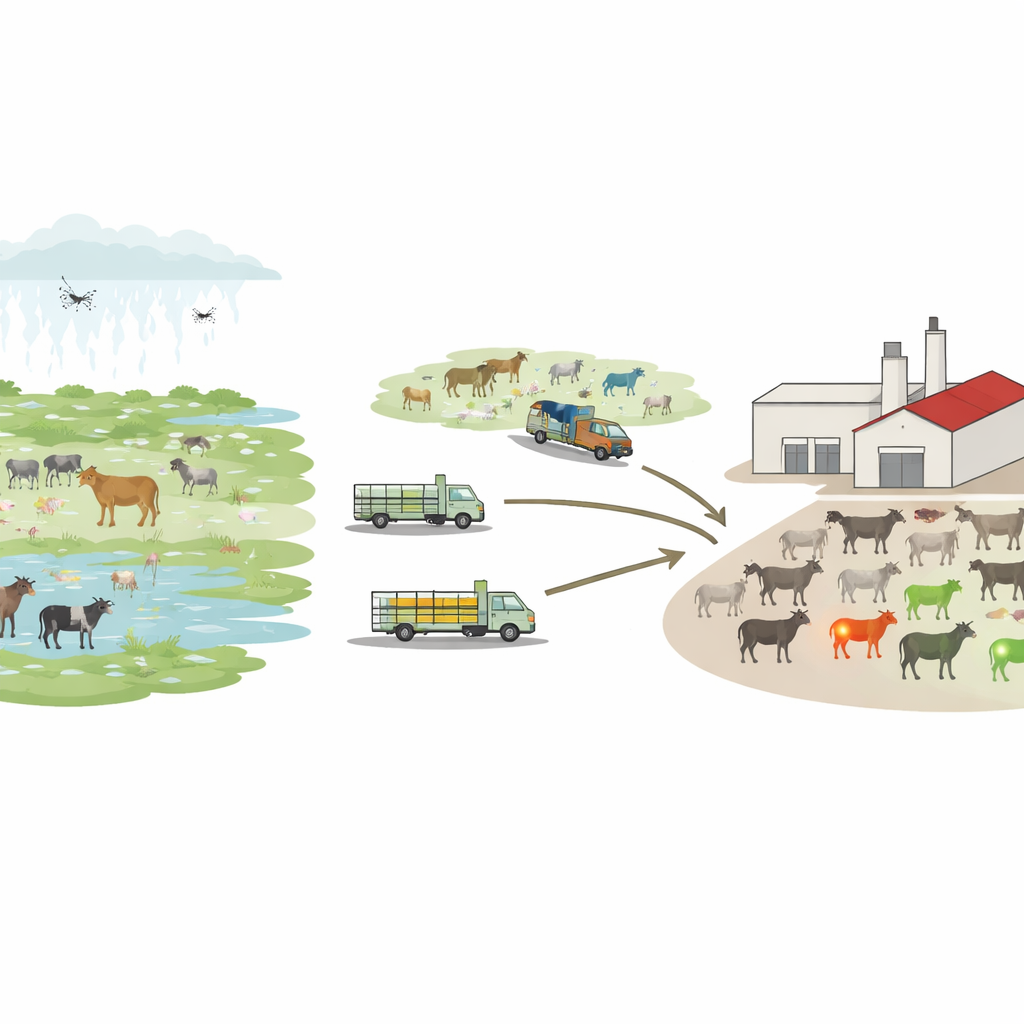
Rift Valley fever virus is closely tied to climate. Heavy rains create pools where mosquitoes breed, and these insects can then infect cattle, sheep, and goats. Sick animals may abort their young or die, and people can become infected through mosquito bites or contact with animal blood and organs. During the strong 2023–2024 El Niño event, Kenya experienced severe flooding, and scientists expected clear signs of Rift Valley fever in the south of the country. Yet no outbreaks were officially reported there. The researchers suspected this might not mean the virus was absent; instead, it might be spreading at low levels in animals without obvious signs of disease.
Turning slaughterhouses into watchtowers
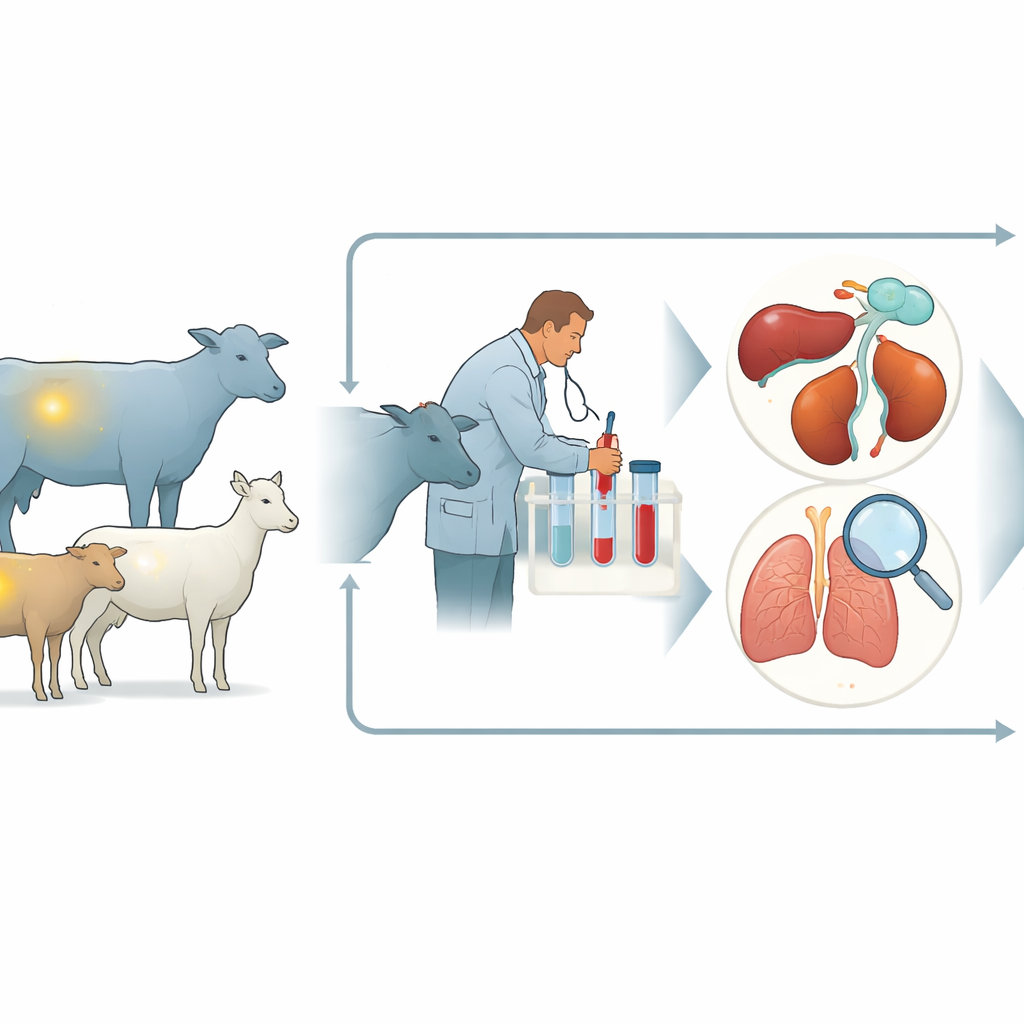
Checking live animals across vast, semi-arid landscapes is costly and difficult, especially where herds roam widely and veterinary services are thinly spread. The team instead used slaughterhouses as convenient hubs where animals from many villages converge. Over 13 months, they sampled 955 cattle, sheep, and goats brought for slaughter at several facilities in southern Kenya. They drew blood at the time of slaughter and recorded the animals’ age, origin, and any visible organ damage seen during meat inspection. Laboratory tests searched for two kinds of antibodies to Rift Valley fever virus: one showing past exposure and another indicating a recent infection.
Evidence of a “silent season” of infection
The results revealed a picture very different from the official silence. About one in ten animals carried antibodies of past exposure, and this proportion rose sharply after the El Niño rains, reaching nearly one in four by May 2024. Six animals had signs of recent infection, spread across several months and species. All of these were adults that looked healthy before slaughter and showed no telltale damage in their organs. On average, the team estimated that around 1.6% of animals in the area become infected each year, with transmission intensifying after the heavy rains. This indicates that the virus continues to circulate at low levels even when no dramatic “abortion storms” or mass die-offs are seen and no outbreaks are reported.
Patterns in place, age, and damage
Because the animals came from many locations, the scientists also checked whether certain villages were hidden hotspots. They mapped where animals had originated and compared infection levels, but found no strong clustering in space for past infections, even though most recent infections were linked to the Kimana area. Likewise, older animals tended to show more past exposure, but age alone did not fully explain the patterns once the timing and slaughterhouse site were considered. Inspectors noted that about 15% of all animals had some kind of organ lesion, often in the liver, lungs, or kidneys. However, these lesions were generally not specific to Rift Valley fever. Apart from a statistical link between lung cysts and past exposure—which likely reflects shared environments rather than a direct connection—the team did not find reliable visual signs that could stand in for proper laboratory tests.
Rethinking how we watch for animal-borne disease
The study shows that relying only on obvious illness and passive reports can miss a great deal of Rift Valley fever activity in livestock. Adult animals can be infected yet appear healthy, move through markets and transport networks, and cross regional or national borders while carrying the virus. By turning slaughterhouses into routine surveillance points—where blood samples are tested and basic details like age and origin are recorded—authorities can detect subtle, year-round transmission and catch rising risk after big climate events like El Niño. For the general public, the message is that better monitoring of animal health, especially in everyday settings like abattoirs, is a crucial line of defense that can protect both livelihoods and human health in a warming, more unpredictable world.
Citation: Gerken, K.N., Rereu, A., Mutai, V. et al. Unreported Rift Valley fever virus circulation during 2023–2024 El Niño event detected by slaughterhouse-based surveillance in southern Kenya. Sci Rep 16, 14123 (2026). https://doi.org/10.1038/s41598-026-44706-y
Keywords: Rift Valley fever, slaughterhouse surveillance, Kenya livestock, mosquito-borne disease, El Niño flooding