Clear Sky Science · en
A method for multi-criteria decision making with probabilistic linguistic term based on cloud TOPSIS
Why choosing under uncertainty matters
When communities face high‑stakes choices—such as how to evacuate people during a nuclear accident—leaders must weigh many competing concerns: safety, cost, stress, and more. Experts often describe these factors using words like “small risk” or “very large loss,” instead of exact numbers. Those words are helpful for humans but awkward for computers. This paper presents a new way to turn such fuzzy, probabilistic language into clear, justifiable rankings of options, aiming to support better decisions when both risk and uncertainty are high.
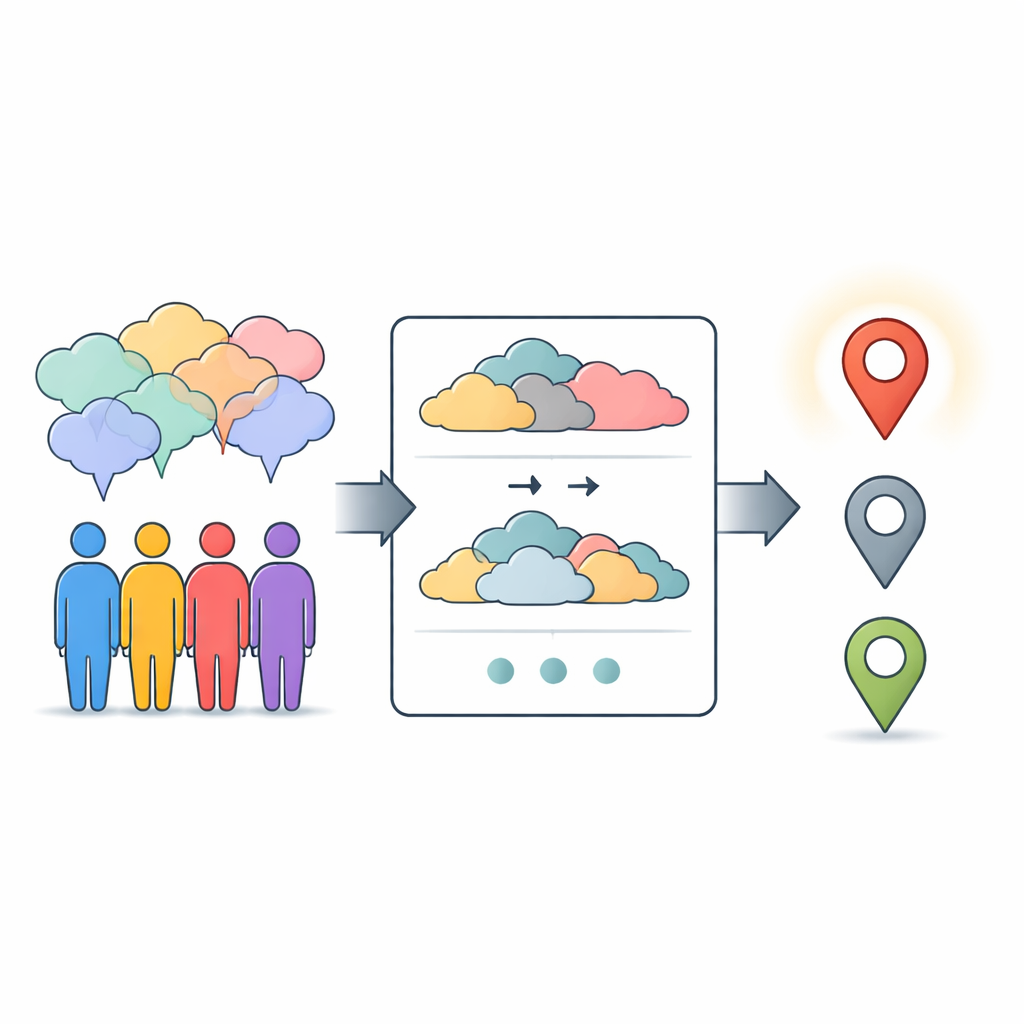
Turning words into measurable clouds
The authors build on a family of tools known as multi‑criteria decision making, which compare options using several criteria at once. Instead of asking experts for precise figures, they let them answer in everyday terms—such as “very small,” “medium,” or “very large”—and attach a probability to each term to show how confident they are. These “probabilistic linguistic terms” are then converted into what the authors call clouds: simple numerical objects that capture three things at once—the typical value, how vague the term is, and how uncertain even that vagueness may be. Using a mathematical pattern related to the golden ratio, the method places these clouds along a scale in a way that lines up well with how people naturally perceive gradations like very small to very large.
Blending many opinions into one picture
Real decisions rarely rely on a single expert. The new framework introduces a way to blend multiple expert clouds into a single combined cloud for each option and each criterion. Experts with clearer, more confident views shape the result more strongly, while still preserving overall uncertainty. The authors also design a new way to measure the distance between any two clouds. This distance reflects not just the difference in typical values, but also differences in vagueness and randomness. Crucially, the method can fairly compare opinions even when experts have used different mixes of linguistic terms, avoiding information loss that can occur in older techniques.
From cloud comparisons to ranked choices
To turn these clouds into a ranking of options, the study adapts a well‑known method called TOPSIS, which compares each alternative to an ideal best and an ideal worst. Here, those ideals are themselves clouds, representing the most favorable and least favorable imaginable assessments across all criteria. For each evacuation plan, the method calculates how close its clouds are to the ideal best and how far from the ideal worst, taking into account the relative importance of each criterion. The result is a single score for every plan that respects the fuzziness and randomness present in the original expert language, yet yields a crisp ordering of which options are better or worse.
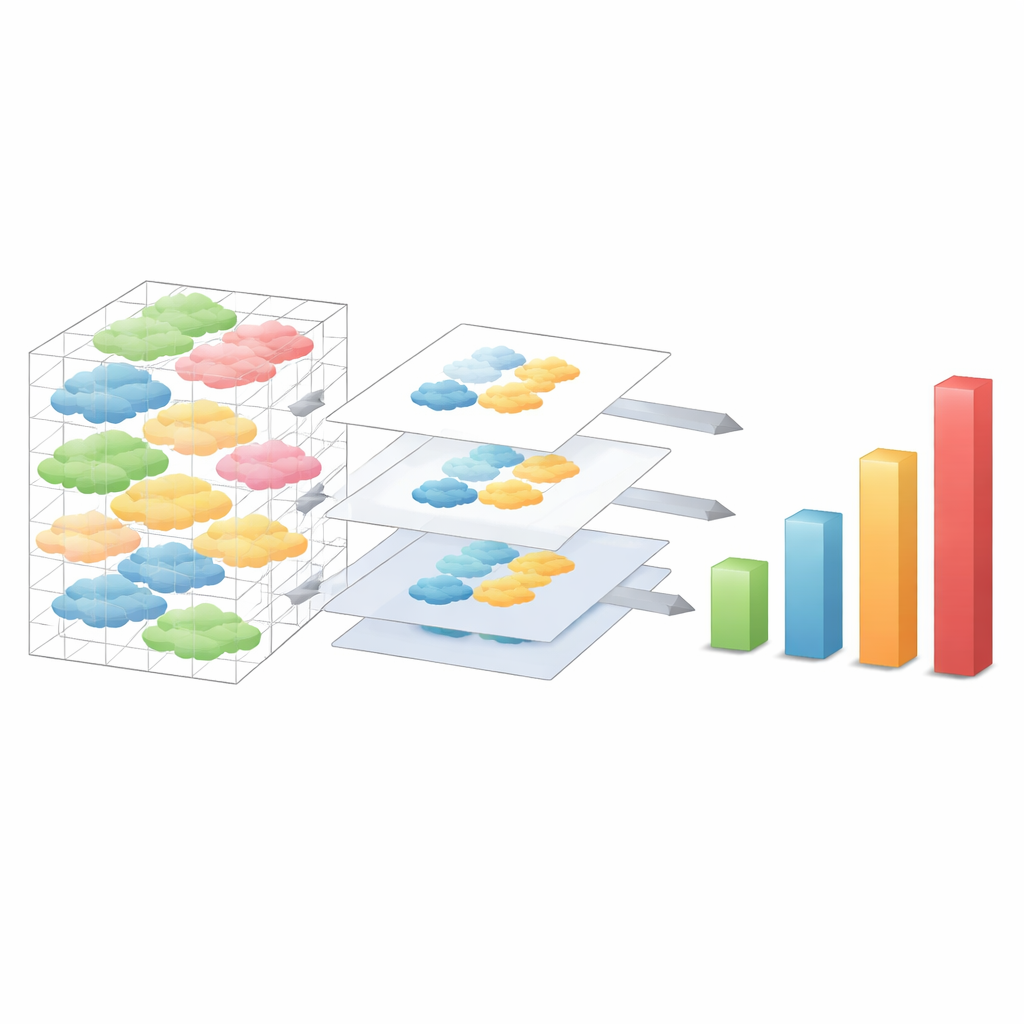
Testing the method with nuclear evacuation plans
To show the method in action, the authors simulate a nuclear emergency in which three experts evaluate four evacuation strategies. They judge each plan using four cost‑type criteria: overall radiation dose to the population, the maximum dose to any individual, psychological distress, and economic loss. Experts express their assessments using verbal terms and probabilities; the method converts these into clouds, aggregates them, and ranks the strategies. The analysis identifies one strategy as clearly best, and a detailed sensitivity study shows that this ranking remains stable even when the assumed importance of each criterion or certain uncertainty parameters are varied over wide ranges. The authors also compare their results with several other advanced decision methods; despite relying on very different mathematics, the strongest competing approaches agree on the top choices, lending confidence to the new framework.
What this means for real‑world decisions
In simple terms, the study offers a way to let experts “speak in words” while still producing “numbers you can act on.” By representing verbal judgments as clouds that encode both vagueness and randomness, the method can handle messy, uncertain information without forcing artificial precision. It simplifies earlier cloud‑based techniques, reduces computational effort, and still delivers rankings that align well with other state‑of‑the‑art approaches. Although the work is demonstrated on nuclear evacuation planning, the same idea could support decisions in health care, environmental protection, infrastructure planning, and any other field where choices must be made under deep uncertainty and expert opinions come wrapped in language rather than hard data.
Citation: Almandeel, A., Rao, C., Zhang, X. et al. A method for multi-criteria decision making with probabilistic linguistic term based on cloud TOPSIS. Sci Rep 16, 14122 (2026). https://doi.org/10.1038/s41598-026-44609-y
Keywords: multi-criteria decision making, uncertainty modeling, linguistic assessment, nuclear emergency planning, decision support methods