Clear Sky Science · en
Navigation activities in an organized colorectal cancer screening program improve follow-up colonoscopy completion
Why this matters for you and your family
Colorectal cancer is one of the most common cancers, yet it is also one of the most preventable. Many people now use simple at‑home stool tests to check for early warning signs, but when those tests come back abnormal, the next step—a follow‑up colonoscopy—does not always happen. This study shows that a relatively small organizational change in how health systems guide patients after an abnormal result can substantially increase the number of people who actually get the colonoscopy they need, potentially catching cancer earlier or preventing it altogether.
From home test to crucial next step
Screening for colorectal cancer increasingly starts at home with stool tests, such as the fecal immunochemical test (FIT). These tests are convenient and help reach people who might not come in for a colonoscopy. But an abnormal FIT is only a warning flag, not a diagnosis. To find and remove precancerous growths or detect cancer early, patients must then undergo a colonoscopy. When that step is missed, the risk of dying from colorectal cancer can double. Despite expert groups recommending that at least 80% of people with abnormal FIT results complete a colonoscopy, many health systems fall short of this goal because of fears, confusion, scheduling hurdles, and busy clinics.
A guide through a complicated system
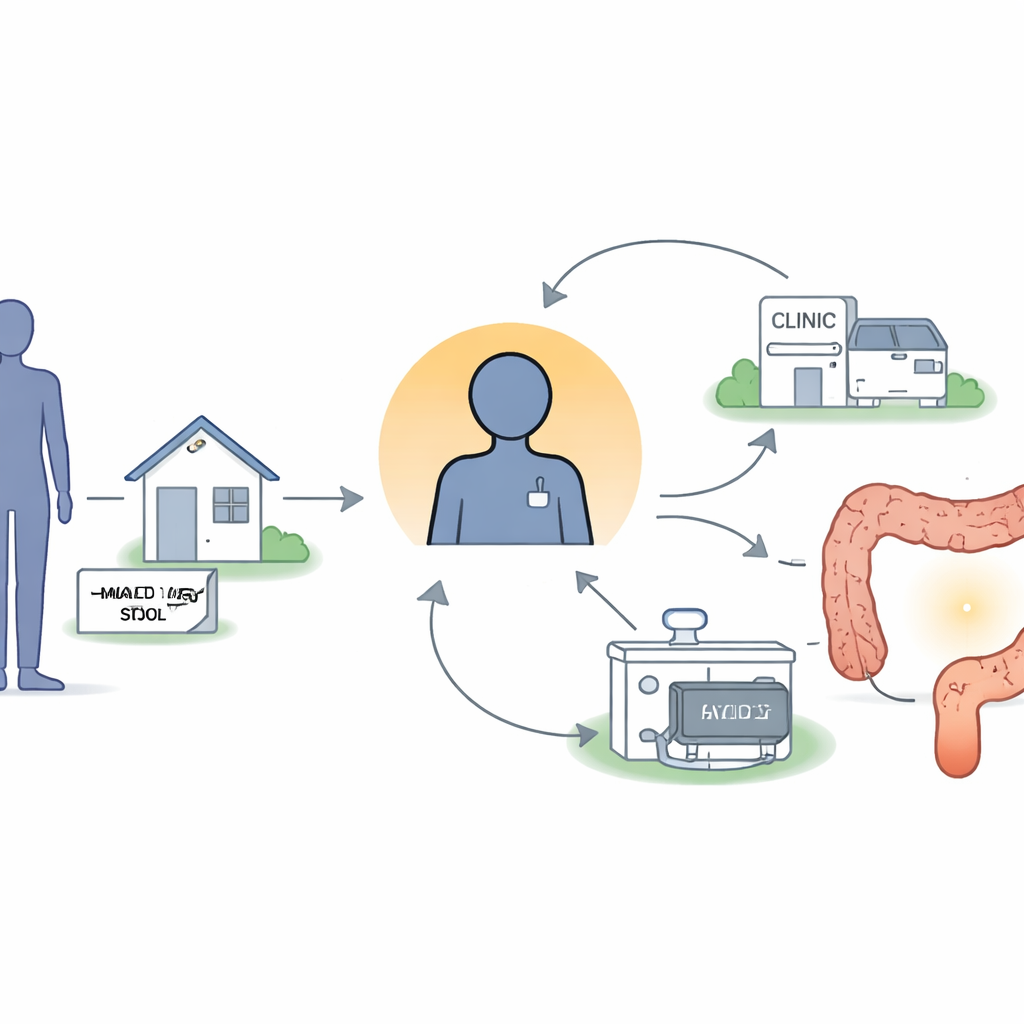
The researchers focused on a large health system in Seattle that mails stool tests to thousands of patients each year. They examined a role called a patient navigator—a trained staff member who helps people move from an abnormal stool test to a completed colonoscopy. The navigator’s job was to spot patients with abnormal results, make sure a colonoscopy was ordered, reach out to patients by phone or online messages, identify and solve barriers such as cost or transportation, and connect them with the right clinic. In 2022, the navigator began contacting patients three months after an abnormal result and could not directly schedule colonoscopies, relying instead on separate scheduling staff.
Speeding up contact and cutting out extra steps
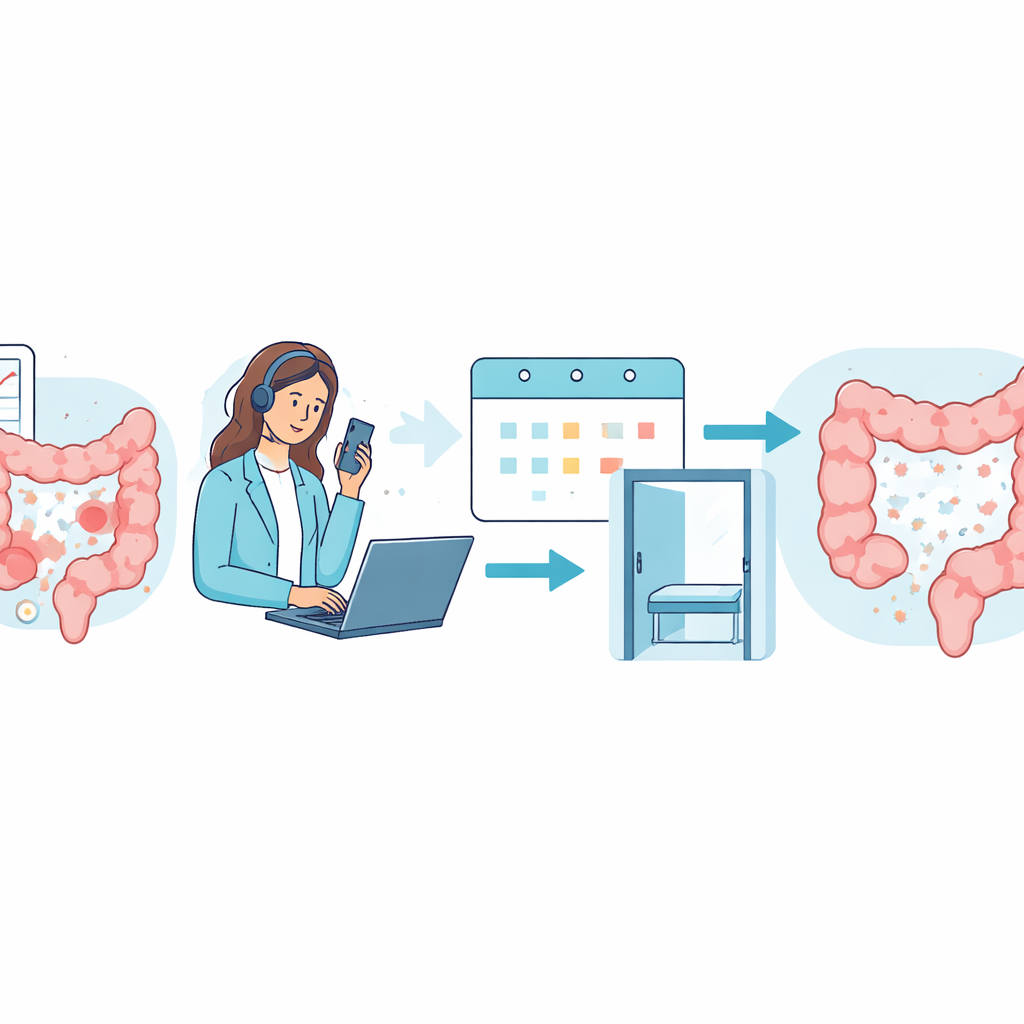
In 2023, the program made two key changes. First, the navigator started reaching out just one month after an abnormal FIT result, rather than waiting three months, so patients heard from a dedicated guide sooner. Second, the navigator was given direct access to schedule colonoscopies at two endoscopy centers, reducing back‑and‑forth handoffs. All other parts of the program stayed the same, which allowed the team to see how these two adjustments influenced what really mattered: whether patients completed colonoscopies and how long it took.
More colonoscopies completed and important findings detected
Comparing two years of data encompassing 368 people with abnormal stool tests, the researchers found a striking improvement. In 2022, about 43% of patients completed a colonoscopy within a year of an abnormal result. In 2023, after the navigation changes, this rose to nearly 66%, a gain of about 23 percentage points. Referral rates and average wait times changed only slightly, suggesting that the biggest impact came from more effective follow‑through rather than big shifts in how quickly referrals were placed. Importantly, among those who completed colonoscopies, a substantial share had advanced precancerous growths or colorectal cancer—conditions that could be treated or even cured when found early. The team estimated that for roughly every four to five people who received earlier, more empowered navigation, one additional person completed a colonoscopy.
What this means for better cancer prevention
For patients, the message is simple: if a home stool test is abnormal, a follow‑up colonoscopy is not optional—it is the essential next step that can save lives. This study shows that health systems can significantly improve how many people complete that step by letting navigators step in earlier and by giving them the authority to schedule procedures directly. While this single‑center effort did not yet reach the 80% completion goal, it demonstrates that modest, practical changes in how care is organized can make a real difference. As more clinics adopt and refine navigation programs, more people stand to benefit from early detection and prevention of colorectal cancer.
Citation: Kimura, A., Peck, A., Bell-Brown, A. et al. Navigation activities in an organized colorectal cancer screening program improve follow-up colonoscopy completion. Sci Rep 16, 13509 (2026). https://doi.org/10.1038/s41598-026-44477-6
Keywords: colorectal cancer screening, stool test follow-up, patient navigation, colonoscopy completion, early cancer detection