Clear Sky Science · en
Propionate metabolism is dysregulated in non-small cell lung cancer patients and EGFR-mutant drug-tolerant persister cells
Why this matters for people with lung cancer
Targeted drugs have transformed treatment for many people with a common form of lung cancer, yet tumors almost always find ways to bounce back. This study uncovers an unexpected culprit in that relapse: a routine metabolic pathway that processes certain fats and nutrients. By linking a small blood-borne molecule to the survival of drug-tolerant cancer cells, the work points toward a new way to detect and potentially disarm lingering disease.
A hidden chemical signal in tumors and blood
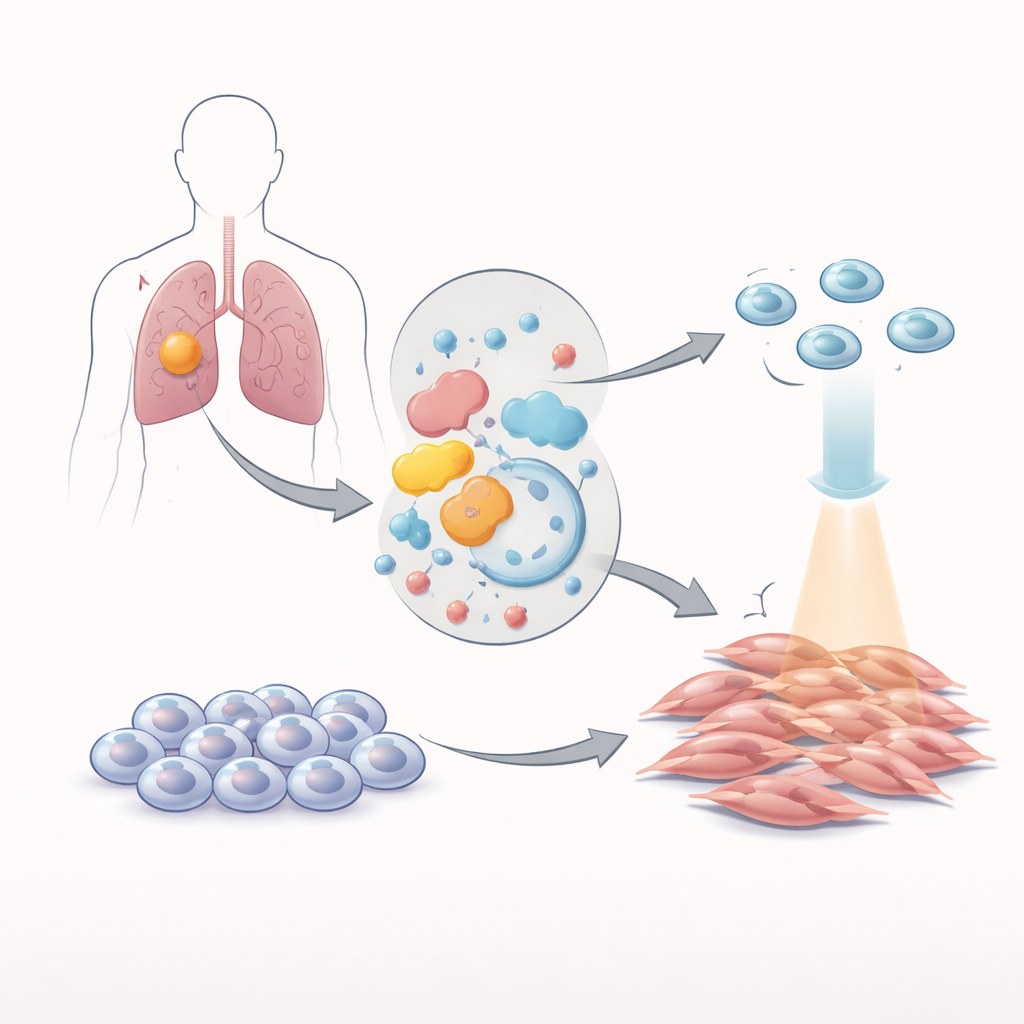
The researchers focused on a molecule called methylmalonic acid, or MMA, which normally appears in small amounts as the body breaks down odd-chain fatty acids, some amino acids, and cholesterol. When the pathway that handles these breakdown products falters, MMA builds up. Earlier lab work showed that high MMA can push cancer cells into a more mobile, injury-like state that tends to resist treatment. In this study, the team examined tumor samples and paired nearby healthy lung tissue from patients with non-small cell lung cancer, the most common lung cancer type. They found that MMA levels were roughly doubled inside tumors. They also measured MMA in the blood of patients with advanced disease and compared it with people who had been cured of early-stage lung cancer and with a large U.S. population survey. Even after carefully accounting for age, kidney function, and vitamin B12 levels—factors known to influence MMA—they saw consistently higher MMA in those with stage 4 lung cancer, suggesting the cancer itself is driving this rise.
A key metabolic gatekeeper goes quiet
To understand why MMA was elevated, the scientists turned to the proteins that run propionate metabolism, the pathway that ultimately feeds this breakdown process into the cell’s energy cycle. Mining large cancer proteomics datasets, they discovered that one enzyme, called MMAB, was consistently reduced in lung tumors compared with nearby normal tissue. Other enzymes in the same pathway did not show a pattern that would clearly explain MMA buildup. Single-cell RNA sequencing data from dozens of patients with early lung adenocarcinoma revealed that MMAB is normally most active in lung lining cells, especially in specific cell types thought to give rise to this cancer. In cancerous cells, however, MMAB expression dropped significantly, reinforcing the idea that turning down this gatekeeper enzyme is a frequent and early change in tumor development.
How altered metabolism supports drug-tolerant cells
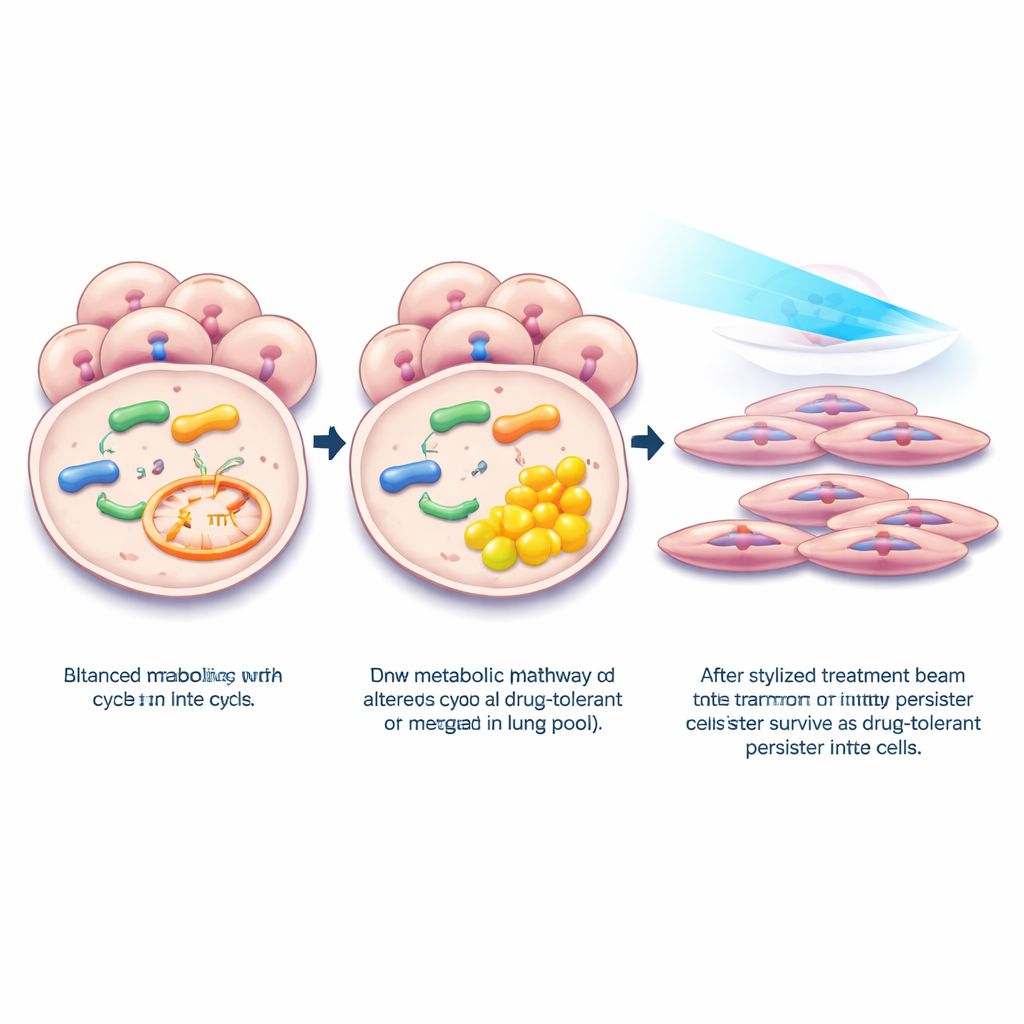
The team next asked what happens when MMAB is deliberately reduced in lung cancer cells grown in the lab. Using genetic tools to knock down MMAB, they observed a clear rise in MMA inside the cells. Gene activity profiling showed that this shift in metabolism switched on programs linked to drug resistance, including pathways associated with low oxygen, inflammatory signaling, and the transition from a tightly connected epithelial state to a more mobile mesenchymal one. These same programs are known hallmarks of so-called drug-tolerant persister cells—the small fraction of cancer cells that hunker down when exposed to powerful targeted drugs, survive the onslaught, and later seed relapse.
Tracking and disarming persister cells
To directly probe the link to persister cells, the researchers exposed several EGFR-mutant lung cancer cell lines to the targeted drug osimertinib at doses that kill most cells but leave behind a slow-cycling remnant. In these surviving persister cells, MMAB levels fell further while MMA rose. Analyses of single-cell data from patients treated with EGFR inhibitors showed a similar pattern: cells from residual disease had lower MMAB than those from untreated tumors. When the scientists forced cells to re-express MMAB, the cells became more vulnerable to osimertinib, especially over long-term treatment, and were less able to form surviving colonies. Molecular tests indicated that restoring MMAB dampened a growth- and survival-promoting communication system known as TGFβ signaling, including downstream proteins that help cells avoid death during drug exposure.
What this means for future treatment
Together, these findings outline a simple but powerful chain of events: lung tumors turn down the MMAB enzyme, MMA accumulates, and this metabolic shift helps cancer cells adopt a hard-to-kill, injury-like state that lets them ride out targeted therapy. For patients, this suggests that a blood test measuring MMA could potentially flag more aggressive or treatment-resistant disease. More importantly, it raises the possibility that drugs or genetic strategies that restore proper propionate metabolism—or that block the downstream signals MMA triggers—could weaken persister cells and make current lung cancer treatments work longer and more completely.
Citation: Parang, B., Yoffe, L., Khan, R. et al. Propionate metabolism is dysregulated in non-small cell lung cancer patients and EGFR-mutant drug-tolerant persister cells. Sci Rep 16, 14095 (2026). https://doi.org/10.1038/s41598-026-44451-2
Keywords: non-small cell lung cancer, drug resistance, cancer metabolism, methylmalonic acid, EGFR-targeted therapy