Clear Sky Science · en
Efficacy of probiotic supplementation in reducing primary dysmenorrhea: a double-blinded randomized controlled trial
Why this study matters for everyday life
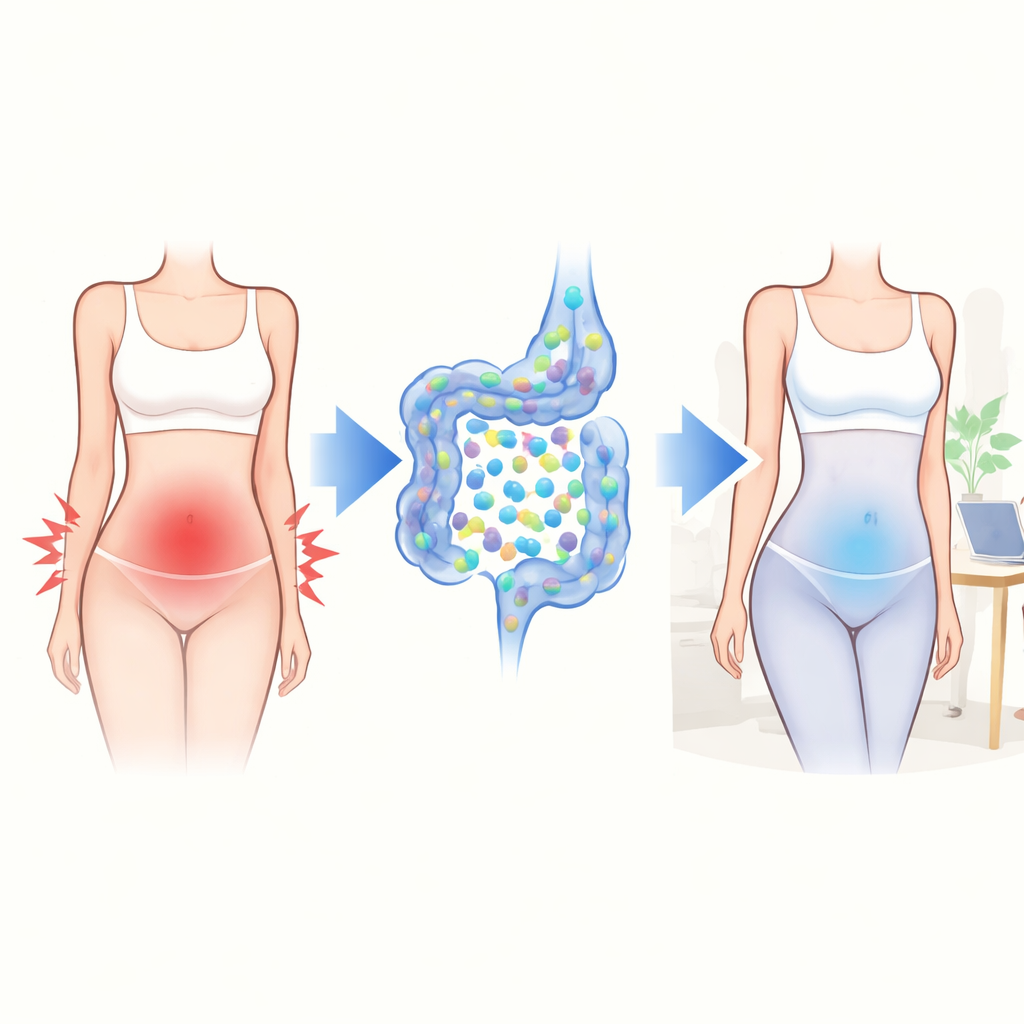
Many young women live with intense period cramps that interfere with school, work, and sleep, yet often feel they just have to endure the pain or rely heavily on painkillers. This study asks a simple but important question: can a daily probiotic supplement—friendly bacteria usually taken for gut health—safely ease menstrual pain and offer a non-hormonal, pill-free support option for primary dysmenorrhea (painful periods without an underlying disease)?
Understanding painful periods
Primary dysmenorrhea is the medical term for strong menstrual cramps that occur even when the pelvic organs look normal. The pain typically starts around the beginning of bleeding, can radiate to the back and thighs, and may last up to three days. Many women also experience nausea, headache, fatigue, and poor sleep. Despite affecting up to 95% of women of reproductive age, it is often underdiagnosed and undertreated because people assume period pain is just part of life or worry about side effects of standard medications.
Why gut bacteria might matter
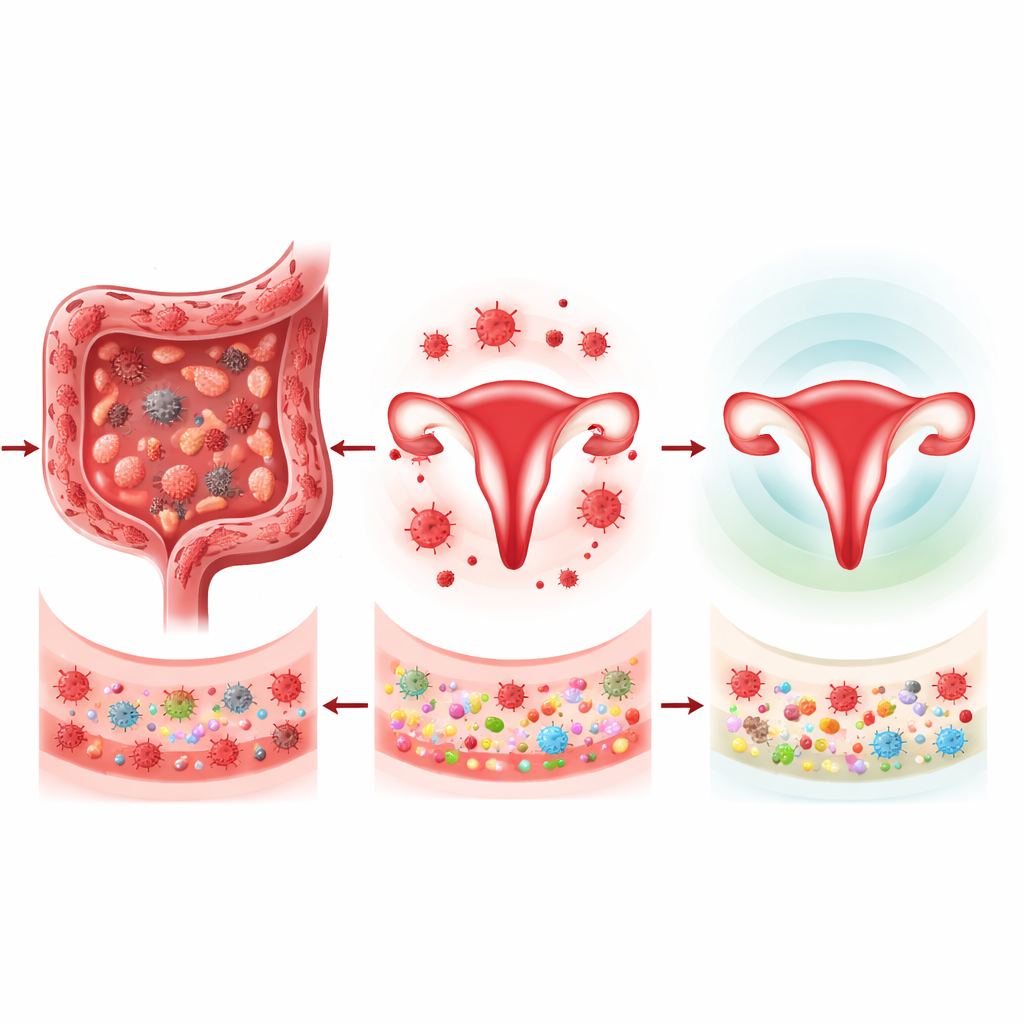
Scientists now think period pain is not only about local chemicals in the uterus but also about the body’s broader inflammatory state. Women with primary dysmenorrhea show higher levels of inflammatory molecules in their blood during the menstrual cycle. Probiotics—beneficial bacteria such as Lactobacillus and Bifidobacterium—can reshape the gut microbiota, strengthen the gut barrier, and calm inflammation throughout the body. They may also signal along the “gut–brain–immune” axis, influencing how the nervous system senses pain and how hormones like estrogen are processed. These ideas led the researchers to test whether a carefully chosen mix of probiotic strains could make period pain meaningfully less intense.
How the trial was carried out
The team ran a double-blind, randomized, placebo-controlled trial, the gold standard for testing treatments. They enrolled 48 healthy women aged 18–24 who had regular cycles and moderate to severe primary dysmenorrhea, confirmed by history and pelvic ultrasound to exclude diseases such as endometriosis. Participants were randomly assigned to take either a multispecies probiotic powder or a placebo sachet, once a day, for three menstrual cycles. Both powders looked and tasted the same, and neither the women nor the researchers knew who was receiving which until the study ended. Pain was measured each month using a standard 0–10 visual analog scale, focusing on the worst pain during each period. The researchers also tracked menstrual flow and any side effects, and they continued to follow the women for three more cycles after the supplements were stopped.
What the researchers found
At the start, both groups had similar average pain scores of about 6 out of 10. During the three months of supplementation, women taking probiotics consistently reported lower pain than those taking placebo. By the third month, average scores had dropped to about 3.7 in the probiotic group compared with 5.8 in the placebo group—a difference large enough to be considered clinically important, not just a minor improvement. Some reduction was also seen in the placebo group, which is common in pain studies, but the probiotic group improved more. Once the supplements were stopped, the differences became less stable: some follow-up months still favored probiotics, but not all reached clear statistical significance. Importantly, menstrual flow and cycle length did not change, suggesting the probiotics eased pain without altering bleeding patterns. Side effects such as mild diarrhea, headache, acne, or muscle aches were rare, similar in both groups, and no serious problems occurred.
What it means for women with cramps
This study suggests that taking a daily multispecies probiotic can meaningfully reduce period pain in young women with primary dysmenorrhea—at least while the supplement is being used. The results point to pain relief through dampening inflammation and nerve sensitivity rather than changing hormone cycles or blood loss. Because the benefit weakened after stopping the probiotic, ongoing use may be needed to maintain the effect. The trial was relatively small and involved one hospital and mainly Asian participants, so larger and more diverse studies are needed, especially ones that track changes in gut bacteria and inflammatory markers over time. Still, these findings support probiotics as a promising, non-hormonal add-on to standard care, offering women another safe option alongside pain medicines, exercise, or other lifestyle approaches to manage difficult periods.
Citation: Vallibhakara, O., Tosiri, W., Vallibhakara, S.AO. et al. Efficacy of probiotic supplementation in reducing primary dysmenorrhea: a double-blinded randomized controlled trial. Sci Rep 16, 13873 (2026). https://doi.org/10.1038/s41598-026-44327-5
Keywords: primary dysmenorrhea, probiotics, menstrual pain, gut microbiome, non-hormonal therapy