Clear Sky Science · en
High prevalence of bancroftian filariasis and comorbidities in the eastern coalfield regions of West Bengal, India following COVID-19 disruption
Why this hidden disease matters now
Lymphatic filariasis, sometimes called elephantiasis, is a mosquito-borne infection that slowly damages the body’s drainage system. It can lead to painful, disfiguring swelling of the legs and other body parts, and it often strikes people in poor, hard-to-reach communities. This study focuses on coal-mining districts in eastern West Bengal, India, and asks a timely question: after COVID-19 disrupted basic health services, did this already neglected disease quietly rebound in places that the health system struggles to reach?
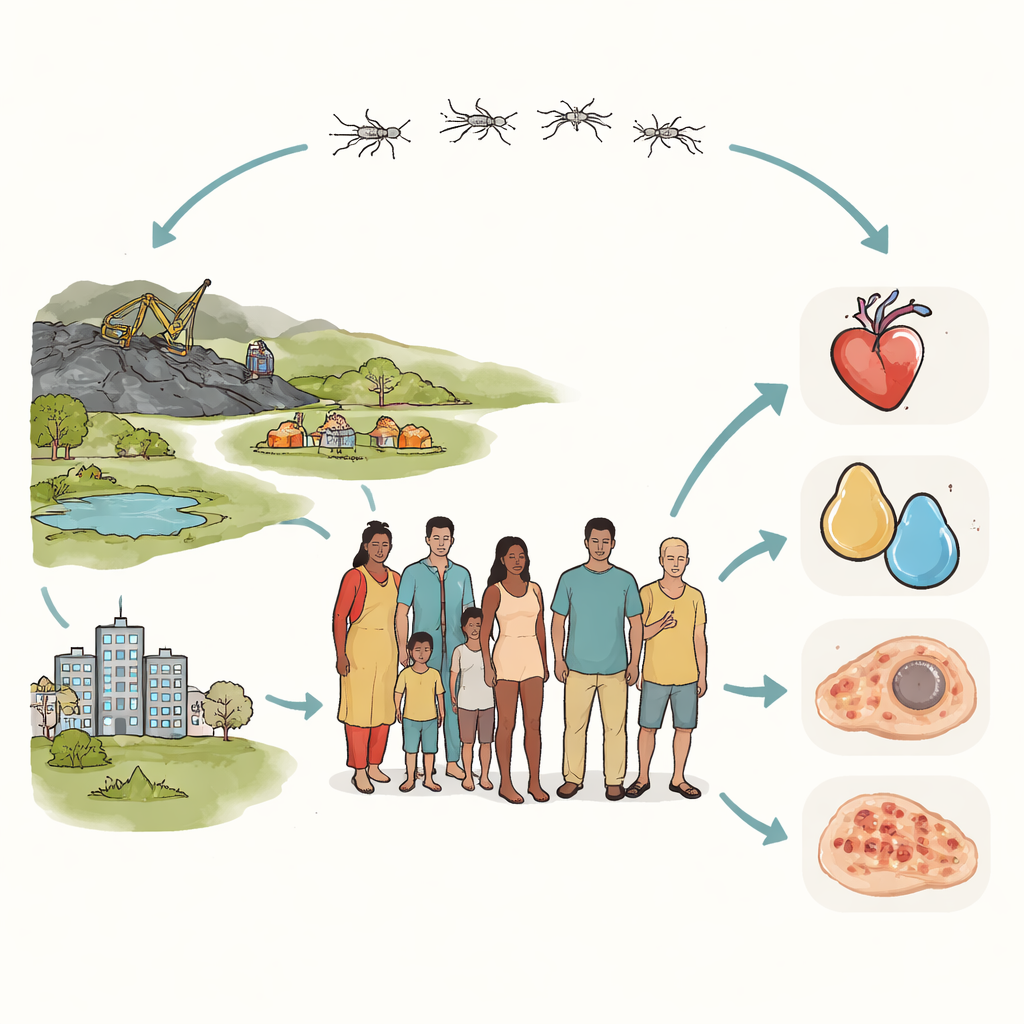
Life in the coalfields and the risk of infection
The researchers worked in four districts that form part of the eastern coalfields, an area of mines, scattered villages, and growing towns along the Damodar River. Many residents are mine laborers living in crowded settlements with limited sanitation, patchy electricity, and poor access to clinics. Pools of stagnant water around mines and settlements create ideal breeding grounds for mosquitoes that spread the filarial worms responsible for this disease. At the same time, people here often lack basic tools for protection—such as mosquito nets—and may have little information about how the infection spreads or can be prevented.
How the team checked the community
From August 2021 to March 2024, covering the late pandemic and early recovery period, field teams went door to door in these districts and invited adults to take part. They collected information on age, sex, income, and health history, and examined people for signs of limb swelling and skin damage. A simple blood test was used first to see who had antibodies against the parasite, and those who screened positive were asked to give a small blood sample at night, when the microscopic worms that circulate in the blood are most active. Looking at these samples under the microscope allowed the team to confirm who had active infections rather than just past exposure.
What they found in these remote communities
Among 3,705 adults studied, about one in six had evidence of lymphatic filariasis. Roughly two-thirds of these were people without obvious symptoms who nonetheless carried the parasite in their blood, meaning they could keep passing the infection to mosquitoes—and then on to others—without knowing it. The rest already showed visible illness, most often long-standing swelling of the legs. Many of these patients had lived with swollen limbs for more than 15 years, and the majority were in the more advanced stages of disease, where the skin thickens and mobility, comfort, and social life are all severely affected. The infection was more common in rural than urban areas and particularly affected older adults, though younger people who grew up during drug-distribution campaigns were not spared, pointing to ongoing transmission.
Illnesses that pile onto an already heavy burden
The study also revealed how this infection intersects with other health problems. High blood pressure was found in well over half of all participants, obesity in about one quarter, and heart disease in about one fifth. Fungal skin infections, especially in deep skin folds around swollen legs and feet, were frequent among those with the most advanced swelling. While many people carrying the worms but without swelling had no other diagnosed conditions, those with visible limb damage were far more likely to have one or several additional illnesses. These overlapping problems make day-to-day life harder, raise the risk of further complications, and complicate treatment for both patients and health workers.
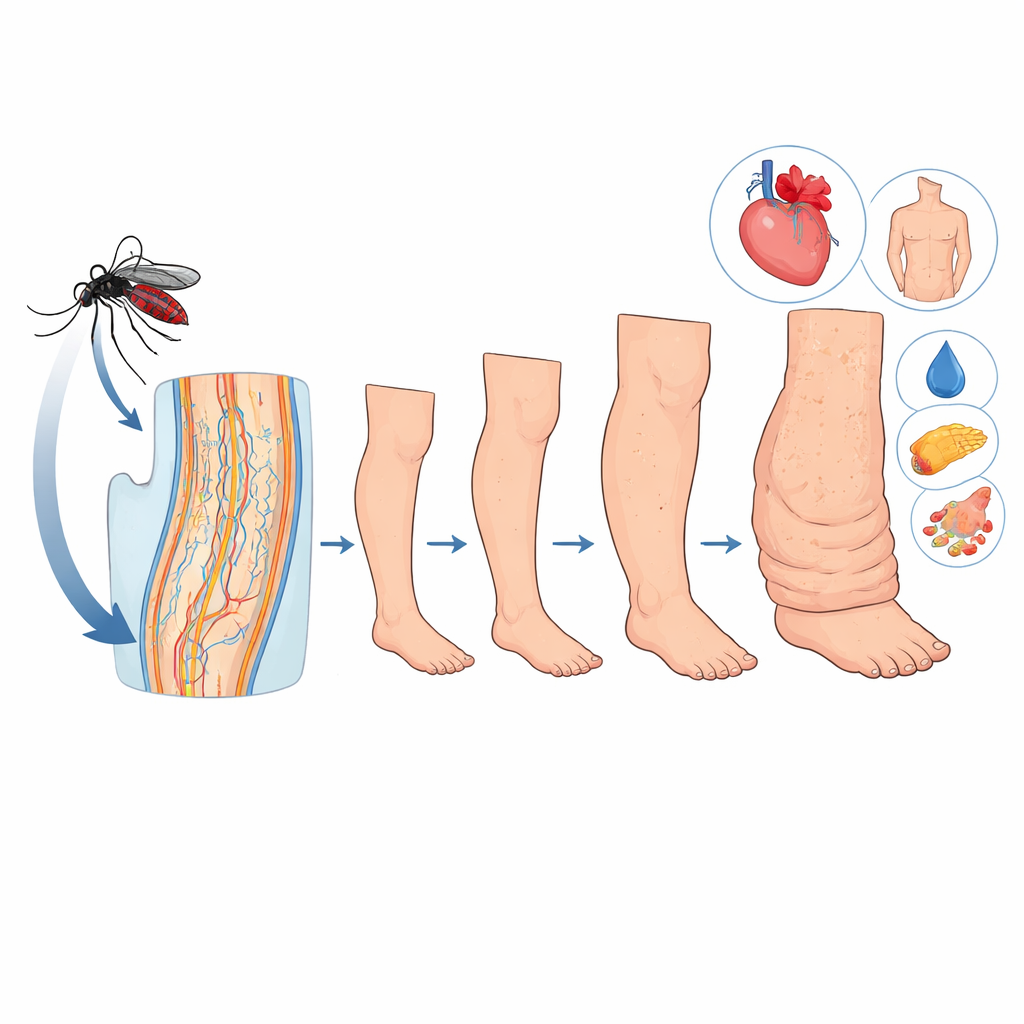
How the pandemic shook an already fragile system
Before COVID-19, India and the World Health Organization had been pushing toward eliminating lymphatic filariasis through rounds of mass drug administration and basic limb-care programs. However, from 2020 onward, door-to-door drug campaigns, clinic visits, and hygiene education were interrupted or scaled back. In the coalfield districts, this pause meant fewer opportunities to reach remote households, manage painful flare-ups of inflammation, or teach simple self-care steps that can prevent infections of the skin. The high rates of active infection and severe swelling detected in this survey suggest that the pandemic setback may have helped the parasite persist and may have worsened the condition of people already affected.
What this means for people and public health
For a lay reader, the message is clear: a disabling but preventable disease is still quietly harming tens of thousands of people in hard-to-reach mining communities. The authors show that many residents continue to carry the parasite and that severe limb swelling and related health problems are common, especially where health services and hygiene support are weakest. They argue that restarting and strengthening drug campaigns, providing simple home-based limb care, and integrating screening for blood pressure, heart disease, obesity, diabetes, and fungal infections into local clinics could dramatically improve lives. Because India bears a large share of the global burden of this infection, tackling these hidden pockets of disease is not just a regional concern; it is a crucial step toward the worldwide goal of finally making lymphatic filariasis a disease of the past.
Citation: Chakraborty, P., Sadhu, A., Modak, B.K. et al. High prevalence of bancroftian filariasis and comorbidities in the eastern coalfield regions of West Bengal, India following COVID-19 disruption. Sci Rep 16, 13002 (2026). https://doi.org/10.1038/s41598-026-43973-z
Keywords: lymphatic filariasis, mosquito-borne disease, West Bengal coalfields, elephantiasis, COVID-19 health disruption